Categories
season four

Episode 57: Under Pressure

Catherine de’ Medici takes the reins under the novel title of Governess of France. Just as she assumes power, a crisis that will overshadow the rest of her life begins to take shape. 

A 1562 woodprint by Frans Hogenberg depicting the Massacre of Vassy (or Wassy) where the Duke of Guise’s retinue fought with a local Huguenot congregation. Both sides blamed the other for starting the violence. Source: Archives Larbor.

Transcript

Because it’s been a while, let me remind you of where we are in our story. King Francois II, son of Catherine de’ Medici and King Henri II of France, has died from an agonizing illness. Catherine’s next oldest son Charles-Maximilien had to come to the throne, regardless of his age. The king is dead, long live the king, as the old French saying goes. Only ten years old, Charles-Maximilien was crowned as King Charles IX. However, the real ruler of France was no one other than Catherine. The three men most likely to successfully challenge her claim as the queen regent, the Duc and Cardinal de Guise and Antoine de Bourbon, had all been neutralized. The Guise brothers agreed not to stake a claim on the regency in exchange for King Francois taking the blame off their shoulders for certain illegalities at the trial of Antoine’s troublesome brother, Louis, the Prince de Condé. As for Antoine, the fact his brother was convicted of being involved in a conspiracy to kidnap King Francois made him vulnerable enough for Catherine to bring him to heel. But Catherine was smart enough to use the carrot along with the stick. She had Condé freed from prison and granted Antoine the important post of Lieutenant General of France. For the Guises, she confirmed the Duke of Guise’s position as a general of the French army. The year before Charles IX’s ascension, Catherine had also married her daughter Claude to the Guises’ cousin, Duke Charles III of Lorraine.


Categories
season four

Episode 56: Queen Mother

Catherine de’ Medici’s chronically ill son is now King François II of France. Rather than getting to enjoy the perks of being a king’s mother, she finds herself caught having to deal with not only the growing tensions between Catholic and Huguenot, but the feud between two powerful families, the Guises and the Bourbons.

A portrait of Catherine de’ Medici (c. 1560), likely around the time of her husband King Henri II’s death, from the workshop of François Clouet. Source: Private collection.
The chateau of Chenonceau in the Loire Valley, which was owned by Diane de Poitiers, but after King Henri’s death she was pressured to trade it with Catherine de’ Medici. Source: Ra-smit.
The chateau d’Amboise, where Catherine de’ Medici and the royal family and court sought safety from a Huguenot conspiracy. Source: Pieter van Everdingen.
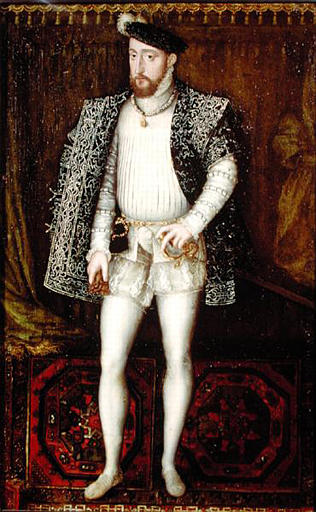
A sketch of King François II by François Clouet. Date unknown. Bibliothèque nationale de France, Paris.
Mary Queen of Scots, dressed in white in mourning for either her father-in-law King Henri II or her mother Marie de Guise. Source: Royal Gallery, Buckingham Palace, London.
Antoine de Bourbon by Corneille de Lyon, painted in 1548. Source: Royal Castle, Warsaw.
François Clouet’s drawing of Queen Jeanne III of Navarre, Antoine de Bourbon’s wife and mother of the future King Henri IV of France.
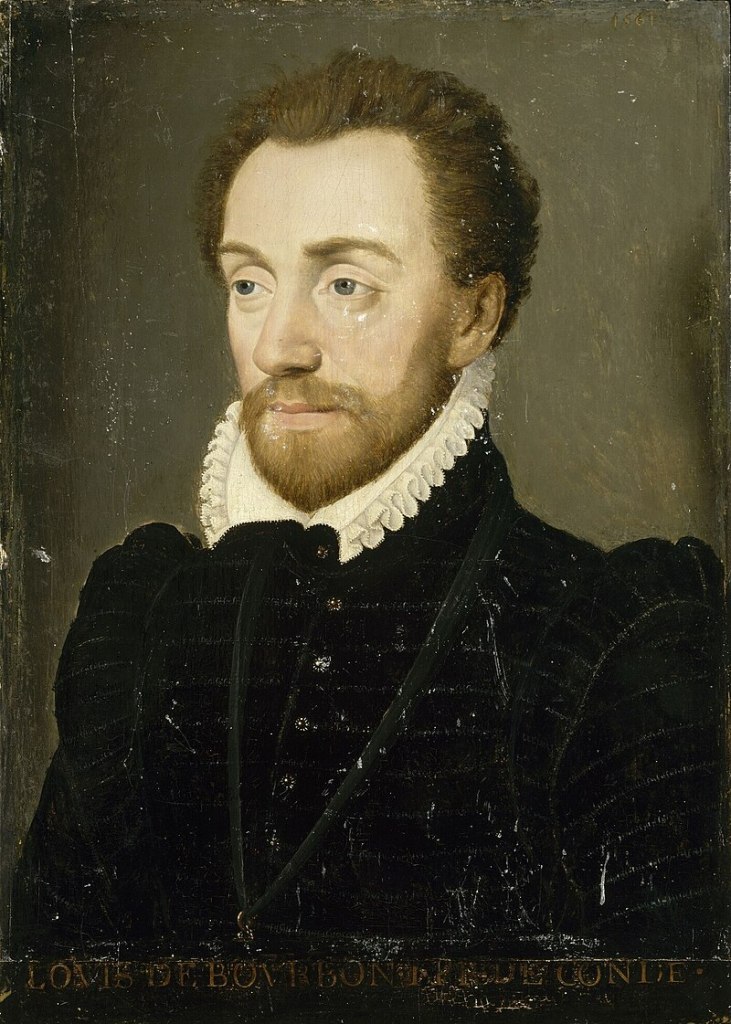
A portrait of Louis de Bourbon, Prince de Condé. Date and artist unknown. Source: Palace of Versailles.
A circa 1562 portrait of Duke François of Guise. Source: Private collection.
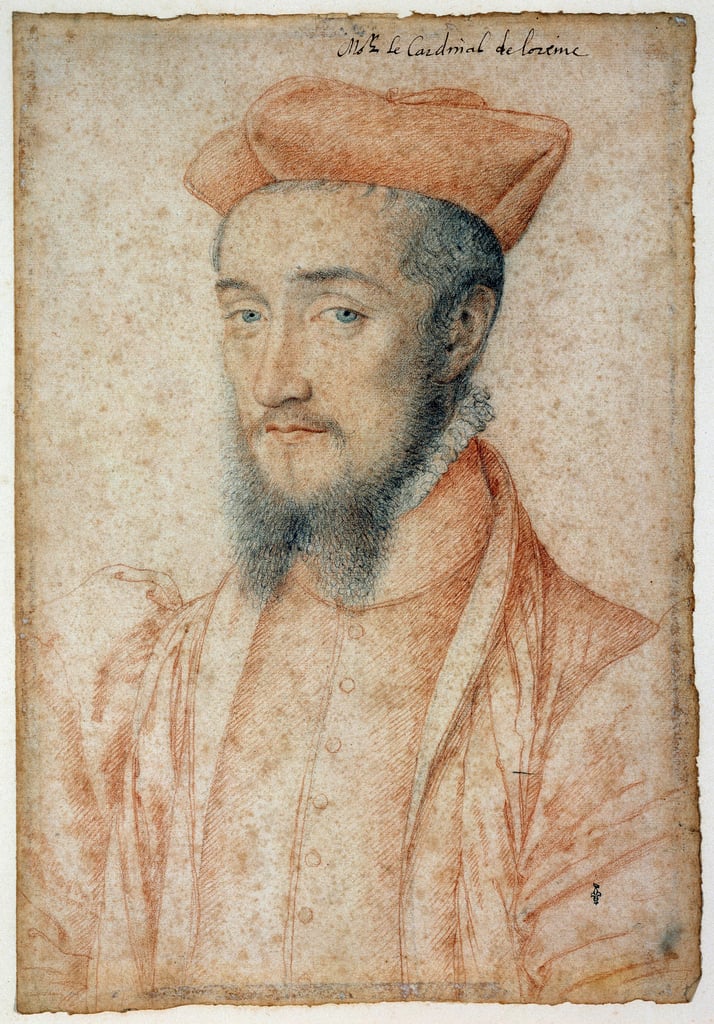
A sketch of Cardinal Charles of Lorraine by François Clouet, dated circa 1555. Source: Musée Condé, Chantilly.

Transcript

When the men rushed to Henri II’s side, they found he had recovered consciousness, but a number of splinters from his opponent Montgomery’s broken lance were sticking through the visor of his helmet. One of the splinters looked particularly deadly. When they took the king’s helmet off with care, they found the large splinter had stabbed the king through his left eye. Seeing the king’s injuries, Catherine and the Dauphin Francois both fainted, and screams rose from the audience. Montgomery, who stayed to help, got on his knees and begged the king to have his hand lopped off or have him killed on the spot. Henri, still unmercifully consciousness, pardoned him on the spot, rightfully pointing out that he was just following a direct order. The court surgeon, Ambroise (Ambroz) Paré, was joined by King Philip II of Spain’s personal surgeon who was sent as a gesture of diplomatic good will. They replicated the king’s wounds on the heads of several executed prisoners, not living prisoners as is sometimes still reported in some books about this era or on historical dramas like the recent show The Serpent Queen. They discovered that they could remove the splinters. However, there was no way to safely treat the wound to remove the pus and other infected material. So both the experts delivered the grim news to Catherine that it was only a matter of time until the king died.

Categories
season four

Episode 55: Ménage à trois

Now queen of France, Catherine de’ Medici is forced to form a somewhat unorthodox household with her husband Henri and Diane de Poitiers. Meanwhile religious persecution and violence have been growing, and Henri prepares to once again face his and his father’s nemesis, Emperor Charles V. 

Support the podcast on Patreon or by making a one-time donation below.

One-Time
Monthly
Yearly

Make a one-time donation

Make a monthly donation

Make a yearly donation

Choose an amount

$5.00
$15.00
$100.00
$5.00
$15.00
$100.00
$5.00
$15.00
$100.00

Or enter a custom amount

$

Your contribution is appreciated.

Your contribution is appreciated.

Your contribution is appreciated.

DonateDonate monthlyDonate yearly

Transcript

Catherine finally gave birth to a new heir to the French throne, named Francois after her father-in-law, she kept having children. This ensured Catherine’s political survival. However, I think that even outside the need to preserve her future at the French court, Catherine wanted to be a mother. In her memoirs, her daughter Marguerite described Catherine as “ a mother who doted on all her children, and was always ready to sacrifice her own repose, nay, even her life, for their happiness.” Indeed, Catherine went above and beyond most royal mothers, making sure they were well tended to and that they ate a diet she herself prescribed even when she was away. She was, apparently, also personally strict, at least to Marguerite, who also wrote, “It is not only that I dare not open a conversation with her, but when she looks at me I almost die of fright in case I have done something to displease her.”  But perhaps that was only Marguerite’s experience, since she was apparently the problem child out of Catherine’s brood, who frankly wrote in one letter, “I see that God has left me this creature for the punishment of my sins through the afflictions she gives me. She is my curse in this world.” But regardless of such sour feelings toward this one child, Catherine was clearly a loving mother, probably by any standards and not just those of sixteenth century royalty. One of the artifacts she left posterity is a prayer book, which carries a painting of Louis, Victoire, and Jeanne, the three children of hers who died in infancy.

Categories
season four

Episode 54: The Girl Has Come to Me Completely Naked

Far from a fairly tale life, to secure her future Catherine de’ Medici must overcome snobbery at the royal court, anti-Italian racism, escalating religious and political tensions, her husband’s bizarre love for his own surrogate mother Diane de Poitiers, and even her own body’s seeming inability to get pregnant with an heir to the French throne. 

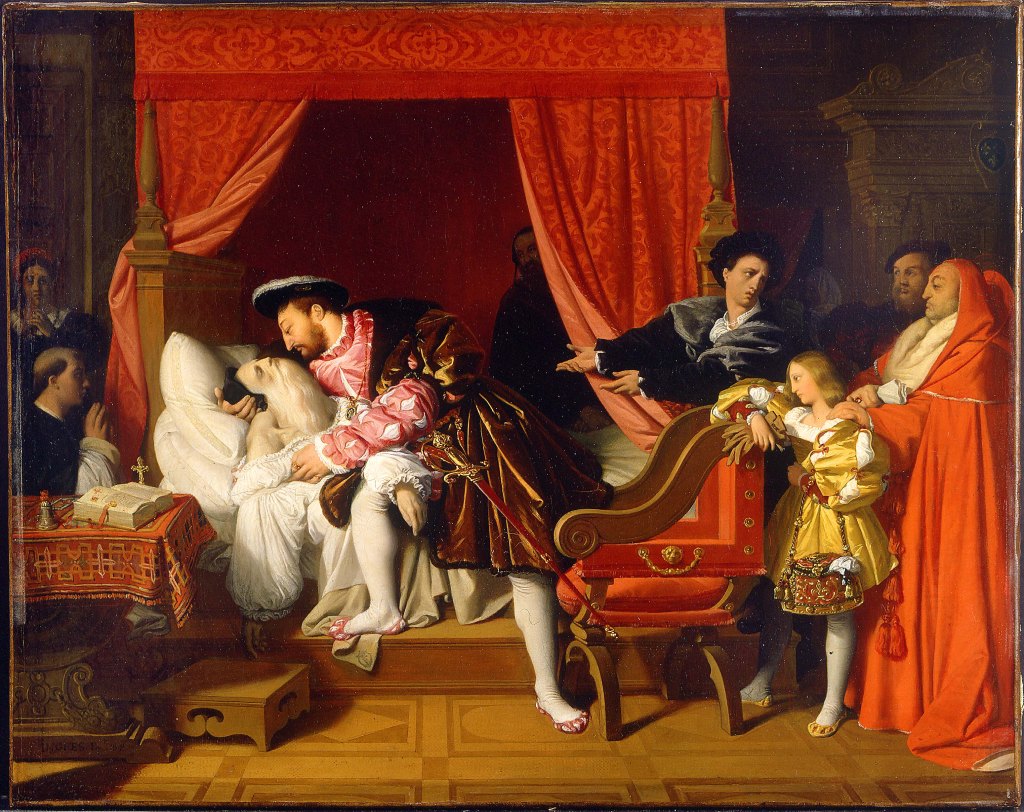
A painting by Jean-Auguste-Dominique Ingres (1818) imagining a possibly fictitious event where King François I of France was present at the deathbed of Leonardo da Vinci. At the very least, da Vinci was just one of a large number of Italian luminaries that François I sponsored and befriended. Source: Petit Palais, Paris.
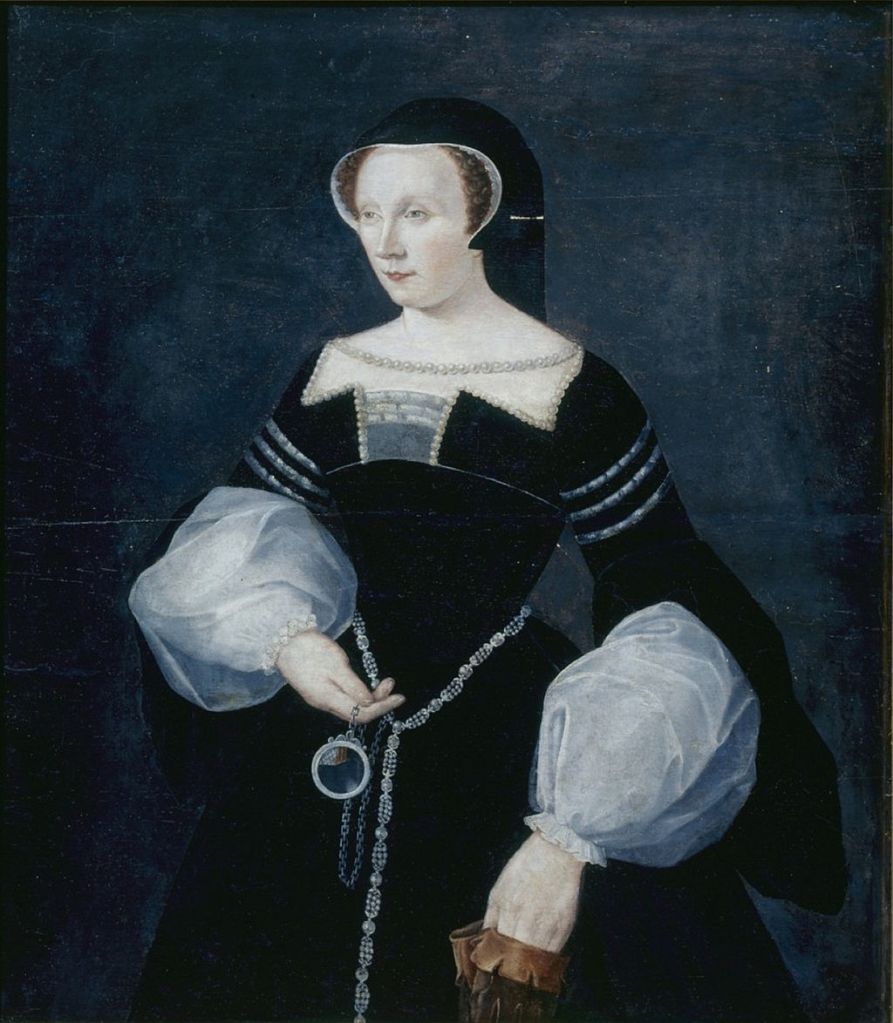
A portrait of Diane de Poitiers by François Clouet. Date unknown. Source: Palais de Versailles.
A portrait of Henri II from the workshop of François Clouet (c. 1560). Note that Henri is wearing black and white, like Diane de Poitiers. Source: Musée Condé, Chantilly.

Support the podcast on Patreon or by making a one-time donation below.

One-Time
Monthly
Yearly

Make a one-time donation

Make a monthly donation

Make a yearly donation

Choose an amount

$5.00
$15.00
$100.00
$5.00
$15.00
$100.00
$5.00
$15.00
$100.00

Or enter a custom amount

$

Your contribution is appreciated.

Your contribution is appreciated.

Your contribution is appreciated.

DonateDonate monthlyDonate yearly

Transcript

We don’t really have a clear picture of what life was like for Catherine in the French court. She did have more than a dollop of French aristocratic blood through her mother, but she was still seen as a daughter of the bourgeoisie, in a royal court where even a marriage between a prince or princess and a member of the nobility might be considered a misalliance. I think sadly most of us can have at least have a vague idea of the snobbery and cliquishness she faced on a daily basis.

Categories
season four

Episode 53: No Girls Allowed

Catherine de’ Medici has just married into the monarchy of France, arguably the oldest surviving Catholic Christian monarchy in Europe. So it’s a good time to ask the question that would shape Catherine’s life: how was it that a monarchy that barred women and their children from the crown also had a long history of powerful women guiding it? 

A funerary monument to Jeanne of Navarre (1328-1349) at the Basilica of Saint-Denis.. At only the age of four or five years old, she became the center of a political controversy over royal inheritance that would lay the groundwork for the Salic Law that would bar women from ever inheriting the throne of France in their own right. Source: Acoma.
A portrait by Jean Clouet of Louise of Savoy, the mother of King François I (date unknown). She ruled as regent for her son while he was off at war, but even when he was present, she remained a powerful political force. Source: The Bemberg Foundation, Toulouse.

Transcript

So I hope you weren’t expecting for me to update you on French history up to the point of Catherine’s marriage in 1533. But for this episode I will give you a crash course on France’s monarchy, the institution that Catherine found herself literally wedded to, and what it meant to be a woman within it.

Categories
season four

Episode 52: The Little Duchess

From the start of her life, the orphaned Catherine’s life was marred by politics. First, she was destined to be a figurehead for her great-uncle’s territorial ambitions. Then she was a hostage blamed for the crimes of her family, and next a pawn on the royal marriage market. No one could have guessed that the future had grander things in store for her than just a marriage to some prince…

Claude Corneille de Lyon’s portrait of Catherine de’ Medici as a young woman, circa 1540. Source: Polesden Lacey, Surrey.
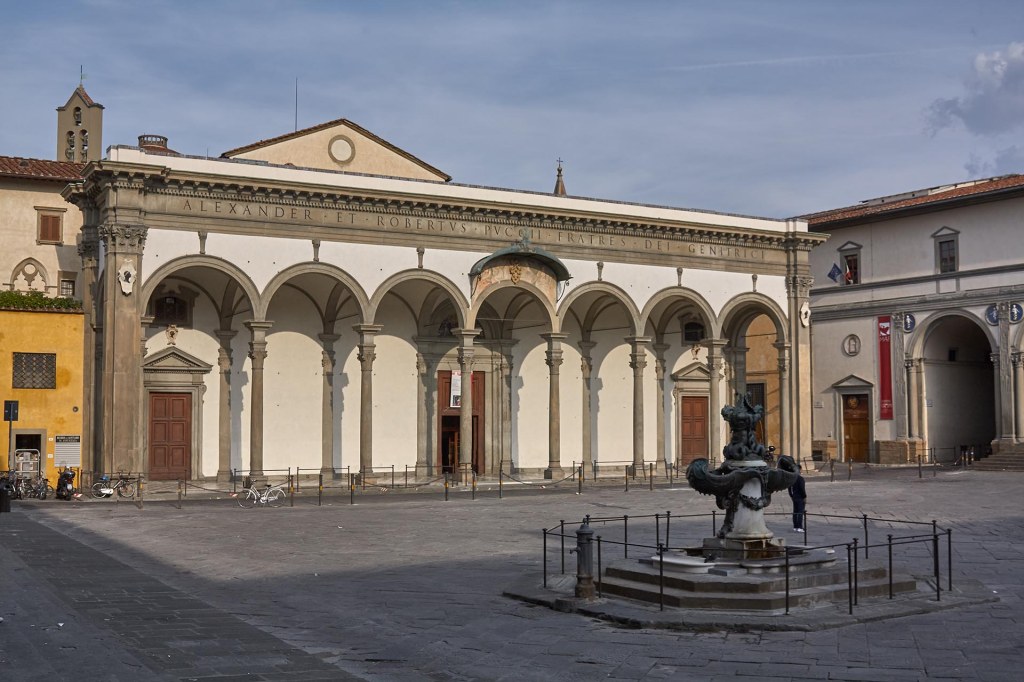
The piazza of the church and convent of Santa Maria Annunziata, where Catherine spent perhaps the happiest years of her childhood. Source: Museo Galileo, Erik Franchi.

Transcript

If anyone in history was ever actually cursed from birth, it may have been Catherine de’ Medici. After giving birth to her, her mother Madeliene de La Tour d’Auvergne died less than a week after her birth from complications.

Categories
season three

Episode 51: Family Feud

Duke Alessandro de’ Medici enters a deadly contest with his cousin, Cardinal Ippolito. The real threat, however, may be closer to home.

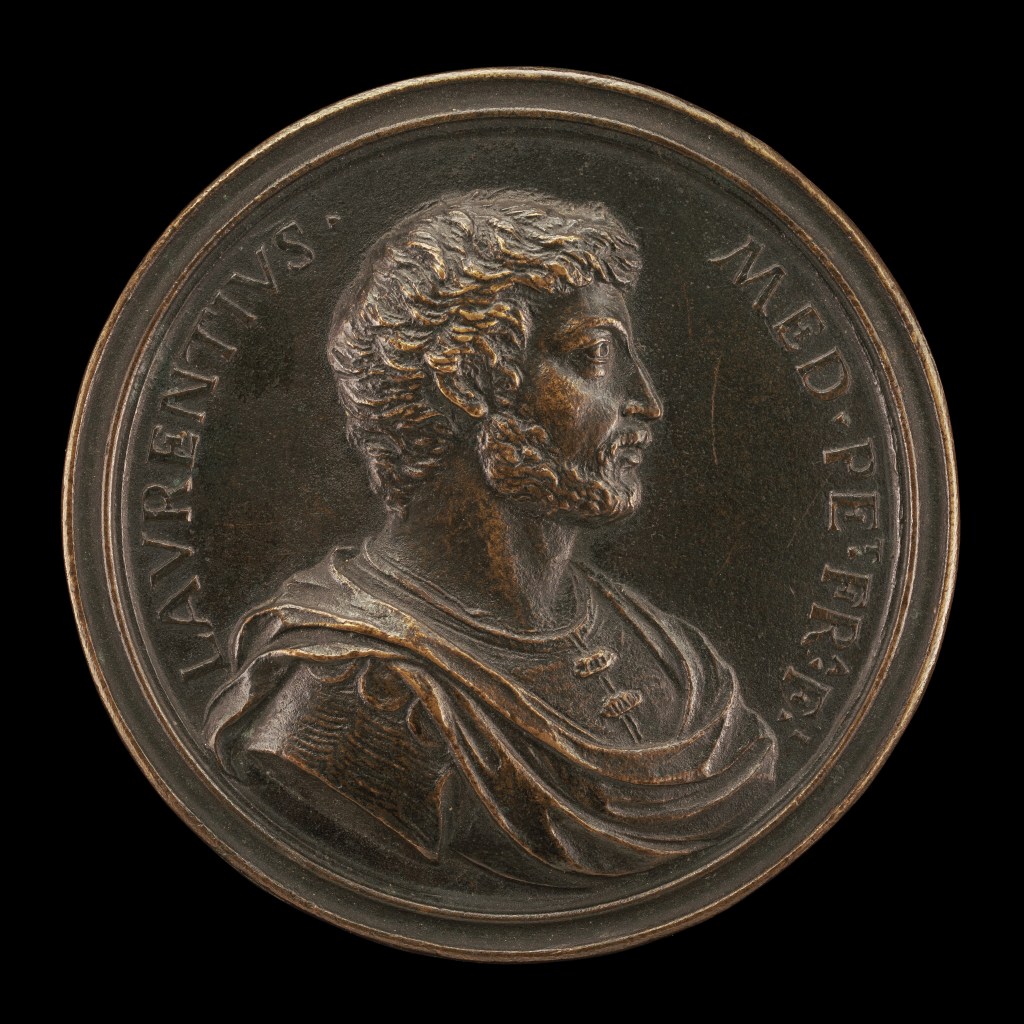
A medal depicting Lorenzino de’ Medici, grandson of Lorenzo “il Popolano.” It was made by Antonio Francesco Selvi circa 1740. Source: National Gallery of Art (Washington, DC).

Transcript

So I hope you weren’t expecting for me to update you on French history up to the point of Catherine’s marriage in 1533. But for this episode I will give you a crash course on France’s monarchy, the institution that Catherine found herself literally wedded to, and what it meant to be a woman within it.

Categories
season three

Episode 50: How The Medici Did It

For our 50th episode, I give an overview of how the Medici went from being just one of several powerful banking families to joining the ranks of European royalty and high nobility.

Before I get started, I just wanted to say sincerely thank you for listening. I started this podcast around the time I was laid off from a job, I didn’t seem to have any real prospects, and I was living in an apartment I didn’t like but I could barely afford. Then during the time I kept on with the podcast I made the difficult decision to go back to school and try to start a new career, I finished my second Master’s degree in Library Science, and…well, things have gotten a lot better since, but I’m still working on the getting a day job I can be happy with or making something like this my job part. I never expected this podcast to become as successful as other history podcasts like the “History of Rome” podcast and…well, it’s not, but that said it’s certainly drawn more regular listeners than I ever expected. On top of the kind emails I often receive and the generous donations from my Patreon supporters, that fact alone helps me get through the bad times, like my recent car accident. It really does.

So thank you.

Categories
season three

Episode 49: Duke

We leave the Medici papacy behind and look at the life and times of Alessandro de’ Medici, the first Medici de facto ruler of Florence and (possibly) a Black head of state in Renaissance Europe.

Agnolo Bronzino’s portrait of Alessandro de’ Medici, Duke of Florence, dated 1531. Source: The Hermitage, St. Petersburg.
A portrait by Titian of Ippolito de’ Medici, dressed in a traditional Hungarian costume in honor of his mission as papal legate in Hungary. Dated 1532-1533. Source: Palazzo Pitti, Florence.

Support the podcast on Patreon or by making a one-time donation below.

One-Time
Monthly
Yearly

Make a one-time donation

Make a monthly donation

Make a yearly donation

Choose an amount

$5.00
$15.00
$100.00
$5.00
$15.00
$100.00
$5.00
$15.00
$100.00

Or enter a custom amount

$

Your contribution is appreciated.

Your contribution is appreciated.

Your contribution is appreciated.

DonateDonate monthlyDonate yearly

Transcript

Last time we said goodbye to Clement VII. But I want to talk a little more about the impact he and Leo X had on the papacy, for better and for worse. Like I mentioned last time, we shouldn’t blame them, especially Clement for too much. No matter what they did or didn’t do, it’s almost certain no matter what that the papacy would have gone from being a fairly major Italian power with the ability to interfere in broader European politics to an institution with mostly spiritual and moral authority. The Papal States were created when European feudalism was in its childhood, and it seems inevitable that, as feudal political structures gave way to the modern nation-state, the papacy would have to adapt and change too. It definitely didn’t help that over the years more Popes would follow the example of Sixtus IV and Alexander VI and keep pruning off papal lands to create independent fiefdoms for their relatives.

Categories
season three

Episode 48 – The Emperor and His Pope

Pope Clement VII sells his soul to Emperor Charles V to get back Florence. Part of the bargain includes Clement essentially signing off on the death warrant of the Republic of Florence.

After the Sack of Rome, Pope Clement stopped shaving and even trimming his beard as a gesture of mourning for the city of Rome. This portrait of Clement VII in his latter years was painted by Giuliano Bugiardini (c. 1532). Source: Deutsches Historisches Museum, Berlin.
Giorgio Vasari’s rendition of the Siege of Florence in 1529/1530, painted in 1558. Source: Palazzo Vecchio, Florence.
Built to protect the new Medici Duke of Florence from any potential revolts, the building of the Basso Fortress was arguably the most tangible sign of the de facto end of the Republic of Florence. Source: Sailko.
Giulio Clovio’s “An Allegory of Charles V”, depicting all of Charles V’s vanquished rivals chained to his foot (date unknown). From left to right is Sultan Suleiman of the Ottoman Empire, Pope Clement VII, King François I of France, Duke John III of Cleves, Elector Johann of Saxony, and Landgrave Philipp of Hesse. Source: Margaret Aston, Panorama of the Renaissance (New York: Henry N. Abrams, 1997).

Transcript

When we last checked in on Florence’s old new or maybe new old republic, it was struggling. As the months piled up, the situation only got worse. Niccolo Capponi’s policy of reconciliation was a complete failure. Part of the problem is that wartime is a horrible time to build a new government. But I suspect even if Florence wasn’t caught up in an unpopular war there would still be problems. Democracies tend to run badly if most of the people don’t share some of the same basic premises. It wasn’t just a case of the pro-Medici and the anti-Medici. Instead among the anti-Medici factions you also had the radical republicans who were drunk on their own overidealized visions of the republics of ancient Greece and Rome and who despised the religious fanaticism of Savonarola and his followers as much as the pro-Medici camp did, the so-called Wailers who yearned to one day fulfill Savonarola’s plans for a democratic theocracy, the conservatives like Machiavelli who just wanted Florence to go back to the good old days of the Ordinances of Justice, and the moderate republicans, many of whom came from the ranks of the ottimati and wanted to make Florence more like a Venice-style oligarchy. United as they were by their rejection of the Medici regime, these were groups with such fundamentally divergent plans for the future of the city that there was no way they could be in the same room with each other, much less build stable coalitions.