Piero de’ Medici narrowly escaped death or abduction. But did everything happen as Piero and his son Lorenzo said? And just how will the Party of the Hill survive when they apparently bet everything on one scheme?
Last time, we saw Piero narrowly dodge a possible abduction or assassination attempt. Only the fact that his son Lorenzo wasn’t recognized and was able to get back to Florence using the backroads foiled the plot. Or was that actually what happened? A silk merchant and staunch critic of the Medici regime, Marco Parenti, left behind an interesting memoir that was discovered, having laid forgotten in the archives, by historian Mark Phillips in the 1970s.
Piero de’ Medici seems to be enjoying a smooth transition to power, but soon enough a rival political party takes shape on the high ground just across the river from the Palazzo de’ Medici. When legal measures fail to dislodge the Medici, the so-called “Party of the Hill” proves itself more than willing to resort to more drastic measures. Meanwhile we get a better look at Piero, the math professor of the Renaissance, and his wife Lucrezia, wife/mother/patron/businesswoman/writer.
The Palazzo Pitti, which was built by banker-politician Luca Pitti to rival the Palazzo de’ Medici which lied just across the River Arno. Since the palace sat on high ground, it inspired the name given to Luca’s anti-Medici political party, the Party of the Hill. Today, it houses the largest museum complex in Florence. Source: Ed Webster.A portrait of Luca Pitti, date and painter unknown. Source: Kursk State Art Gallery, Kursk Oblast, Russian Federation. A portrait of Lucrezia de’ Medici, néeTornabuoni, by Domenico Ghirlandaio (c. 1475). Source: National Gallery of Art, Washington DC. A bust of Piero de’ Medici at the Bargello in Florence. Source: Yair Haklai.
Transcript
Something I didn’t really get into was that, while Cosimo was able to cling tightly to power since the general assembly he called under the steely gaze of armed troops, discontent had been simmering in the last years of his unofficial reign. Many of Cosimo’s top lieutenants who helped ensure the government would carry out his wishes, especially Agnolo Acciaiuoli, Luca Pitti, and Dietisalvi Neroni, all became increasingly critical of the Medici and their tactic of pre-selecting candidates for office, even though they did not dare do anything to act upon their criticisms or voice them too loudly.
At the height of his political power, Cosimo de’ Medici is being overwhelmed with illness and personal tragedy. Who will succeed him to his invisible, nameless throne? His son Piero, who unfortunately is a middle-aged man so sick no one thinks he will live for much longer.
Transcript
As far as we know, it was smooth sailing for Cosimo after the general assembly of 1458. The old lists of enfranchised lists that had been put together under the Albizzi were burned. Through Cosimo’s new council, the Cento, not only were hundreds of citizens disenfranchised but new lists of citizens were drawn up to be placed in the electoral bags. And although the republic still operated the same way it had since the Ordinances of Justice were enacted, few if any important decisions were made without Cosimo’s input. In his memoirs Pope Pius II observed that after the general assembly “Cosimo was refused nothing. He was regarded as the arbiter of war and peace, the regulator of law; not so much a citizen as the master of his city. Political councils were held at his house; the magistrates he nominated were elected; he was king in all but name and state.”
Cosimo de’ Medici quickly established a regime that operated within Florence’s constitution but gave Cosimo an almost unchallenged power over the state. Unfortunately, Cosimo’s government was a delicate structure, and the pandemonium of Italian Renaissance politics threatened to bring it all tumbling down.
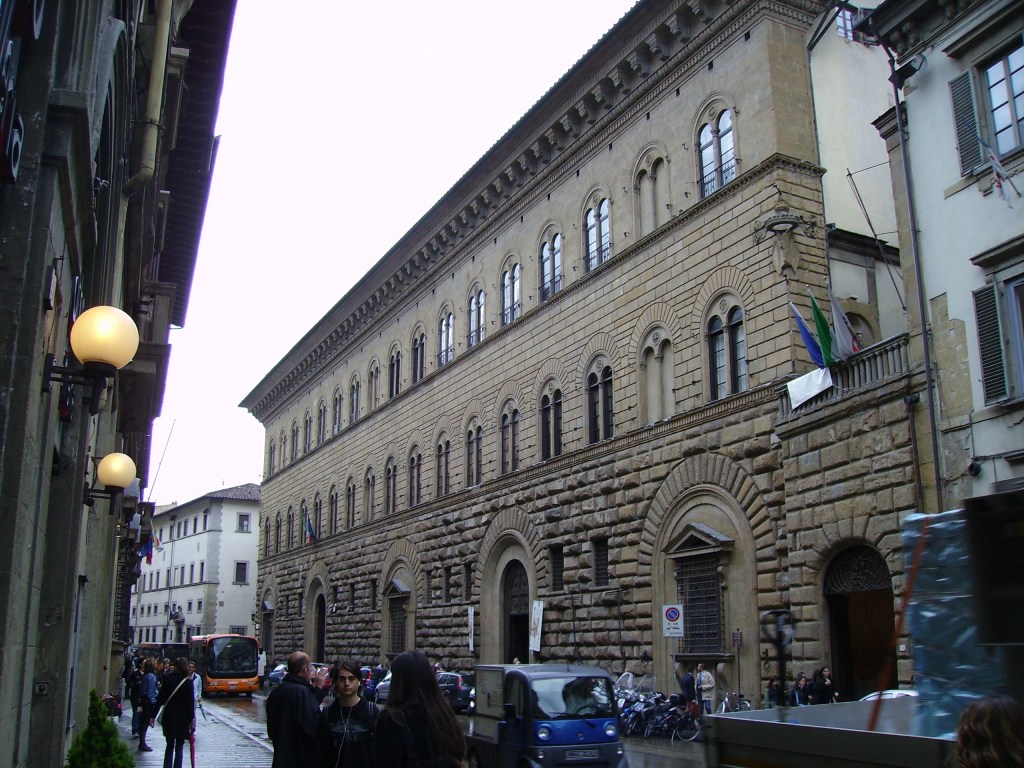
The exterior of the Palazzo Medici-Riccardi. Source: Yair Haklai, Wikicommons. The interior of the Chapel of the Magi within the Palazzo Medici-Riccardi. Source: theflorentine.net. A portrait of Francesco Sforza, Duke of Milan, former condottieri, and a key ally of Cosimo de’ Medici, by Bonifacio Bembo (c. 1460). He insisted on being painted wearing his battered and worn old campaigning hat.
Transcript
So, with that, let’s start by talking about the idea of an invisible throne and why Cosimo after his return from exile can be said to have one. By the time the Council of Florence was over, if not sooner, foreign leaders wrote to and talked about Cosimo de’ Medici as if he were the de facto ruler of Florence. This is rather remarkable because, unlike other Italian rulers, Cosimo never called himself or was called signore. Nor did he ever receive some kind of aristocratic title or was voted an office like dictator-for-life cementing his power. In fact, in the decades between Cosimo’s triumphant return and his death, for the most part commentators within Florence write and talk as if the republic was chugging along like always. Cosimo actually pushed only one major reform to the government, which we’ll get to this episode. Just by pulling the levers provided for him by the Florentine constitution and by his patronage network, Cosimo made himself the all but unchallenged ruler of one of the richest regions of Europe. Cosimo’s regime was for the most part so subtle and was managed so indirectly that even now modern historians have trouble determining exactly what decisions made by the official political leaders of Florence were actually their initiative or if they were acting entirely on behalf of Cosimo.
With a combination of patience and political maneuvering, Cosimo turns the tables on his enemies and returns to Florence in triumph. His first major act is to host an attempt to reunify the long-divided Greek and Latin churches. It has rather mixed results, but it does make something clear to the rulers of Europe: Cosimo is no longer just a banker.
An image believed to be the Byzantine Emperor John VIII, taken from a cycle of frescoes by Benozzo Gozzoli depicting the Magi’s visit to the infant Jesus Christ but with the likenesses of various participants in the Council of Florence (c. 1459). Source: Magi Chapel, Palazzo Medici Riccardi. Pisanello’s sketches of the Byzantine delegation at the Council of Florence (c. 1439-1449).
Rinaldo may not have gotten away with killing his greatest threat, Cosimo de’ Medici, but he had seemingly neutralized him by exiling him and his biggest supporters in the fall of 1433. With two of the leading populist families, the Medici and the Alberti, cut down, the conservative regime was secure. At least, for the time being.
As soon as he inherits his father’s place as head of the rich, international Medici Bank, Cosimo gets a target on his back in a Florence where politics are increasingly molded by the sponsorship of the rich and not by the guilds. The minute he steps on the public arena, not only is Cosimo’s political career is in danger, but his very life.
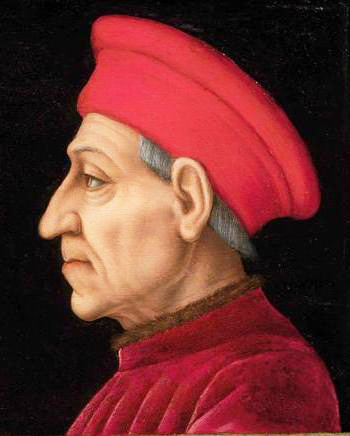
Posthumous portrait of Cosimo de’ Medici by Bronzino (c. 1567). Source: La Galleria degli Uffizi, Florence. Another posthumous portrait of Cosimo (c. 1519) by Jacopo Pontormo. Source: La Galleria degli Uffizi, Florence. Posthumous portrait of Contessina de’ Bardi de’ Medici (c. 1567) by Bronzino. Pitti Palace, Florence.
Transcript
Giovanni di Bicci has, largely because of his connections to one of several rival popes, become a wealthy banker. Although drawn into politics by just the mere fact of his wealth and by his family’s reputation as supporters of the populist cause, Giovanni largely stayed out of politics. So much so, in fact, that no one was sure if he sided with the conservative or the populist cause. As a result, Giovanni had a great deal of political capital when he intervened to stop the conservatives, at the time led by Rinaldo degli Albizzi, from disenfranchising members of the minor guilds and replacing them with nobles and members of the major guilds. Also, he decisively supported a major tax reform that replaced the city’s sales and poll taxes with the Catasto, a system in which the property and revenues of the city’s citizens were surveyed and taxed based on citizens’ wealth and income.
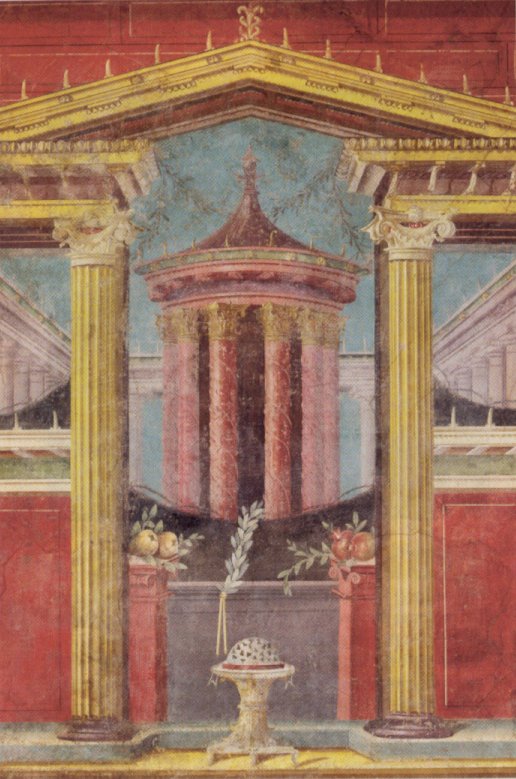
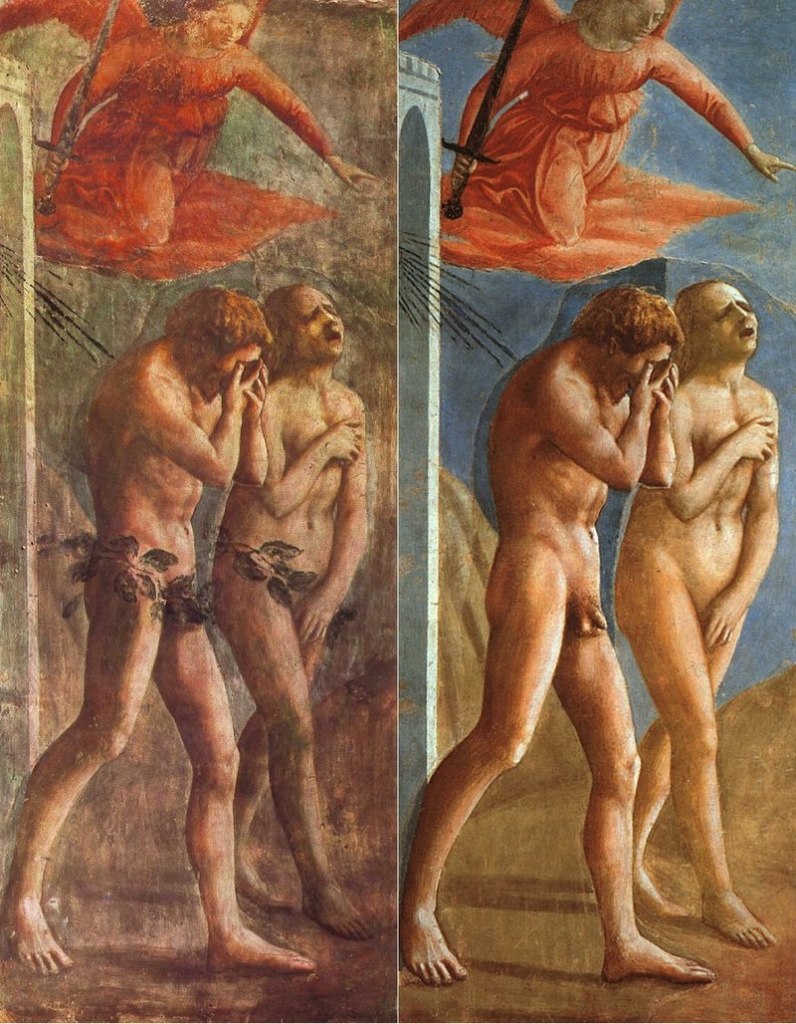
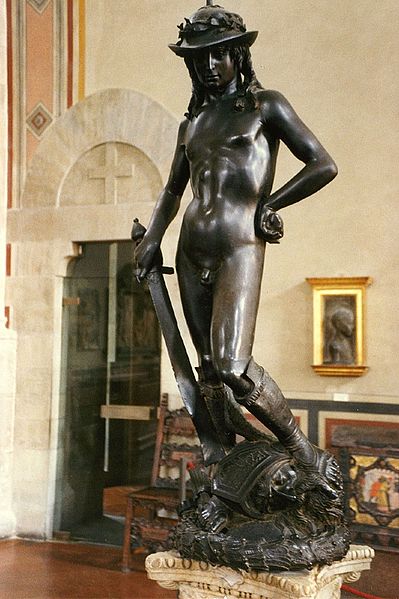
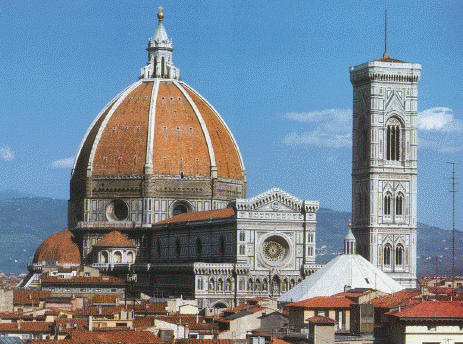
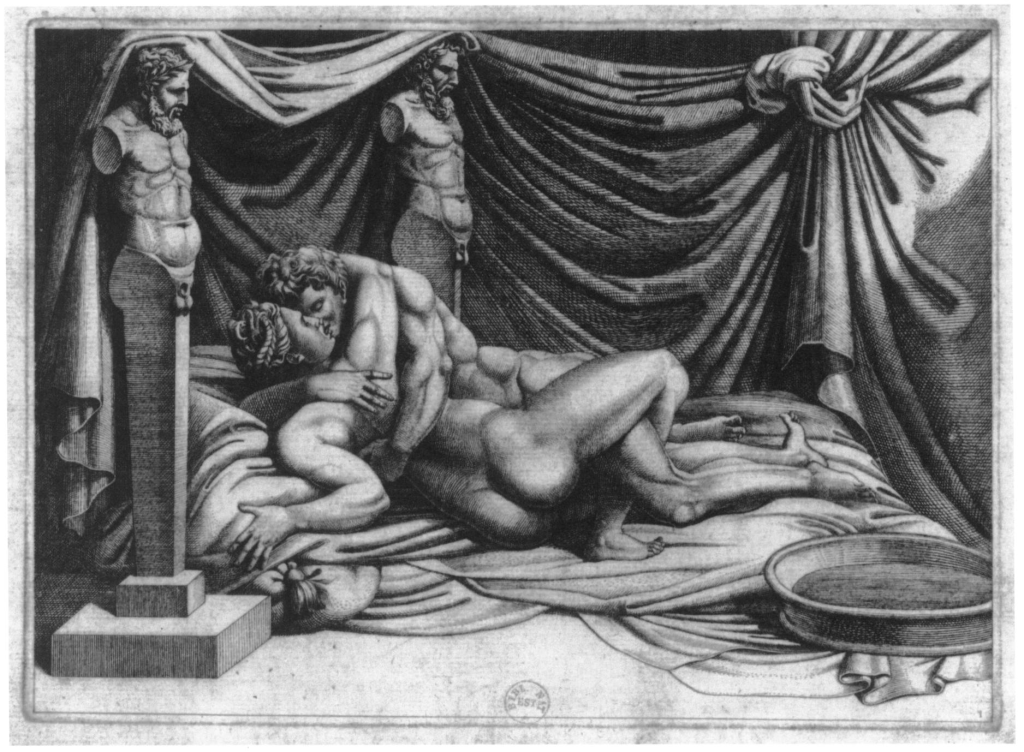
This first century BCE Roman fresco from the villa of Publius Fannius Synistor in Boscoreale in modern-day Naples, which demonstrates a partial use of vanishing point, a technique that would not be perfected until the Renaissance. Source: Metropolitan Museum of Art. Giotto’s Crucifix (c. 1290-1300). Note the realistic details such as Jesus’ facial expression and the wound in his side. Source: The Tempio Malatestiano in Rimini, Italy.Masaccio, The Expulsion (c. 1426-1428). Note the fig leaves added to the version on the left, before they were removed with the 20th century restoration shown on the right. Source: Santa Maria del Carmine, Florence. Donatello’s David (c. 1440s?), the first freestanding nude sculpture made in Europe since antiquity. Source: Patrick A. Rodgers, the Bargello, Florence.The Monastery of Batalha in the Central Region of Portugal. Source: Waugsberg. The dome of Santa Maria del Fiore, erected by Filippo Brunelleschi. It remains the largest brick dome in the world. An image from I Modi (1524).
Transcript
Something about history that usually remains true is that very few people are ever aware of the significance of the times they live through. The Romans of their late fourth century CE didn’t know their children and grandchildren would be the last citizens of the empire nor did the Prophet Muhammad’s contemporaries realize their compatriots would crush the superpowers of their day, the Eastern Roman and Sassanid Empires, and start a religion that would change the world. And no one ever thought of themselves as living through the colonial era or the Enlightenment or whathaveyou. If any generations ever knew exactly what era they were living through, it was the people who lived to see the Renaissance. While it was a nineteenth century historian, Jules Michelet, who did first slap the label “Renaissance” on the whole period, it really was Giorgio Vasari, the humanist who wrote Lives of the Most Excellent Painters, Sculptors, and Architects, who coined the metaphor of “rebirth” when referring to the accomplishments of the artists he described in his work.
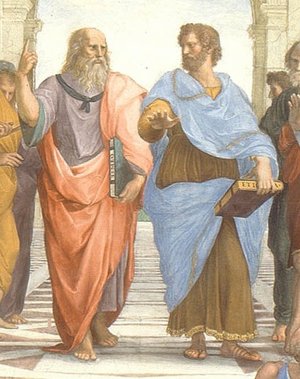
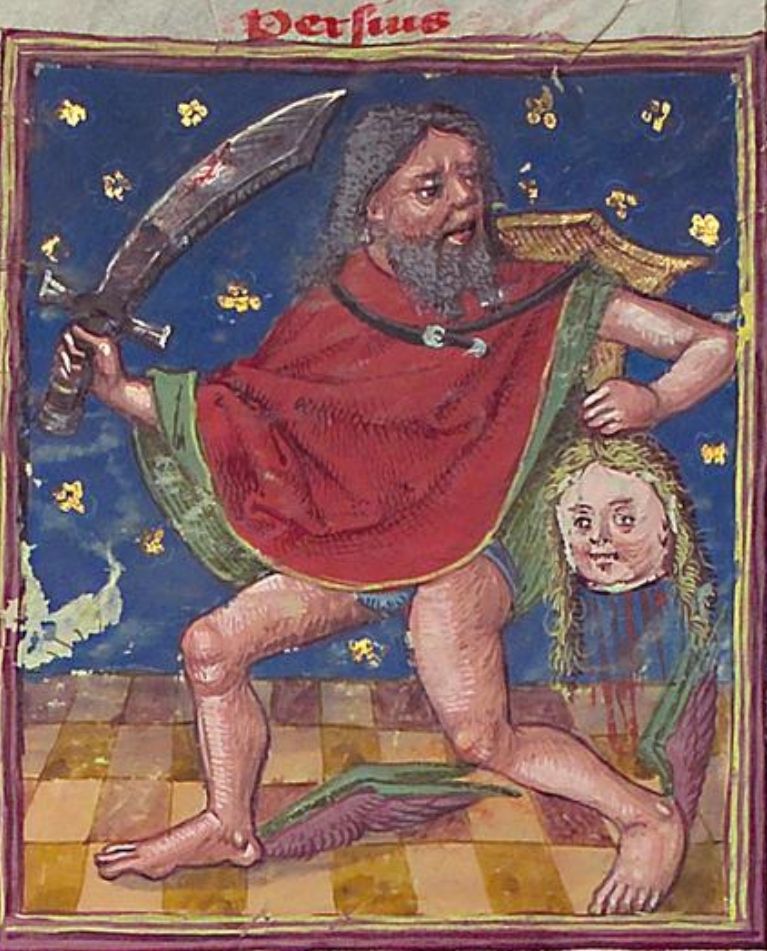
Raphael, The School of Athens, ca. 1510. It is a fresco that lies in the Vatican’s Apostolic Palace. A representation of the standard medieval western European representation of Perseus, from an astrological and occult guidebook, the Heidelberger Schicksalsbuch (1491), currently kept in the rare books collection of the University of Heidelberg. Note how Perseus is wielding an Arabic-style scimitar.Altichiero de Zevio’s sketch portrait of Petrarch, c. 1375. Anonymous portrait of Giovanni Pico della Mirandola.
Let’s talk about the Renaissance. Because the Renaissance was a truly international movement, and not at all the exclusively Italian movement we tend to think of it as, to talk about it it’s almost impossible not to jump around in space and time. So, for the sake of trying (possibly in vain) to keep things tidy I split my discussion of the Renaissance in two. First, we’ll talk about the old, how the Renaissance looked back into the past. Second, we’ll get into the new, meaning how the Renaissance looked forward.
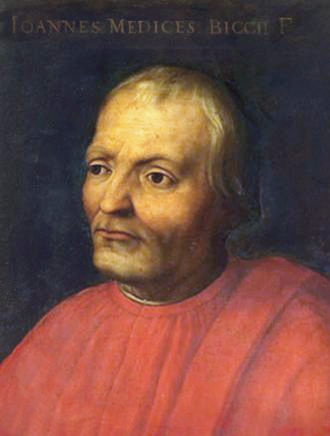
Portrait of Giovanni di Bicci de’ Medici (c. 1563) by Cristofano dell’Altissimo. Source: Palazzo-medici.it.
We close out Season 1, “The Early Medici”, with a look at the life and death of Giovanni di Bicci de’ Medici, whose descendants would become the branch of the family we usually mean when we talk about the Medici. Not only is he the first prominent member of the family, however, he also founded the dynasty in the sense that he started the tradition of sponsoring forward-thinking artists, writers, and architects and in how his apparent reluctance to be a public figure actually inspired a formula for political success that would carry his descendants to greater heights than even his more ambitious forebears could have imagined.
Support us on Patreon, through Venmo at @ Chad-Denton-15, or through a donation below.
While I talked about how Giovanni de Bicci dei Medici reaped the benefits from his relationship with the sketchy soldier turned rival pope John XXIII, the rest of the Medici family was not doing so well. The family remained committed to the populist cause. Unfortunately, the conservatives also remained firmly in power since the fall of Salvestro de’ Medici. As a result, various Medici along with members of other populist families were persecuted by the government, either barred from political office or exiled from the city. So, while we can’t know what his true political beliefs were, by making himself a low-key ally of the conservatives, Vieri de’ Medici was truly and literally saving himself and his family. Giovanni de Bicci would not follow in his cousin and fairy godfather’s footsteps. However, he would find his own savvy way of surviving the political whirlwind.
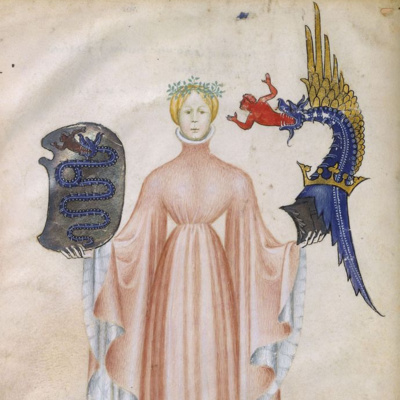
A miniature depicting Valentina Visconti, Duchesse d’Orléans, with the symbols of Milan and the Visconti family, from a copy of Cicero’s De natura deorum, c. 1400. Source: anne-marie.eu.
Around the dawn of the fifteenth century, two developments unfolded that would sooner or later change the future of the Medici family forever. In one, Valentina Visconti enters a miserable marriage with a French royal. In the other, Giovanni de Bicci de’ Medici takes advantage of Europe being split between two and even three rival popes by (allegedly!) bankrolling the church career of a former soldier who hobnobbed with pirates and robbers that eventually sees him become Pope.
Transcript
This time, I’m going to have to zoom out a bit. I do try to keep this from turning into the northern Italy or the History of Florence podcast. But we’re at a point where two events that initially had absolutely nothing to do with the Medici would have ramifications that would completely shape the family’s future.










 The Medici Podcast