Categories
season three

Episode 47: The Old New Republic

Lorenzo the Magnificent’s granddaughter Clarice triggers a coup in Florence just by berating the man in charge. Meanwhile Pope Clement is driven to hide in a derelict palace in the mountains and receives an unwelcome visitor all the way from England.
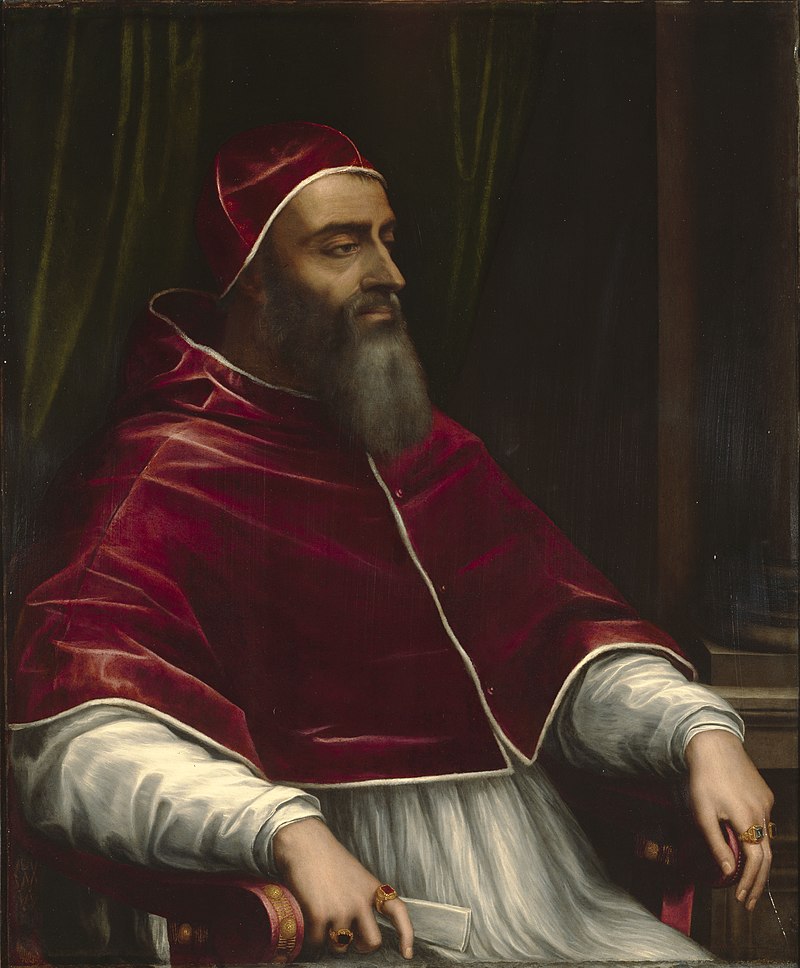
A portrait of Pope Clement VII after the Sack of Rome by Sebastiano del Piombo (c. 1531). Despite beards being unfashionable in Italy among the upper class at the time, Clement VII grew one as a sign of mourning for the Sack of Rome. Source: The Getty Center, Los Angeles, California.
An artist’s rendition of the Battle of Mohács (1526), which triggered the destruction of the independent Kingdom of Hungary and led to Hungary being split between the Ottoman Empire, Austria, and the Principality of Transylvania, along with the Hapsburgs claiming the crowns of Hungary, Croatia, and Bohemia. The image is based on the testimony of a soldier who participated in the battle (1555). Source: Chronicle Commissioned by Johann Jacob Fugger.
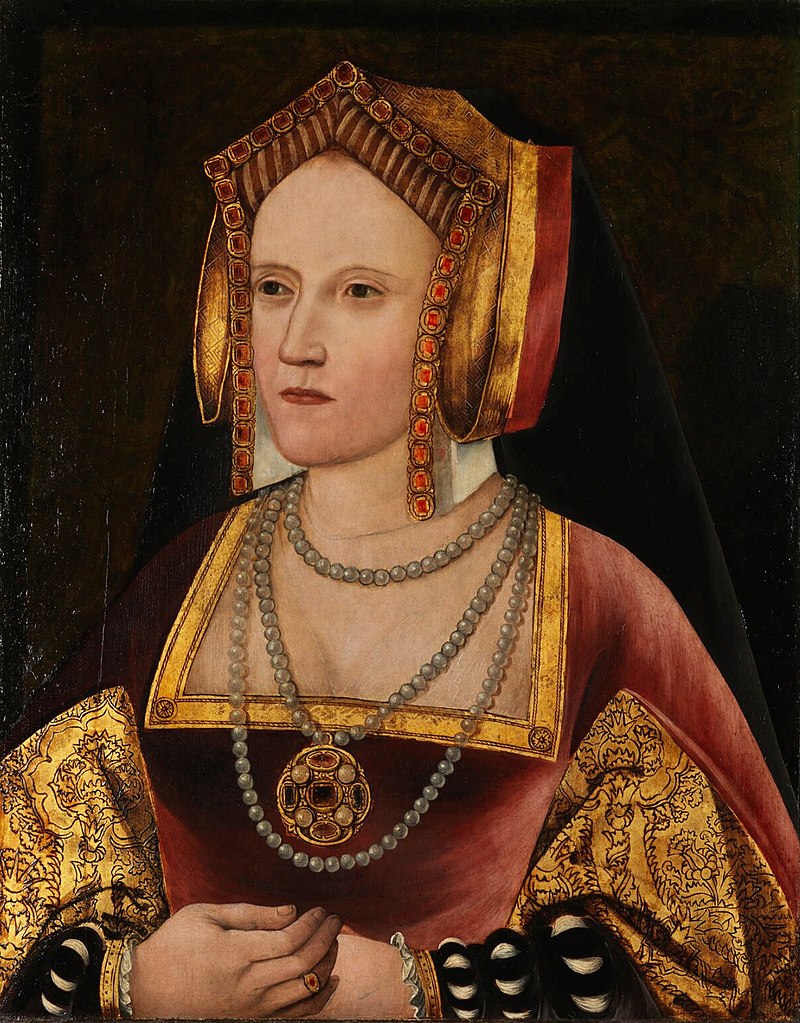
A contemporaneous portrait of Catherine of Aragon, Queen of England. Artist unknown (c. 1520). The matter of the annulment of her marriage to King Henry VIII would turn out to be a far bigger issue than Clement VII probably ever realized. Source: Lambeth Palace, London.

Transcript

When Emperor Charles V learned that his unpaid troops had torn apart Rome, he ordered his court to dress in black, as if mourning the death of a member of the imperial family. I have no doubt that Charles was sincere. After all, he was a devout Catholic, and he had put some effort into avoiding this very outcome. However, he was still a ruler, and he had practical reasons to lament this outcome as well. In modern terms, the Sack of Rome was a massive PR disaster for the imperial cause. It galvanized the League of Cognac. The imperial army looked like a pack of heretical barbarians. Even Henry VIII of England, who at this point was still loyal to the Pope, joined the alliance against the emperor.

Categories
season three

Episode 46 – The Sack of Rome

Pope Clement tries once more to loosen Emperor Charles V’s grip on Italy, another revolution in Florence is narrowly avoided through one man’s incompetence, and the stage is set for one of modern history’s most notorious war-time atrocities.

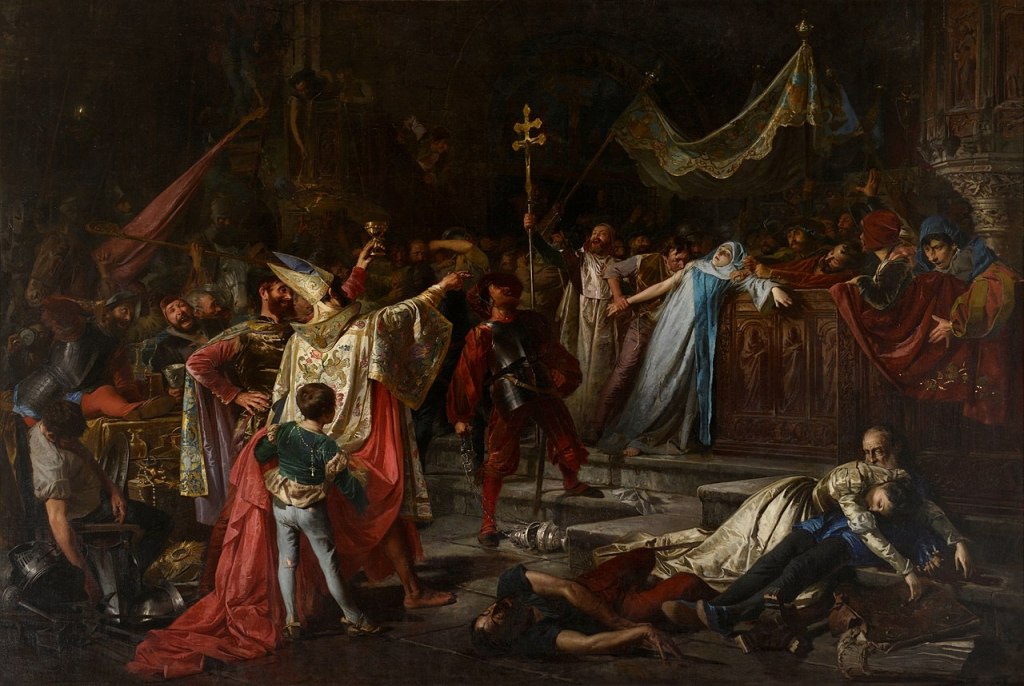
Dirck Volckertsz, “Sack of Rome in 1527 and the Death of Charles III, Duke of Bourbon” from The Victories of Charles V (1555/1556). Source: British Museum, London.
Francisco Javier Amérigo, The Sack of Rome (1884). Source: Victor Balaguer Museum & Library, Vilanova i la Geltrú, Catalonia, Spain.
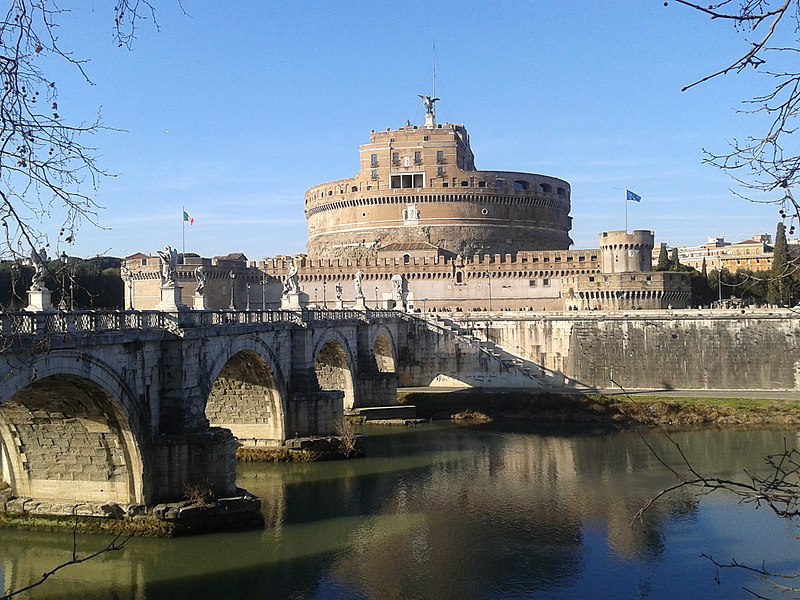
The Castel Sant’Angelo or the Mausoleum of Hadrian, where Pope Clement VII had to spend a nightmarish month taking shelter with 3,000 Roman civilians during the sack. Source: 0x010c on Wikimedia.

One-Time
Monthly
Yearly

Make a one-time donation

Make a monthly donation

Make a yearly donation

Choose an amount

$5.00
$15.00
$100.00
$5.00
$15.00
$100.00
$5.00
$15.00
$100.00

Or enter a custom amount

$

Your contribution is appreciated.

Your contribution is appreciated.

Your contribution is appreciated.

DonateDonate monthlyDonate yearly

Transcript

The Florentine Luigi Guicciardini, the brother of the more famous historian Francesco, was an eye witness to one of the darkest chapters in the history of the city of Rome. In his account of what happened to the city, he wrote, “All the sacraments of the modern Church were scorned and vilified as if the city had been captured by Turks or Moors or some other barbarous and infidel enemy.” Another eyewitness, Marino Sanuto, more succinctly wrote in his diary, “’Hell itself was a more beautiful sight to behold.” This was the Sack of Rome of 1527. It was certainly worse than the four times Rome was sacked in late antiquity and the Middle Ages, including the infamous pillaging of the city by Vandals in 410. In those times, the marauders still followed prevailing rules of warfare. Either that or Rome was so depopulated it was little more than a village or a small town. 1527 was something different, more akin to the atrocities we read about in the annals of the 20th century history. In fact, arguably it wasn’t just pillaging at all; it was an outburst of mass rage directed at a civilian population that was allowed to go on for not just days or weeks, but months.   

Categories
season three

Episode 45: The Edge of the Abyss

Clement VII brings back the artistic glories of Renaissance Rome, but disaster for himself, his family, and for Rome looms overhead. 

The Baptism of Constantine I (1517-1524) . It is part of a series of frescos started during the pontificate of Leo X and continued under Clement VII on the life and conversion of Emperor Constantine I by Giulio Romano and Giovan Francesco Panini. Pope Clement is included in the painting as Pope Sylvester. Source: The Apostolic Palace, Vatican City.
One-Time
Monthly
Yearly

Make a one-time donation

Make a monthly donation

Make a yearly donation

Choose an amount

$5.00
$15.00
$100.00
$5.00
$15.00
$100.00
$5.00
$15.00
$100.00

Or enter a custom amount

$

Your contribution is appreciated.

Your contribution is appreciated.

Your contribution is appreciated.

DonateDonate monthlyDonate yearly

Transcript

At first Giulio wanted to just use a version of his own name as a papal title, which would have made him Pope Julius III. It also would have kept with the tradition of Renaissance Popes adopting names that invoked the great heroes of Greek, Roman, and Byzantine history, like Alexander, Hadrian, and Leo. However, Clement was instead convinced by his advisors to choose a different papal name. I couldn’t find a source explaining exactly why Pope Clement chose the name that he did. One theory is that he did so to signal that he would be merciful to his enemies like Cardinal Soderini. In fact, despite Soderini’s involvement in the Cardinal Plot against Leo X, Clement did in 1521 allow Soderini to return to Rome, although perhaps it was at least in part a practical decision to stop him from getting up to too much mischief in Florence. Another, more likely theory is that Clement chose the name because at one point in his career climbing up the church hierarchy he was once the priest at the Church of Saint Clement in Rome. Personally I wonder if it might have been meant at least a little to be a sly if elaborate shot at Emperor Charles V, since Pope Clement I was according to legend imprisoned under the orders of the first century Roman Emperor Trajan. Even if it wasn’t intentional, later events would prove the connection to be ironic.

Categories
season three

Episode 44: Interregnum

After Leo X’s sudden death, the Medici are briefly out of power in the papacy. In the meantime, Emperor Charles V changes the landscape of European politics by getting elected as Holy Roman Emperor, and the fate of the Medici family is put in the hands of an orphaned, illegitimate son.

A 1528 portrait of Giulio de’ Medici, Pope Clement VII, by Sebastiano del Piombo. Source: J. Paul Getty Museum, Los Angeles, California.

Transcript

Since I didn’t want to risk adding more to the overstuffed narrative, I did just slide over what I think was one of the most important political events of the sixteenth century: the election of King Charles of Spain as Emperor Charles V of the Holy Roman Empire. It might just seem like icing on the cake from Charles’ point of view. What, being Archduke of Austria, Duke of Burgundy, and king of Castile and Aragon wasn’t enough, you had to be Holy Roman Emperor too? But to be fair Charles himself believed that if didn’t gain the imperial title, it would have been a risky situation. After all, the Holy Roman Emperor had historic claims on many of Charles’ titles in the Netherlands, and having an unfriendly emperor would even threaten the Hapsburg ownership of their own heartland, Austria. That definitely would have been the outcome if that emperor also happened to be the king of France. With the encouragement of the Elector of Brandenburg and the Elector of Saxony, King Francois threw his own crown in the ring. France wasn’t part of the Holy Roman Empire, but in the past foreign princes had run for the office and had come very close to claiming it, like the English prince Richard of Cornwall who was elected King of the Germans, but was never actually crowned emperor, in the thirteenth century.

Categories
season three

Episode 42: The Orphan

A new Medici is born amidst tragedy, Pope Leo struggles with the threats posed by France, Spain, and the Holy Roman and Ottoman empires and a deadly conspiracy close to home, and an obscure monk and university lecturer in Germany starts to inspire a bit of controversy. 

A portrait possibly of Madeleine de La Tour d’Auvergne, the mother of Catherine de’ Medici and wife of Lorenzo “the Younger.” Date unknown. Source: Uffizi Gallery.

Transcript

The last we saw Pope Leo X he had just betrayed his mentor and predecessor, Pope Julius, by ousting Julius’ nephew Francesco Maria from the duchy of Urbino and giving the duchy instead to Leo’s own nephew Lorenzo. But a few modern historians and Leo’s contemporaries agreed that he had also betrayed Julius by not doing enough to, as Julius would say, drive the barbarians out of Italy. But honestly while taking Urbino from its rightful duke was an undisputable blunder, I don’t think Leo can really be blamed for the rest of his foreign policy. He was stuck between a French rock and an imperial hard place, especially now that Spain and the Holy Roman Empire was practically ruled by the same family.

Categories
season three

Episode 40: New World Order

We look at Pope Leo X’s reign, from how he got an edition of a pivotal Jewish text dedicated to him to the elaborate practical joke he engineered involving his pet elephant and an old-fashioned Roman triumph. But Leo also has to face the fact that  the fate of Europe now lays in the hands of three young, ambitious, and powerful monarchs. 

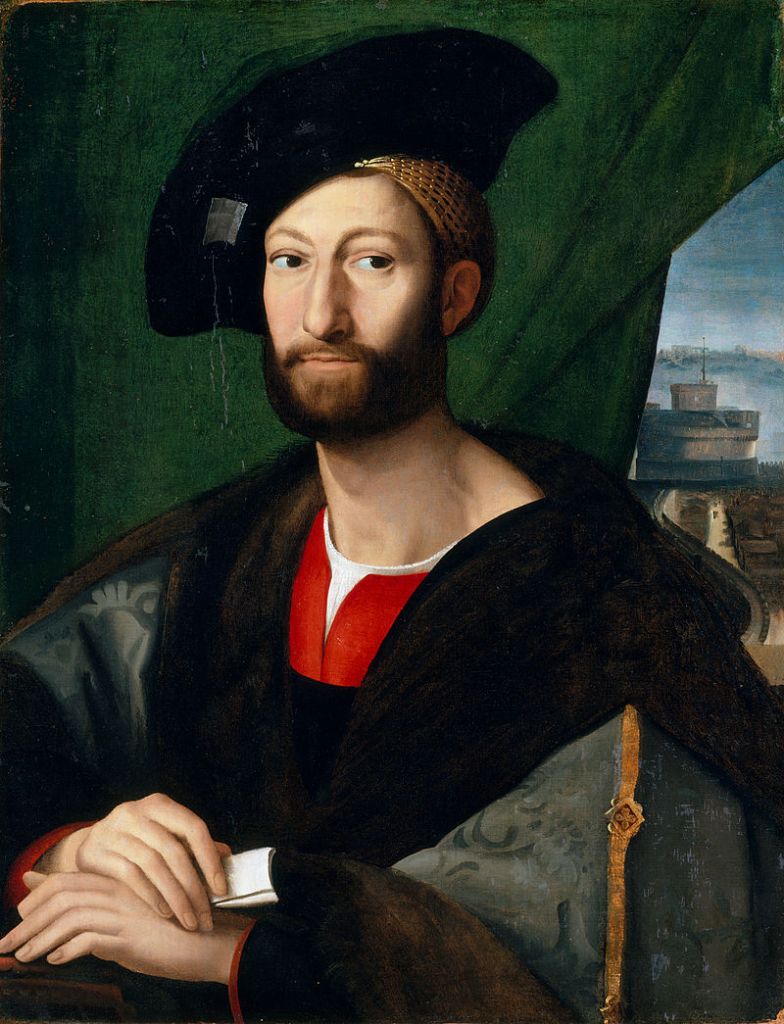
A portrait of Giuliano de’ Medici, duc de Nemours, who was Lorenzo the Magnificent’s youngest son (c. 1515) by Raphael’s workshop. Source: The Metropolitan Museum of Art, New York City.
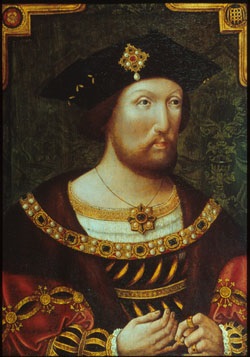
King Henry VIII as a young man. Date and artist unknown. Source: National Portrait Gallery, London.
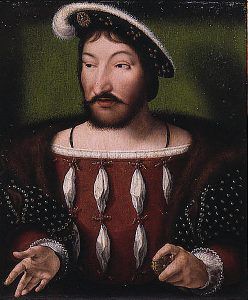
King François I of France (c. 1530) from the workshop of Joos van Cleve. Source: Private collection.
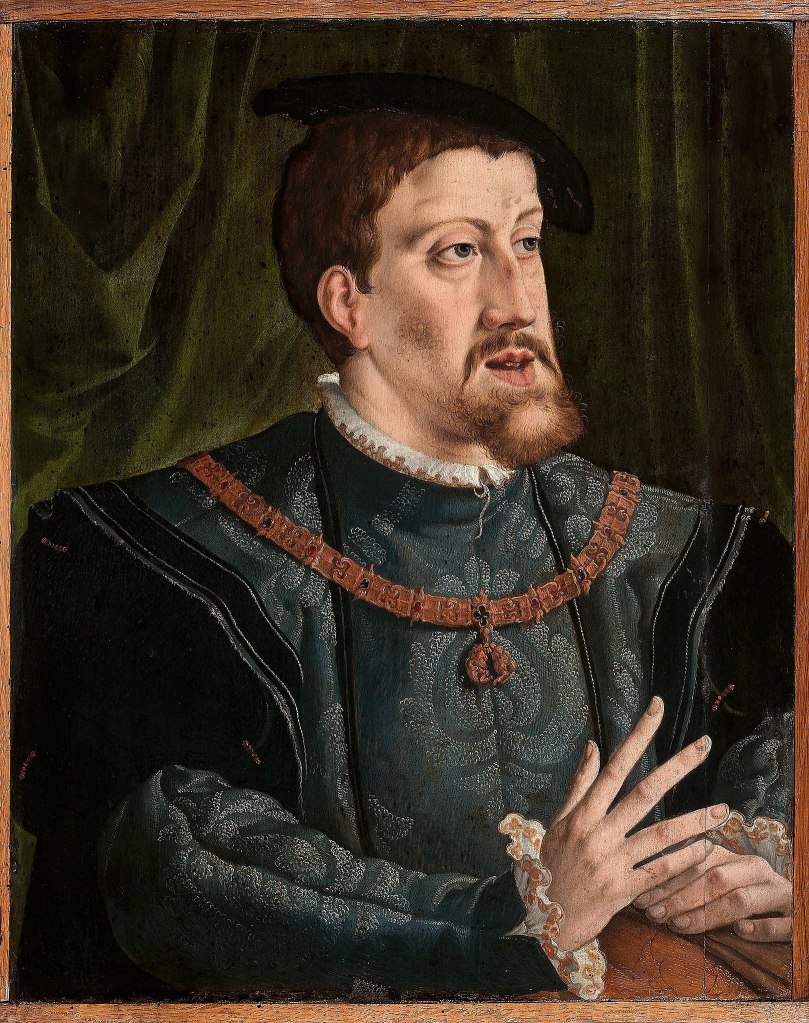
Portrait of Emperor Charles V as a young man by Jan Cornelisz Vermeyen (1535). Source: Private collection.

Transcript

When last we left Giovanni de’ Medici, he had exceeded even his father’s wildest ambitions by becoming Pope Leo X. So, from here on out, we’ll start to refer to him as Leo. There’s too many Giovannis in the story of the Medici anyway.

Categories
season three

Episode 39: The Lion of God

The unlikely partnership between the bookish, affable Giovanni de’ Medici and the rough-and-tumble Pope Julius II will finally bring the Medici back to power and set the stage for Giovanni’s turn as Pope Leo X, which would prove to be one of the most consequential papal reigns in history for reasons no one could have predicted.

A contemporaneous portrait of Giuliano della Rovere, Pope Julius II, by Raphael (1511). Despite their very different personalities, Pope Julius was Giovanni de’ Medici’s mentor and biggest benefactor, playing an essential role in the Medici’s restoration. Source: The National Gallery, London.

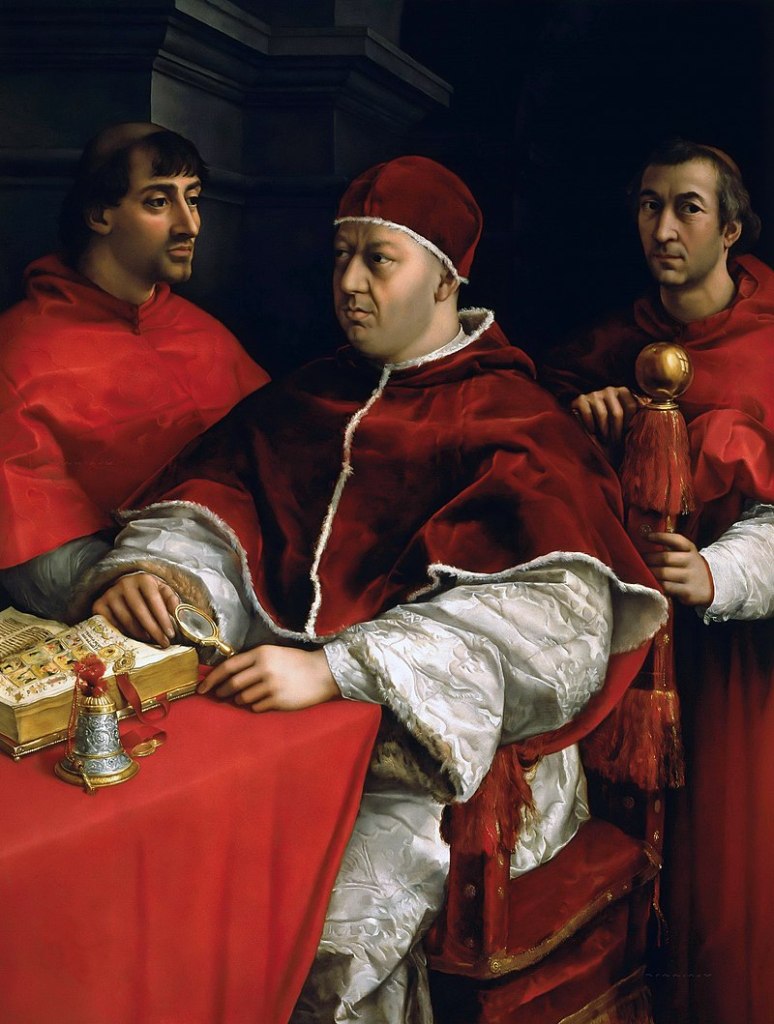
Raphael’s portrait of Pope Leo X with his cousins, Giulio de’ Medici (the future Pope Clement VII) and Luigi de’ Rossi, who were both cardinals (1518). Source: Uffizi Gallery, Florence.

Sketches of Hanno the Elephant by Giulio Romano (c. 1515). Hanno proved to be the most popular attraction at Leo X’s coronation and essentially became the Pope’s pet.

Transcript

According to a story, when Lucrezia was about to give birth to her son Giovanni, she had a dream that she gave birth to a lion. You don’t have to be all that skeptical to suspect this account is probably apocryphal. Still, there’s a tinge of truth in that Giovanni de’ Medici did end up becoming the hero that saved the future of the family. That much his father, Lorenzo the Magnificent, glimpsed when he boasted that making Giovanni a cardinal was his greatest achievement.

Categories
season three

Episode 37: The Exile

Still in exile, Piero de’ Medici throws himself on the mercy of the new king of France and Cesare Borgia. But will they prove to be reliable friends?


“Bayard on the Bridge of Garigliano”, a painting depicting the Battle of Garigliano (December 29, 1503) by Félix Henri Emmanuel Philippoteaux (1840). Source: Palais de Versailles.
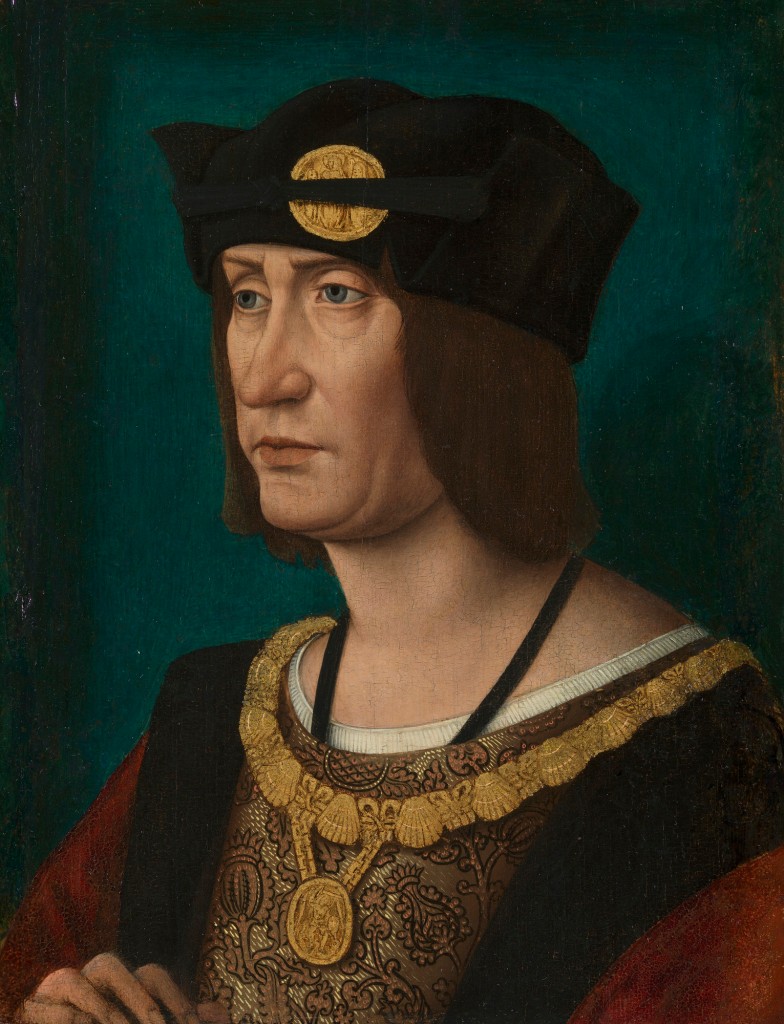
A contemporaneous portrait of King Louis XII of France from the workshop of Jean Perréal (c. 1514). Source: The Royal Collection at Hampton Court Palace.

Transcript

While Savonarola rose to power, Piero remained in Venice, gambling away what little money he got from loans off of Medici sympathizers or made working for Venice as an army captain. But still, Piero remained optimistic. He believed, especially after Savonarola’s downfall, that either the Pope, the Duke of Milan, or the Doge of Venice would force Florence to allow him to return home. And he still insisted to his allies that he would “return not as a lord, but as a citizen.”  What would happen after that…well, personally I suspect Piero didn’t give that much thought beyond his first night where he would, as he put it, enjoy some grapes back in the Palazzo Medici. Unfortunately, Venice and Florence signed a peace treaty on April 1499 which secured the release of Piero’s brother Cardinal Giovanni, who had been captured and imprisoned. However, the clauses of the treaty did not include any provision for the Medici’s return to Florence.

Categories
season three

Episode 36: The Tigress and the Popolano

This time, we check in on the sons of Pierfrancesco de’ Medici, the brothers Popolano, Lorenzo and Giovanni. While Lorenzo tried to play a small, non-partisan role in Florence’s new government, Giovanni fell in love with one of the most famous and daring women of the Renaissance.

“La dama dei gelsomini” (“The Lady of Jasmine”) by Lorenzo di Credi, date unknown. It is believed to be a contemporaneous portrait of Caterina Sforza. Source: The Picture Gallery of Forli.
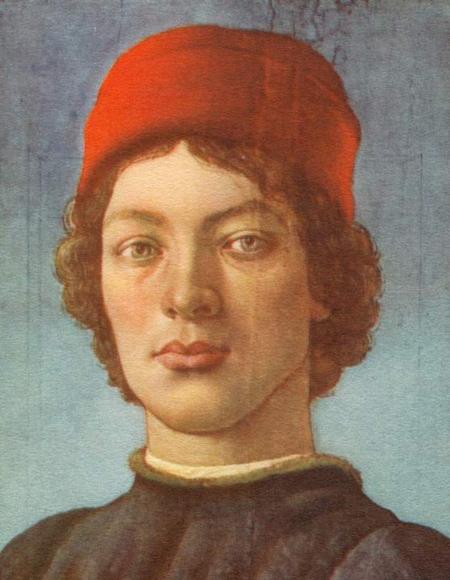
A portrait by Filippino Lipi thought to possibly be of Giovanni di Pierfrancesco “il Popolano” (ca. 1490). Source: U.S. National Gallery of Art.
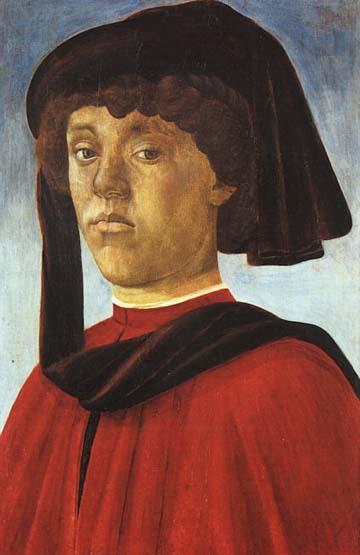
A portrait of Lorenzo di Pierfrancesco “il Popolano” by Sandro Botticelli (1479). Source: Pitti Palace, Florence.

Transcript

Before we finally return to Piero de’ Medici, we need to check in on his cousins, the sons of Pierfrancesco, Lorenzo and Giovanni. They’re not to be confused with Lorenzo the Magnificent or any of the other Giovannis in the Medici family, which is one of the reasons I’m mostly only talking about them in their own episode. Plus honestly not much happened with the two after they plotted against Piero, becoming exiled, and then trying to ingratiate themselves with King Charles of France.

Categories
season three

Episode 35: Trial By Ordeal

We conclude Savonarola’s story by looking at why one of his most fervent followers decided to try to shut up the growing criticism of Savonarola by resorting to an obsolete medieval ritual and how that decision backfired catastrophically. 

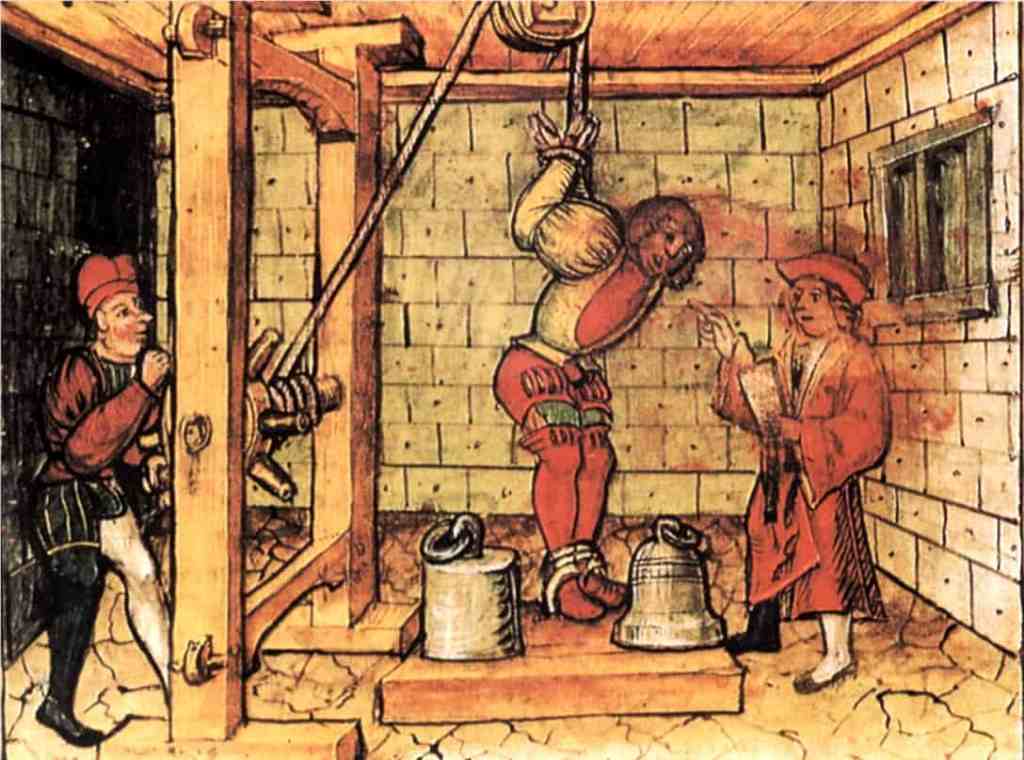
An illustration by Hans Spiess of the strappado, the torture device used on Girolamo Savonarola. 1513. Source: The Chronicle of Lucerne, the Burger Library of Lucerne.
A contemporaneous painting of the executions of Girolamo Savonarola, Domenico da Pescia, and Silvestro Maruffi (1498) by Filippo Dolciati. Source: Museo di San Marco, Florence.

Transcript

Just before his excommunication, Savonarola was at the top of the mountain. True, he had become not just an embarrassment but a liability because of his hostile relationship with the Pope. But he still had formidable political influence and was untouchable. No matter how many of his enemies the Arrabiatti got elected, none dared act against him out of fear that arresting him would cause a civil war or the collapse of the republic. But the mountain Savonarola stood on was turning into mud. Florence was still in an economic decline that would in some ways prove to be permanent, a plague was raging across Tuscany, and food prices were still high and would get even worse with another harsh winter in 1497-1498. Now Alexander’s excommunication didn’t knock Savonarola off the mountain, but to take the metaphor one step further, it was like turning a firefighter’s hose on an already increasingly slippery and muddy mountain.