Categories
season three

Episode 33: God’s Republic

Charles VIII marches on Naples not knowing a brand-new plague is waiting for him, the Medici adapt to the existence of the new republic in different ways, and Savonarola and his allies in government tighten their grip over Florence, even while Rodrigo Borgia closes in on Florence’s popular preacher.

Transcript

Savonarola never really ruled Florence. In fact, you couldn’t even say that he had an invisible throne like the Medici did. But his sermons captivated his audiences with how they shifted gracefully from apocalyptic thunder to gentle cries for social reform, and as a result he had a great deal of influence over both the average people and the elites. As much as Savonarola owed to his skills as a preacher, he was also lucky enough to have a chance to hedge his bets on King Charles VIII of France. As Florence and Savonarola were about to christen their reformed republic, Charles was marching on Rome to face Pope Alexander VI, and it still seemed like King Charles really would reform the papacy itself.

Categories
season three

Episode 32: The Friar and the King

Piero de’ Medici is gone, and a new rising star is a hotshot preacher named Girolamo Savonarola. Once an itinerant preacher and lecturer, Savonarola now finds himself hobnobbing with King Charles VIII of France and even having a say in Florence’s newly rebuilt, Medici-free republic. 

The only known contemporaneous portrait of Girolamo Savonarola (1497 or 1498) by Fra Bartolomeo. Source: Museo di San Marco, Firenze.
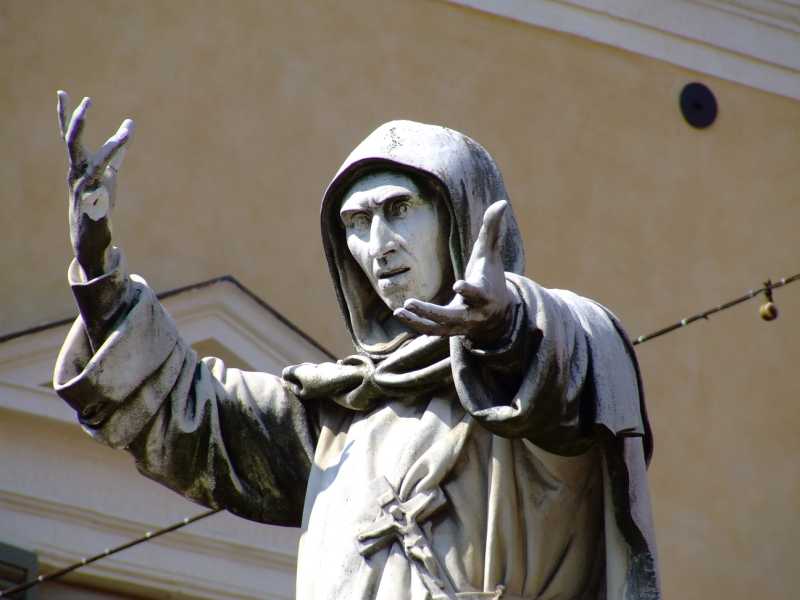
A statue of Girolamo Savonarola in the Palazzo Savonarola in Ferrara (1875) by Stefano Galletti. Source: Dominican Friars of England, Wales, and Scotland website.

Transcript

Today, we’re leaving behind the Medici golden age. This episode marks the start of a new season, the Holy Family. It’s an era that begins with the Medici being driven out of their home city. By rights they should have faded into obscurity. Yet, ironically, this will be the time when they really left their mark on European and even world history. A Medici would assume the role of antagonist in a little tiff you might have heard of called the Protestant Reformation. The family would also, like that other great Italian family the Borgias, take a part in the story of how the golden age of the Italian city-states drew to a close and how Italy would lose much of its independence to the great powers of Europe for roughly 300 years. Basically, this season is about how a dynasty stripped of political power and the bank they founded and driven into exile just simply refused to step off the stage of history.

Categories
season two

Episode 31: The Flood Comes

Piero doesn’t get to enjoy being the de facto lord of Florence for long before he has to deal with an impending French invasion of Italy. He decides to imitate his father’s boldest move, which would surely work…won’t it?

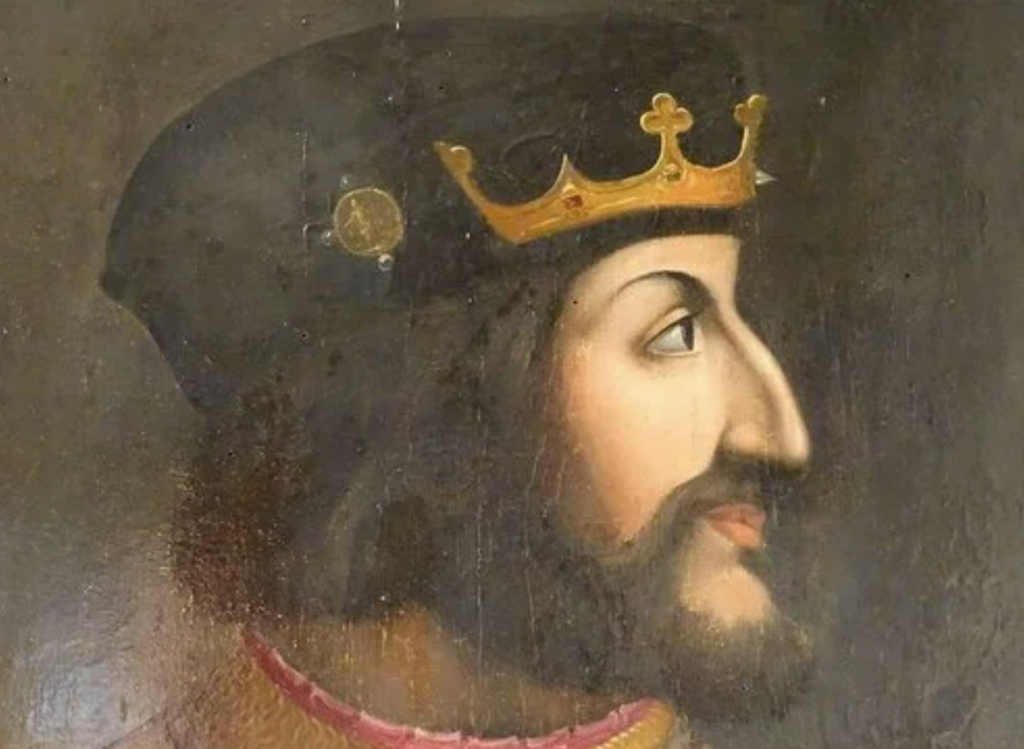
A portrait of King Charles VIII of France. Artist unknown. Uffizi Galleries, Florence.

Transcript

The birth of the future King Charles VIII of France was even more celebrated than that of a normal heir. His father, King Louis XI of France, had two daughters, but by that time it would have been impossible even for their domineering father to have them accepted as his successors. Under what was called the Salic Law, daughters could not inherit the French throne. This law took its name from the Salian Franks, the Germanic people that first established the kingdom of France and gave it its name. In truth, the Salic Law just took its name from an old sixth century law that regulated property inheritance and had nothing to do with royal succession. But in the early fourteenth century it was a convenient excuse for King Felipe V to claim the throne instead of his elder brother’s daughter Jeanne. The excuse became even more convenient when King Edward III of England used the claim to the French throne he inherited through his mother to justify his invasion of France. By Louis XI’s time, the Salic Law was firmly locked in place. So without a son the crown would pass over his hated cousin and rival, Louis d’Orleans. However, since the day he was born to the happy parents Louis XI and his queen Charlotte of Savoy, Charles VIII was sickly. No wonder Louis XI was so afraid for his son’s survival that he kept him isolated and micromanaged his son’s governors.

Categories
season two

Episode 26: The Private Life and Patronage of Lorenzo de’ Medici

The Lorenzo we see from his voluminous letters is a man who had a short temper and bouts of depression, but was also capable of tremendous compassion and generosity. Unfortunately, his relationships with his own wife and sons were perhaps less than ideal.

Transcript

So you may have noticed I focused on Lorenzo’s activities as a politician, and not as a patron. This is despite the fact that Lorenzo is the rare historically celebrated leader who is actually better known for his activities in the cultural sphere than his political career. Now that we hit a point in our story where Lorenzo is basking in his victories over Pope Sixtus and is for the first time in a long time secure, I want to hit pause and look at Lorenzo as a family man and then as the head of a vast patronage network that made Florence one of the cultural capitals of Europe.