
Pope Clement tries once more to loosen Emperor Charles V’s grip on Italy, another revolution in Florence is narrowly avoided through one man’s incompetence, and the stage is set for one of modern history’s most notorious war-time atrocities.

Make a one-time donation
Make a monthly donation
Make a yearly donation
Choose an amount
Or enter a custom amount
Your contribution is appreciated.
Your contribution is appreciated.
Your contribution is appreciated.
DonateDonate monthlyDonate yearlyTranscript
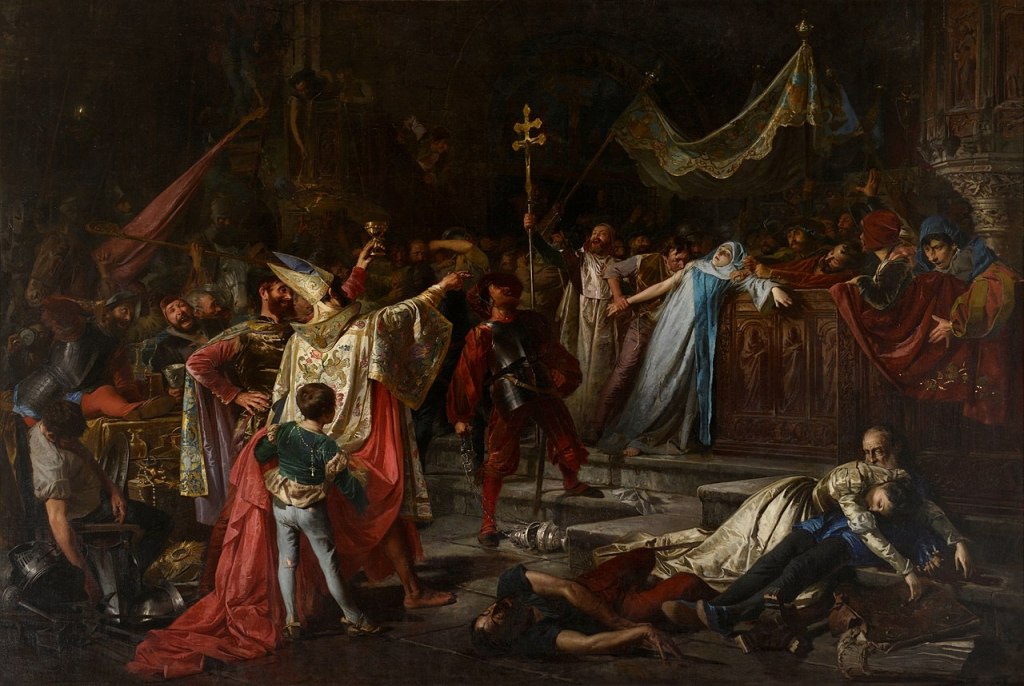
The Florentine Luigi Guicciardini, the brother of the more famous historian Francesco, was an eye witness to one of the darkest chapters in the history of the city of Rome. In his account of what happened to the city, he wrote, “All the sacraments of the modern Church were scorned and vilified as if the city had been captured by Turks or Moors or some other barbarous and infidel enemy.” Another eyewitness, Marino Sanuto, more succinctly wrote in his diary, “’Hell itself was a more beautiful sight to behold.” This was the Sack of Rome of 1527. It was certainly worse than the four times Rome was sacked in late antiquity and the Middle Ages, including the infamous pillaging of the city by Vandals in 410. In those times, the marauders still followed prevailing rules of warfare. Either that or Rome was so depopulated it was little more than a village or a small town. 1527 was something different, more akin to the atrocities we read about in the annals of the 20th century history. In fact, arguably it wasn’t just pillaging at all; it was an outburst of mass rage directed at a civilian population that was allowed to go on for not just days or weeks, but months.








 The Medici Podcast