Categories
season three

Episode 37: The Exile

Still in exile, Piero de’ Medici throws himself on the mercy of the new king of France and Cesare Borgia. But will they prove to be reliable friends?


“Bayard on the Bridge of Garigliano”, a painting depicting the Battle of Garigliano (December 29, 1503) by Félix Henri Emmanuel Philippoteaux (1840). Source: Palais de Versailles.
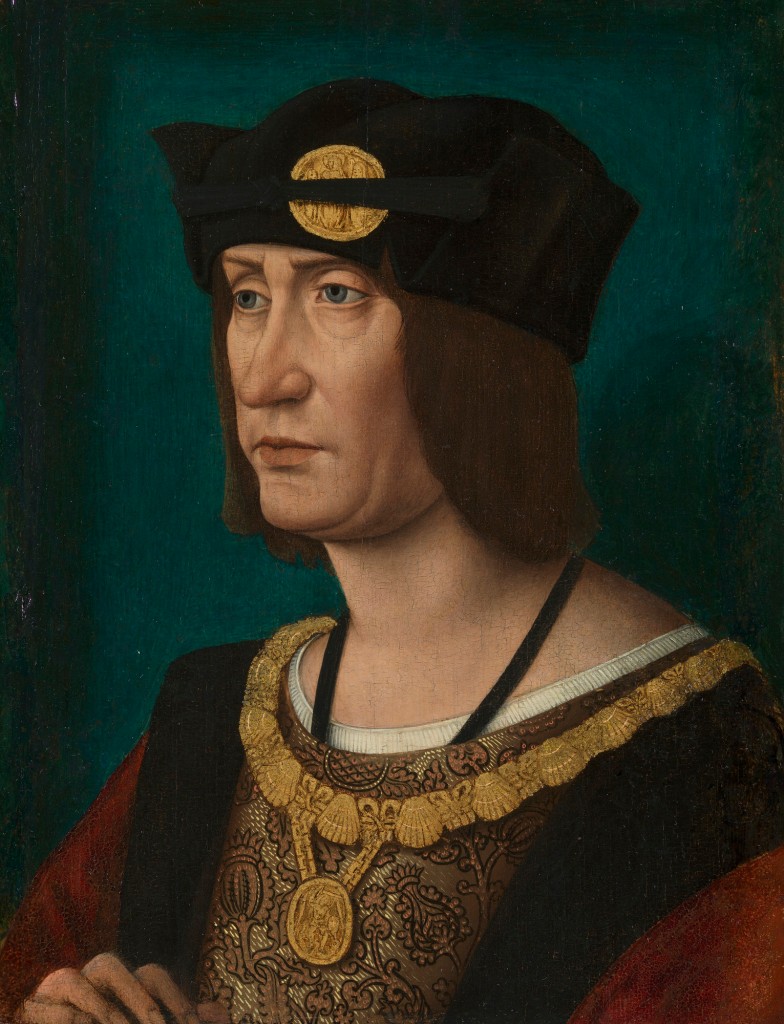
A contemporaneous portrait of King Louis XII of France from the workshop of Jean Perréal (c. 1514). Source: The Royal Collection at Hampton Court Palace.

Transcript

While Savonarola rose to power, Piero remained in Venice, gambling away what little money he got from loans off of Medici sympathizers or made working for Venice as an army captain. But still, Piero remained optimistic. He believed, especially after Savonarola’s downfall, that either the Pope, the Duke of Milan, or the Doge of Venice would force Florence to allow him to return home. And he still insisted to his allies that he would “return not as a lord, but as a citizen.”  What would happen after that…well, personally I suspect Piero didn’t give that much thought beyond his first night where he would, as he put it, enjoy some grapes back in the Palazzo Medici. Unfortunately, Venice and Florence signed a peace treaty on April 1499 which secured the release of Piero’s brother Cardinal Giovanni, who had been captured and imprisoned. However, the clauses of the treaty did not include any provision for the Medici’s return to Florence.

Categories
season three

Episode 32: The Friar and the King

Piero de’ Medici is gone, and a new rising star is a hotshot preacher named Girolamo Savonarola. Once an itinerant preacher and lecturer, Savonarola now finds himself hobnobbing with King Charles VIII of France and even having a say in Florence’s newly rebuilt, Medici-free republic. 

The only known contemporaneous portrait of Girolamo Savonarola (1497 or 1498) by Fra Bartolomeo. Source: Museo di San Marco, Firenze.
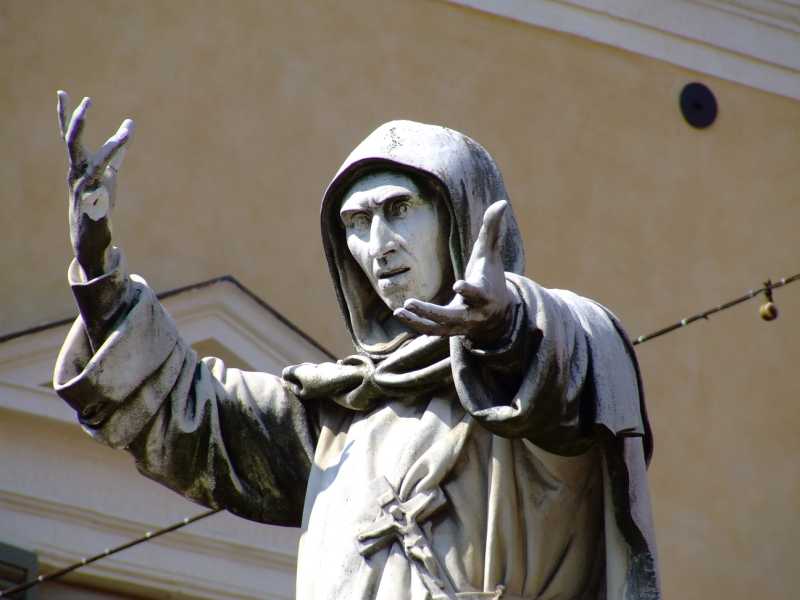
A statue of Girolamo Savonarola in the Palazzo Savonarola in Ferrara (1875) by Stefano Galletti. Source: Dominican Friars of England, Wales, and Scotland website.

Transcript

Today, we’re leaving behind the Medici golden age. This episode marks the start of a new season, the Holy Family. It’s an era that begins with the Medici being driven out of their home city. By rights they should have faded into obscurity. Yet, ironically, this will be the time when they really left their mark on European and even world history. A Medici would assume the role of antagonist in a little tiff you might have heard of called the Protestant Reformation. The family would also, like that other great Italian family the Borgias, take a part in the story of how the golden age of the Italian city-states drew to a close and how Italy would lose much of its independence to the great powers of Europe for roughly 300 years. Basically, this season is about how a dynasty stripped of political power and the bank they founded and driven into exile just simply refused to step off the stage of history.

Categories
season two

Episode 17: The Invisible Throne

Cosimo de’ Medici quickly established a regime that operated within Florence’s constitution but gave Cosimo an almost unchallenged power over the state. Unfortunately, Cosimo’s government was a delicate structure, and the pandemonium of Italian Renaissance politics threatened to bring it all tumbling down. 

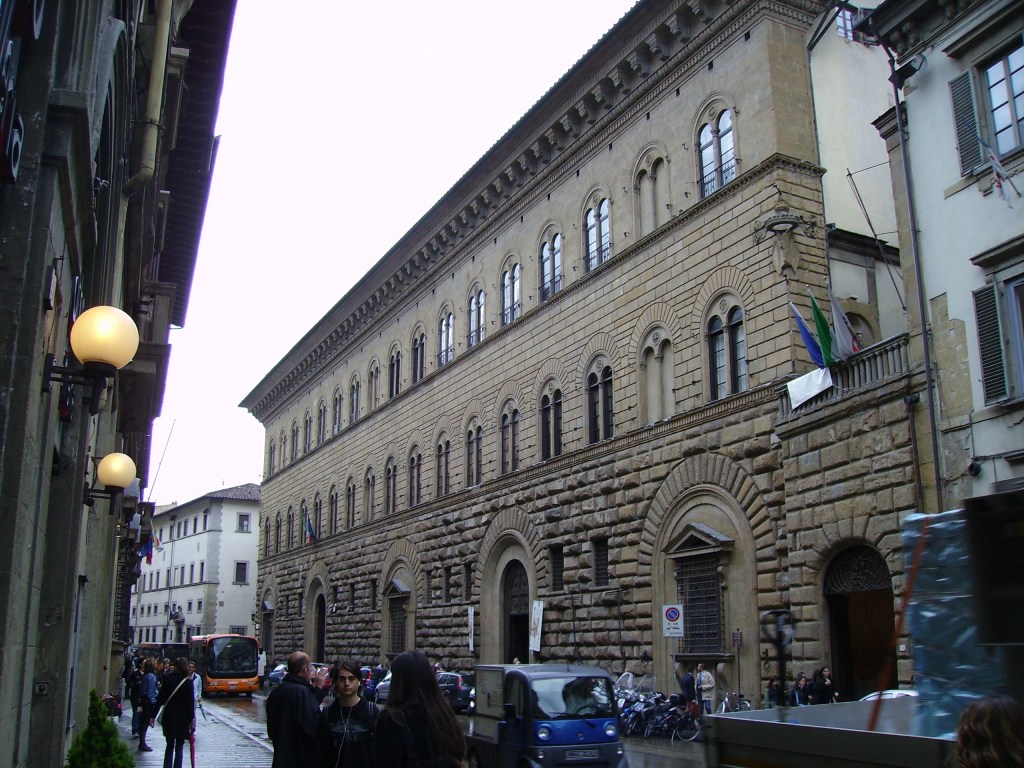
The exterior of the Palazzo Medici-Riccardi. Source: Yair Haklai, Wikicommons.
The interior of the Chapel of the Magi within the Palazzo Medici-Riccardi. Source: theflorentine.net.
A portrait of Francesco Sforza, Duke of Milan, former condottieri, and a key ally of Cosimo de’ Medici, by Bonifacio Bembo (c. 1460). He insisted on being painted wearing his battered and worn old campaigning hat.

Transcript

So, with that, let’s start by talking about the idea of an invisible throne and why Cosimo after his return from exile can be said to have one. By the time the Council of Florence was over, if not sooner, foreign leaders wrote to and talked about Cosimo de’ Medici as if he were the de facto ruler of Florence. This is rather remarkable because, unlike other Italian rulers, Cosimo never called himself or was called signore. Nor did he ever receive some kind of aristocratic title or was voted an office like dictator-for-life cementing his power. In fact, in the decades between Cosimo’s triumphant return and his death, for the most part commentators within Florence write and talk as if the republic was chugging along like always. Cosimo actually pushed only one major reform to the government, which we’ll get to this episode. Just by pulling the levers provided for him by the Florentine constitution and by his patronage network, Cosimo made himself the all but unchallenged ruler of one of the richest regions of Europe. Cosimo’s regime was for the most part so subtle and was managed so indirectly that even now modern historians have trouble determining exactly what decisions made by the official political leaders of Florence were actually their initiative or if they were acting entirely on behalf of Cosimo.

Categories
season one

Episode 12: The Founder of the Dynasty

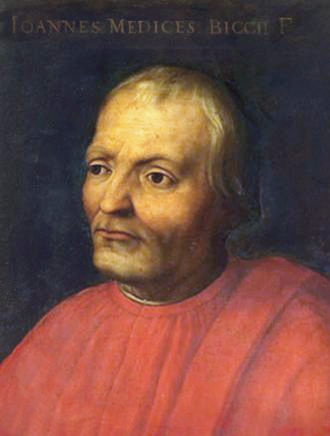
Portrait of Giovanni di Bicci de’ Medici (c. 1563) by Cristofano dell’Altissimo. Source: Palazzo-medici.it.

We close out Season 1, “The Early Medici”, with a look at the life and death of Giovanni di Bicci de’ Medici, whose descendants would become the branch of the family we usually mean when we talk about the Medici. Not only is he the first prominent member of the family, however, he also founded the dynasty in the sense that he started the tradition of sponsoring forward-thinking artists, writers, and architects and in how his apparent reluctance to be a public figure actually inspired a formula for political success that would carry his descendants to greater heights than even his more ambitious forebears could have imagined. 

Support us on Patreon, through Venmo at @ Chad-Denton-15, or through a donation below.

One-Time
Monthly
Yearly

Make a one-time donation

Make a monthly donation

Make a yearly donation

Choose an amount

¤5.00
¤15.00
¤100.00
¤5.00
¤15.00
¤100.00
¤5.00
¤15.00
¤100.00

Or enter a custom amount

¤

Your contribution is appreciated.

Your contribution is appreciated.

Your contribution is appreciated.

DonateDonate monthlyDonate yearly

Transcript

While I talked about how Giovanni de Bicci dei Medici reaped the benefits from his relationship with the sketchy soldier turned rival pope John XXIII, the rest of the Medici family was not doing so well. The family remained committed to the populist cause. Unfortunately, the conservatives also remained firmly in power since the fall of Salvestro de’ Medici. As a result, various Medici along with members of other populist families were persecuted by the government, either barred from political office or exiled from the city. So, while we can’t know what his true political beliefs were, by making himself a low-key ally of the conservatives, Vieri de’ Medici was truly and literally saving himself and his family. Giovanni de Bicci would not follow in his cousin and fairy godfather’s footsteps. However, he would find his own savvy way of surviving the political whirlwind.

Categories
season one

Episode 9: Revolution

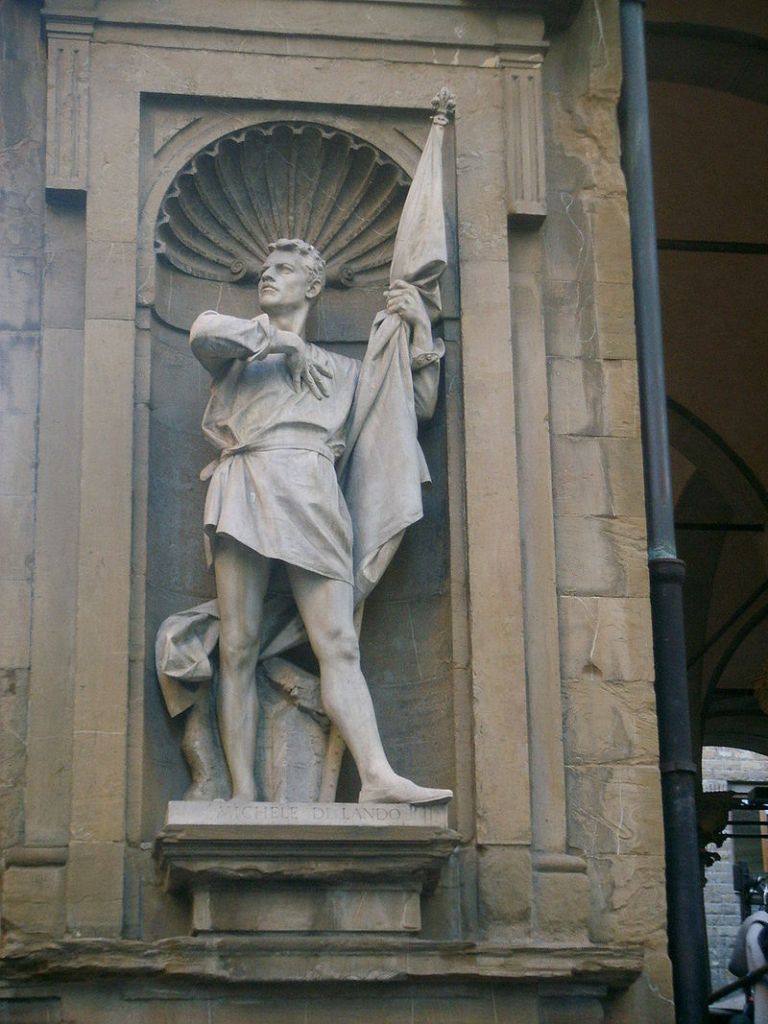
A statue of Michele di Lando in the Loggia del Mercato Nuovo. Source: Saliko via Wikimedia Commons.

After Salvestro de’ Medici helps stoke the flames of revolution, violence breaks out on the streets of Florence and a wool-comber is installed in the highest office of the republic. But who will really benefit from this proletariat revolt in the long term?

Transcript

Let’s start this episode with an exercise of imagination. Close your eyes, unless you’re driving or walking, in which case please don’t close your eyes, and try to imagine what it was like to be a poor laborer, earning a pittance from Florence’s cloth industry, sometime in the years following the Black Death.

Categories
season one

Episode 8: Unholy War

The papal palace at Avignon. Source: about-france.com.

In a time of simmering class tensions and growing exploitation of the poor, Salvestro de’ Medici turns against his conservative comrades and declares he’s on the side of the downtrodden. On his political agenda? Backing an all-out war against the Pope.

Transcript

As you probably expect from living in the 21st century, all those wages spiking up and workers getting the power to seek employment with different employers didn’t sit well with the rich. So, in the years following the original outbreak of the Black Death, there was a conservative retrenchment.

Categories
season one

Episode 6: King Walt

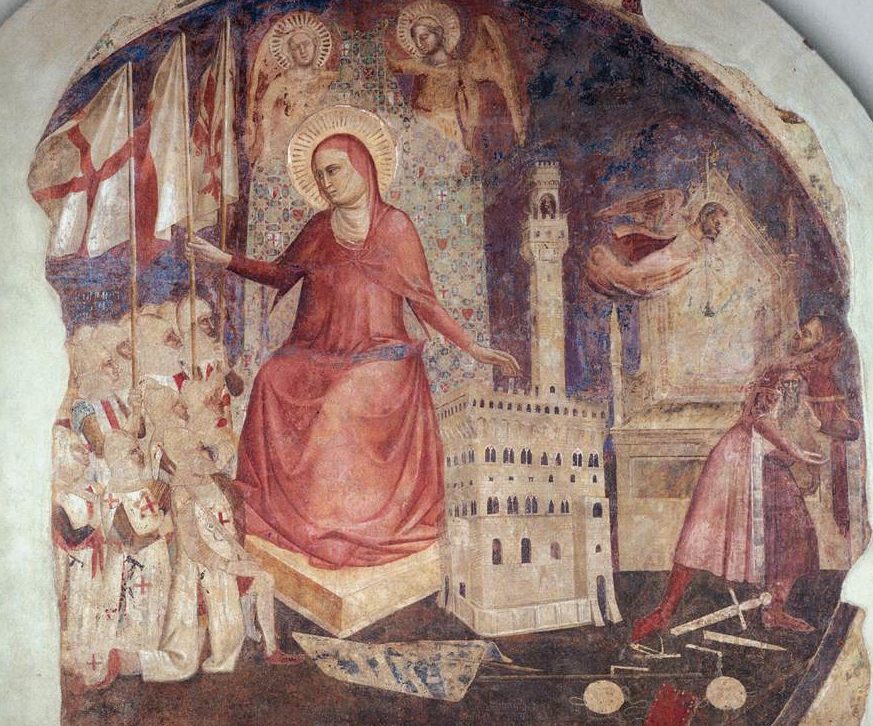
A fresco of St. Anne and the expulsion of Walter of Brienne, today in the Palazzo Vecchio.

Facing famine, plague, an unending war, and an economic recession, the Florentines resort to handing the keys over to a French nobleman with a glamorous but mostly empty title. Meanwhile the Medici, although still lurking in the shadows from our point of view, manage to establish themselves as populists during the chaos and violence to come.

Transcript

So I’ll fess up. The title of this episode is a bit of a flight of fancy. There never was a King Walter of Tuscany, although not from a lack of trying on Walter’s part. Walter started out as a signore of Florence, but he made a big push to become the lord of Florence. Quite possibly, his goal was to establish his own hereditary domain in Tuscany. Instead, Walter was sent packing, and Florence would never again experiment with inviting some foreigner to become signore.

Categories
season one

Episode 5: Boom Town

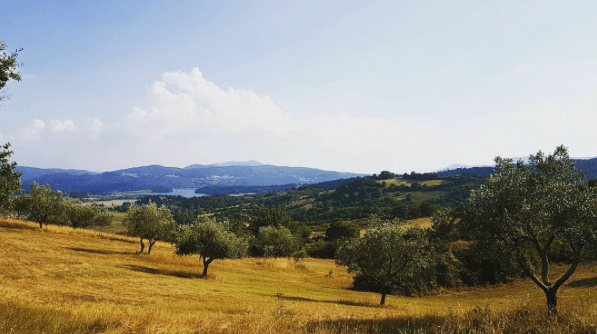
A picture of the Mugello Valley in Tuscany. Source: Christian Lorenz

Sometime before the dawn of the fourteenth century, a family named the Medici moved from a small village in the Mugello Valley in the Apennines to the bustling city of Florence. Eventually, they became successful bankers and one member was elected to the republic’s top office. They also jumped right into the city’s latest violent class and factional civil war. 

Transcript

Once upon a time, there was a courageous knight named Averardo. He fought well for Emperor Charlemagne, freeing Italy from the tyranny of the Lombards. While traveling through the Mugello Valley, he caught word of a giant who was terrorizing the people who lived there. Averardo challenged this Goliath to one-on-one combat. The giant tried to brain Averardo with his mace, but he lifted his golden shield at the pivotal moment, holding the shield so strongly that the mace shattered against it. However, it left the shield dented with the iron balls off the mace. Even with his shield damaged, however, Averardo was able to overpower and kill the cruel giant. Impressed by his feats, Charlemagne himself granted Averardo the right to use the dented shield, iron balls and all, as his family insignia. With that, Averardo graciously accepted the invitation of the people he liberated to settle in the valley. There, his descendants became known as the Medici family.