Categories
season two

Episode 14: Renaissance, The New

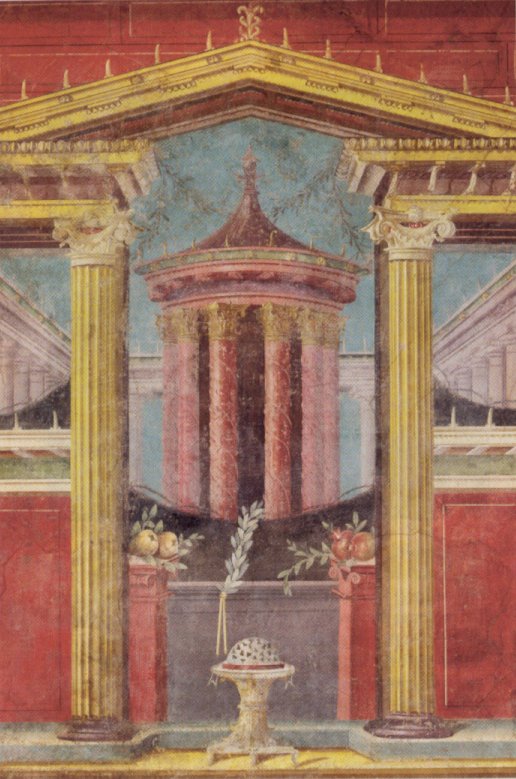
This first century BCE Roman fresco from the villa of Publius Fannius Synistor in Boscoreale in modern-day Naples, which demonstrates a partial use of vanishing point, a technique that would not be perfected until the Renaissance. Source: Metropolitan Museum of Art.
Giotto’s Crucifix (c. 1290-1300). Note the realistic details such as Jesus’ facial expression and the wound in his side. Source: The Tempio Malatestiano in Rimini, Italy.
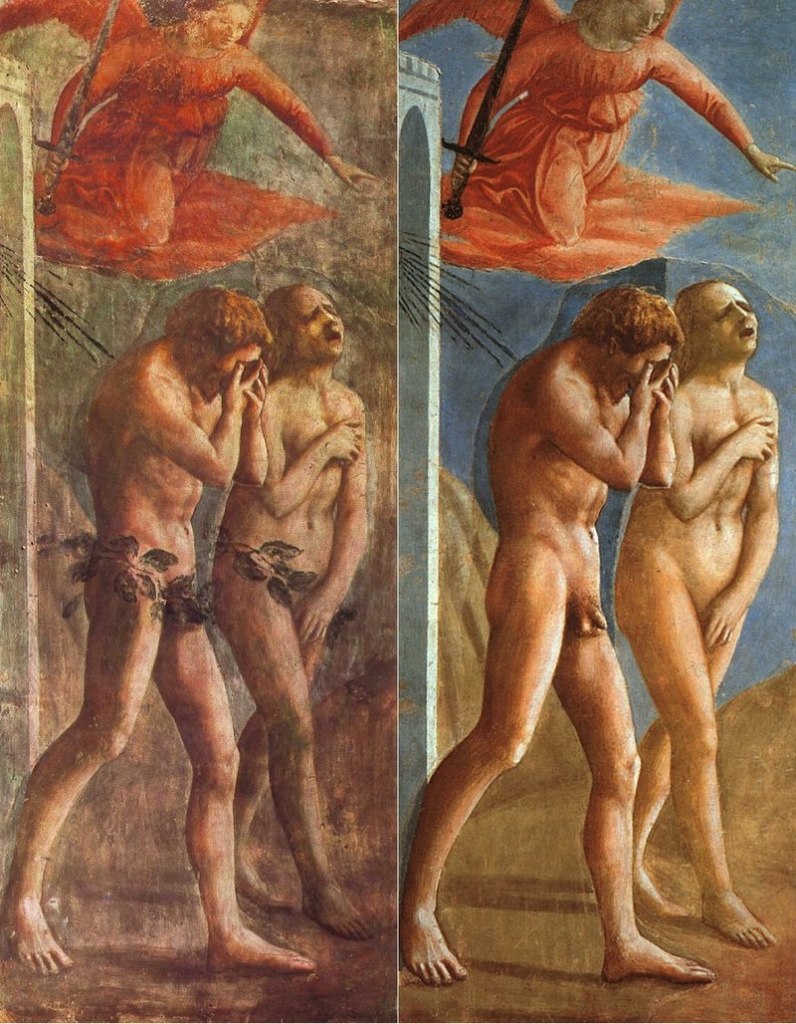
Masaccio, The Expulsion (c. 1426-1428). Note the fig leaves added to the version on the left, before they were removed with the 20th century restoration shown on the right. Source: Santa Maria del Carmine, Florence.
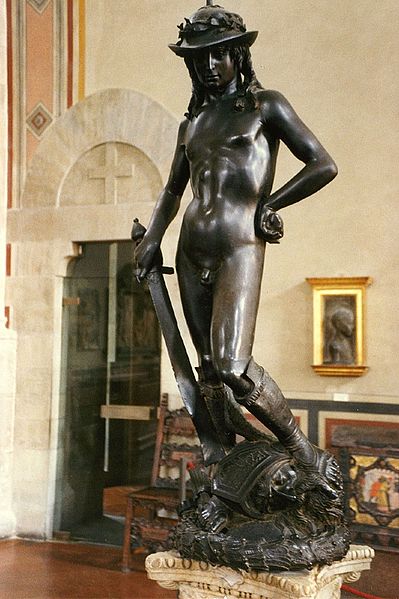
Donatello’s David (c. 1440s?), the first freestanding nude sculpture made in Europe since antiquity. Source: Patrick A. Rodgers, the Bargello, Florence.
The Monastery of Batalha in the Central Region of Portugal. Source: Waugsberg.
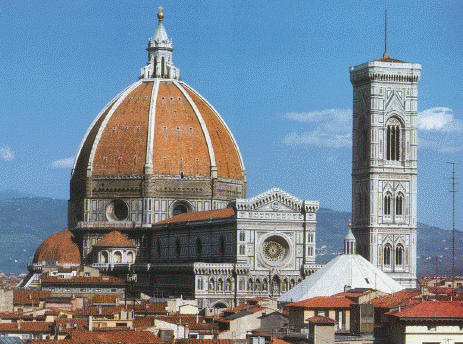
The dome of Santa Maria del Fiore, erected by Filippo Brunelleschi. It remains the largest brick dome in the world.
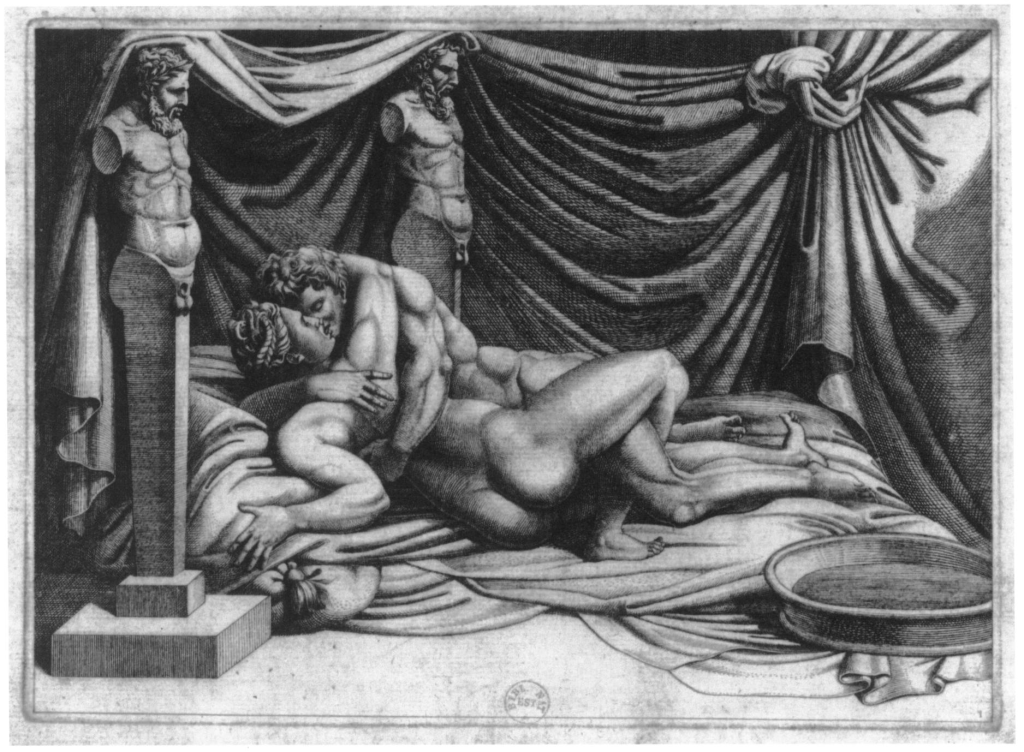
An image from I Modi (1524).

Transcript

Something about history that usually remains true is that very few people are ever aware of the significance of the times they live through. The Romans of their late fourth century CE didn’t know their children and grandchildren would be the last citizens of the empire nor did the Prophet Muhammad’s contemporaries realize their compatriots would crush the superpowers of their day, the Eastern Roman and Sassanid Empires, and start a religion that would change the world. And no one ever thought of themselves as living through the colonial era or the Enlightenment or whathaveyou. If any generations ever knew exactly what era they were living through, it was the people who lived to see the Renaissance. While it was a nineteenth century historian, Jules Michelet, who did first slap the label “Renaissance” on the whole period, it really was Giorgio Vasari, the humanist who wrote Lives of the Most Excellent Painters, Sculptors, and Architects, who coined the metaphor of “rebirth” when referring to the accomplishments of the artists he described in his work.
Categories
season one

Episode 12: The Founder of the Dynasty

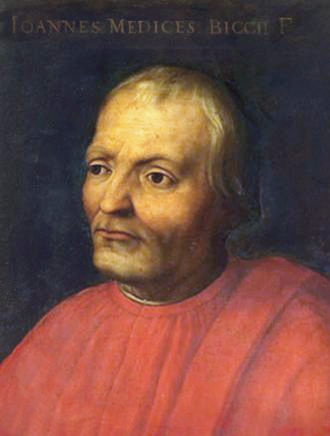
Portrait of Giovanni di Bicci de’ Medici (c. 1563) by Cristofano dell’Altissimo. Source: Palazzo-medici.it.

We close out Season 1, “The Early Medici”, with a look at the life and death of Giovanni di Bicci de’ Medici, whose descendants would become the branch of the family we usually mean when we talk about the Medici. Not only is he the first prominent member of the family, however, he also founded the dynasty in the sense that he started the tradition of sponsoring forward-thinking artists, writers, and architects and in how his apparent reluctance to be a public figure actually inspired a formula for political success that would carry his descendants to greater heights than even his more ambitious forebears could have imagined. 

Support us on Patreon, through Venmo at @ Chad-Denton-15, or through a donation below.

One-Time
Monthly
Yearly

Make a one-time donation

Make a monthly donation

Make a yearly donation

Choose an amount

¤5.00
¤15.00
¤100.00
¤5.00
¤15.00
¤100.00
¤5.00
¤15.00
¤100.00

Or enter a custom amount

¤

Your contribution is appreciated.

Your contribution is appreciated.

Your contribution is appreciated.

DonateDonate monthlyDonate yearly

Transcript

While I talked about how Giovanni de Bicci dei Medici reaped the benefits from his relationship with the sketchy soldier turned rival pope John XXIII, the rest of the Medici family was not doing so well. The family remained committed to the populist cause. Unfortunately, the conservatives also remained firmly in power since the fall of Salvestro de’ Medici. As a result, various Medici along with members of other populist families were persecuted by the government, either barred from political office or exiled from the city. So, while we can’t know what his true political beliefs were, by making himself a low-key ally of the conservatives, Vieri de’ Medici was truly and literally saving himself and his family. Giovanni de Bicci would not follow in his cousin and fairy godfather’s footsteps. However, he would find his own savvy way of surviving the political whirlwind.