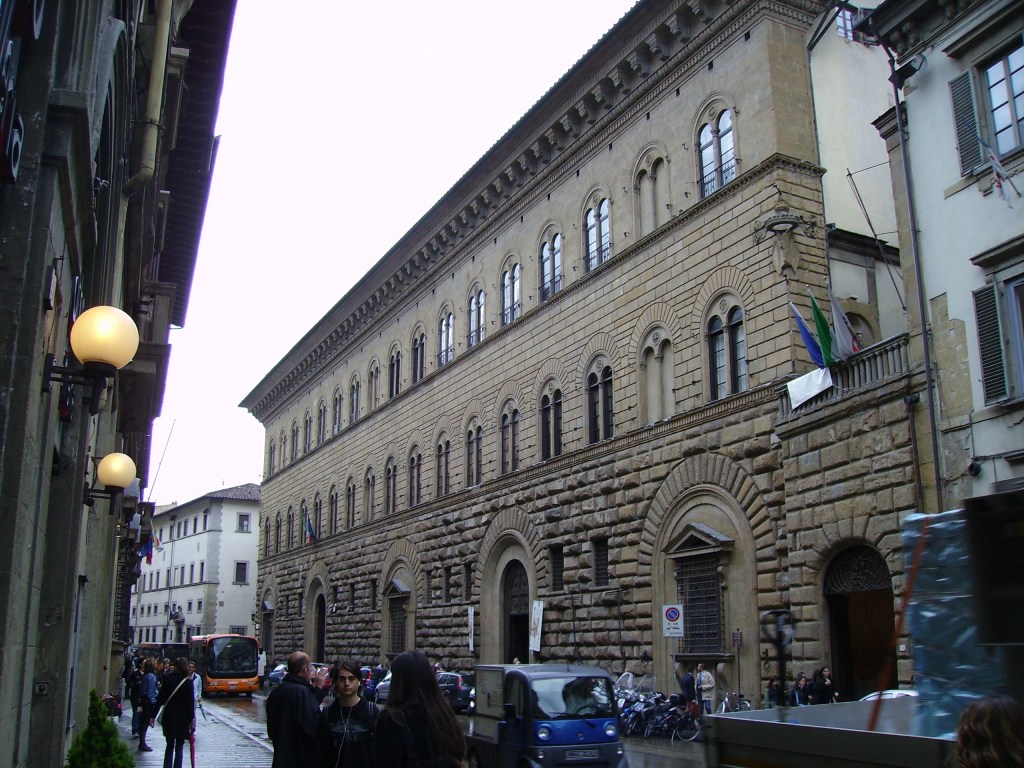
With a combination of patience and political maneuvering, Cosimo turns the tables on his enemies and returns to Florence in triumph. His first major act is to host an attempt to reunify the long-divided Greek and Latin churches. It has rather mixed results, but it does make something clear to the rulers of Europe: Cosimo is no longer just a banker.
An image believed to be the Byzantine Emperor John VIII, taken from a cycle of frescoes by Benozzo Gozzoli depicting the Magi’s visit to the infant Jesus Christ but with the likenesses of various participants in the Council of Florence (c. 1459). Source: Magi Chapel, Palazzo Medici Riccardi. Pisanello’s sketches of the Byzantine delegation at the Council of Florence (c. 1439-1449).
Rinaldo may not have gotten away with killing his greatest threat, Cosimo de’ Medici, but he had seemingly neutralized him by exiling him and his biggest supporters in the fall of 1433. With two of the leading populist families, the Medici and the Alberti, cut down, the conservative regime was secure. At least, for the time being.
As soon as he inherits his father’s place as head of the rich, international Medici Bank, Cosimo gets a target on his back in a Florence where politics are increasingly molded by the sponsorship of the rich and not by the guilds. The minute he steps on the public arena, not only is Cosimo’s political career is in danger, but his very life.
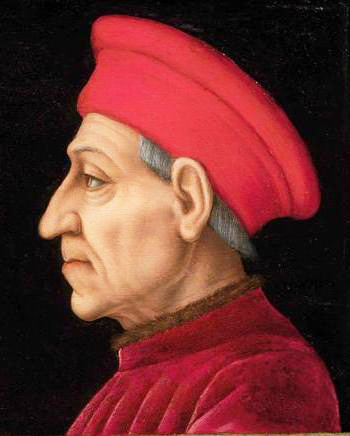
Posthumous portrait of Cosimo de’ Medici by Bronzino (c. 1567). Source: La Galleria degli Uffizi, Florence. Another posthumous portrait of Cosimo (c. 1519) by Jacopo Pontormo. Source: La Galleria degli Uffizi, Florence. Posthumous portrait of Contessina de’ Bardi de’ Medici (c. 1567) by Bronzino. Pitti Palace, Florence.
Transcript
Giovanni di Bicci has, largely because of his connections to one of several rival popes, become a wealthy banker. Although drawn into politics by just the mere fact of his wealth and by his family’s reputation as supporters of the populist cause, Giovanni largely stayed out of politics. So much so, in fact, that no one was sure if he sided with the conservative or the populist cause. As a result, Giovanni had a great deal of political capital when he intervened to stop the conservatives, at the time led by Rinaldo degli Albizzi, from disenfranchising members of the minor guilds and replacing them with nobles and members of the major guilds. Also, he decisively supported a major tax reform that replaced the city’s sales and poll taxes with the Catasto, a system in which the property and revenues of the city’s citizens were surveyed and taxed based on citizens’ wealth and income.
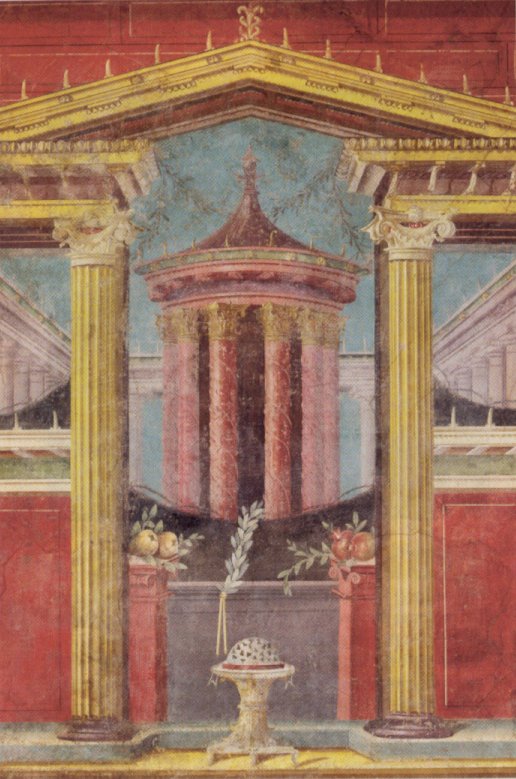
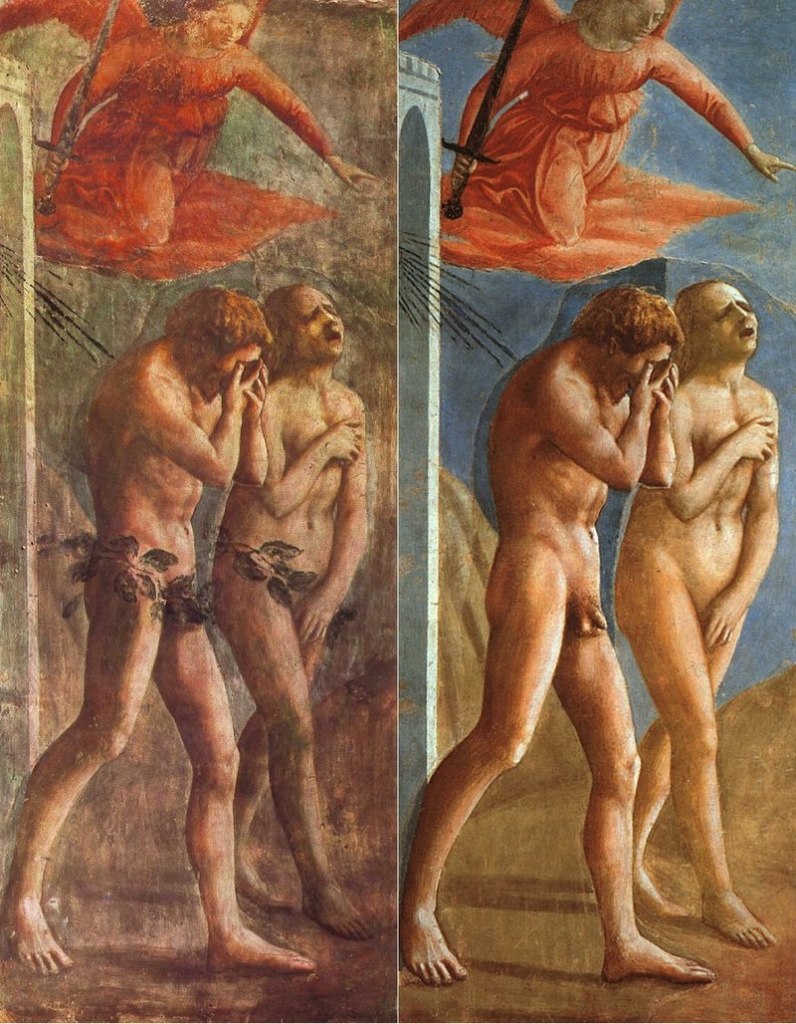
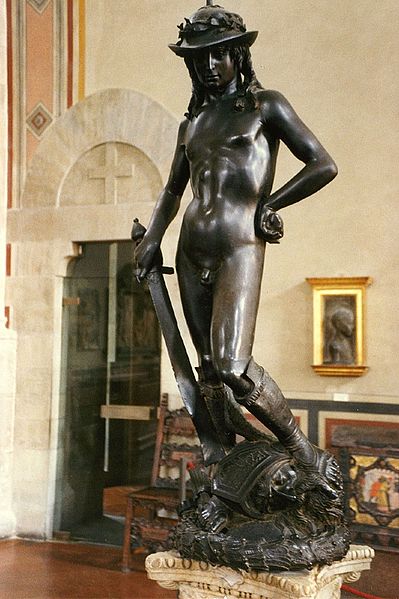
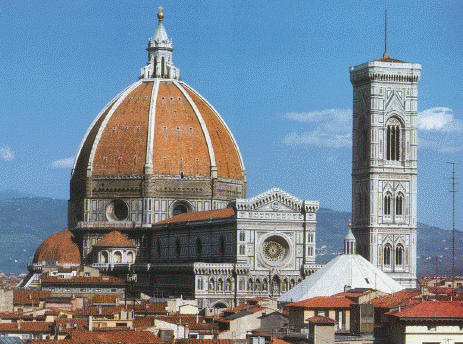
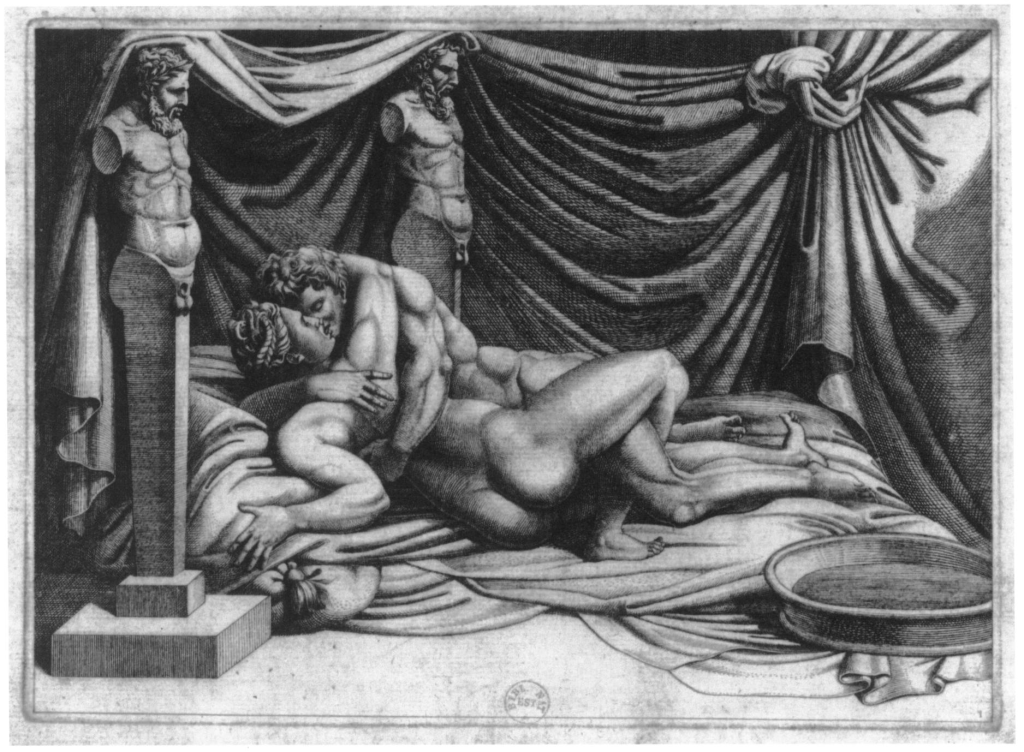
This first century BCE Roman fresco from the villa of Publius Fannius Synistor in Boscoreale in modern-day Naples, which demonstrates a partial use of vanishing point, a technique that would not be perfected until the Renaissance. Source: Metropolitan Museum of Art. Giotto’s Crucifix (c. 1290-1300). Note the realistic details such as Jesus’ facial expression and the wound in his side. Source: The Tempio Malatestiano in Rimini, Italy.Masaccio, The Expulsion (c. 1426-1428). Note the fig leaves added to the version on the left, before they were removed with the 20th century restoration shown on the right. Source: Santa Maria del Carmine, Florence. Donatello’s David (c. 1440s?), the first freestanding nude sculpture made in Europe since antiquity. Source: Patrick A. Rodgers, the Bargello, Florence.The Monastery of Batalha in the Central Region of Portugal. Source: Waugsberg. The dome of Santa Maria del Fiore, erected by Filippo Brunelleschi. It remains the largest brick dome in the world. An image from I Modi (1524).
Transcript
Something about history that usually remains true is that very few people are ever aware of the significance of the times they live through. The Romans of their late fourth century CE didn’t know their children and grandchildren would be the last citizens of the empire nor did the Prophet Muhammad’s contemporaries realize their compatriots would crush the superpowers of their day, the Eastern Roman and Sassanid Empires, and start a religion that would change the world. And no one ever thought of themselves as living through the colonial era or the Enlightenment or whathaveyou. If any generations ever knew exactly what era they were living through, it was the people who lived to see the Renaissance. While it was a nineteenth century historian, Jules Michelet, who did first slap the label “Renaissance” on the whole period, it really was Giorgio Vasari, the humanist who wrote Lives of the Most Excellent Painters, Sculptors, and Architects, who coined the metaphor of “rebirth” when referring to the accomplishments of the artists he described in his work.
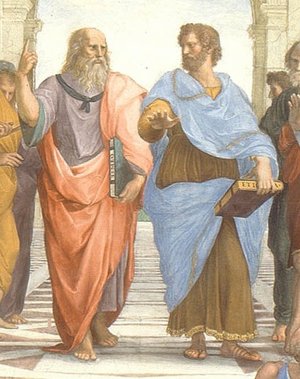
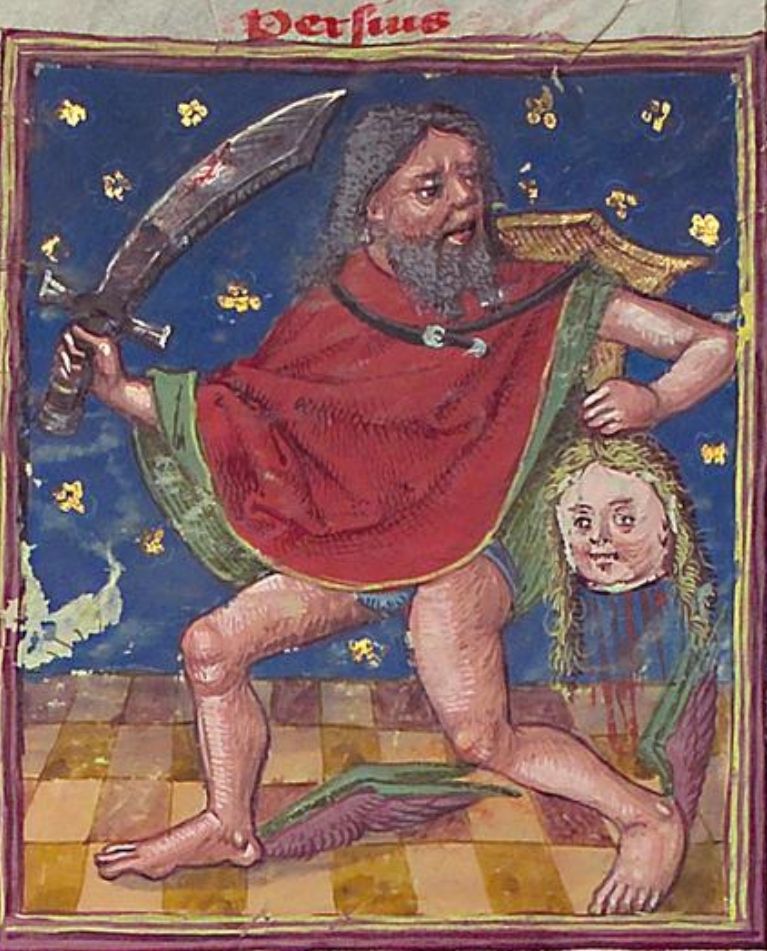
Raphael, The School of Athens, ca. 1510. It is a fresco that lies in the Vatican’s Apostolic Palace. A representation of the standard medieval western European representation of Perseus, from an astrological and occult guidebook, the Heidelberger Schicksalsbuch (1491), currently kept in the rare books collection of the University of Heidelberg. Note how Perseus is wielding an Arabic-style scimitar.Altichiero de Zevio’s sketch portrait of Petrarch, c. 1375. Anonymous portrait of Giovanni Pico della Mirandola.
Let’s talk about the Renaissance. Because the Renaissance was a truly international movement, and not at all the exclusively Italian movement we tend to think of it as, to talk about it it’s almost impossible not to jump around in space and time. So, for the sake of trying (possibly in vain) to keep things tidy I split my discussion of the Renaissance in two. First, we’ll talk about the old, how the Renaissance looked back into the past. Second, we’ll get into the new, meaning how the Renaissance looked forward.
Domenico Peterlini, Dante in Exile, ca. 1860, at the Gallery of Modern Arts in Florence.
He was a political exile who sided with the wrong people at the wrong time and lost the love of his life. Also he was one of the greatest writers in history and got to shape the modern Italian language.
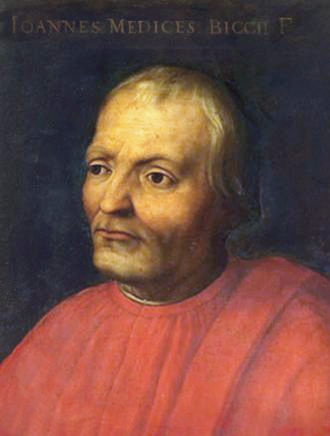
Portrait of Giovanni di Bicci de’ Medici (c. 1563) by Cristofano dell’Altissimo. Source: Palazzo-medici.it.
We close out Season 1, “The Early Medici”, with a look at the life and death of Giovanni di Bicci de’ Medici, whose descendants would become the branch of the family we usually mean when we talk about the Medici. Not only is he the first prominent member of the family, however, he also founded the dynasty in the sense that he started the tradition of sponsoring forward-thinking artists, writers, and architects and in how his apparent reluctance to be a public figure actually inspired a formula for political success that would carry his descendants to greater heights than even his more ambitious forebears could have imagined.
Support us on Patreon, through Venmo at @ Chad-Denton-15, or through a donation below.
While I talked about how Giovanni de Bicci dei Medici reaped the benefits from his relationship with the sketchy soldier turned rival pope John XXIII, the rest of the Medici family was not doing so well. The family remained committed to the populist cause. Unfortunately, the conservatives also remained firmly in power since the fall of Salvestro de’ Medici. As a result, various Medici along with members of other populist families were persecuted by the government, either barred from political office or exiled from the city. So, while we can’t know what his true political beliefs were, by making himself a low-key ally of the conservatives, Vieri de’ Medici was truly and literally saving himself and his family. Giovanni de Bicci would not follow in his cousin and fairy godfather’s footsteps. However, he would find his own savvy way of surviving the political whirlwind.
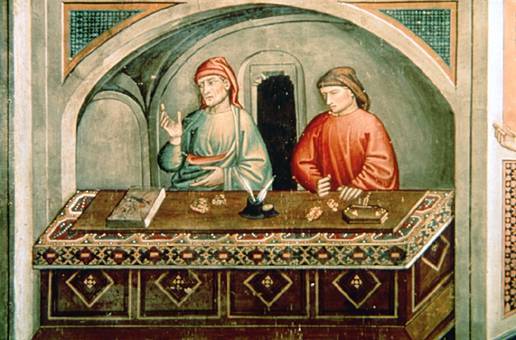
A portrait of bankers at a traditional banking table. Source unknown.
We take a step back from the life of Giovanni di Bicci dei Medici to look at banking, commerce, and religious and legal attitudes about usury and luxury in Renaissance Florence. How did the Medici and other Florentine dynasties prosper in banking when loans with interest were considered a grave sin and a form of theft?
Transcript
I decided to take a brief break from telling the story of Giovanni di Bicci’s life to give a little context to exactly how the Medici made their money. Let’s talk capitalism. Or proto-capitalism.
A miniature depicting Valentina Visconti, Duchesse d’Orléans, with the symbols of Milan and the Visconti family, from a copy of Cicero’s De natura deorum, c. 1400. Source: anne-marie.eu.
Around the dawn of the fifteenth century, two developments unfolded that would sooner or later change the future of the Medici family forever. In one, Valentina Visconti enters a miserable marriage with a French royal. In the other, Giovanni de Bicci de’ Medici takes advantage of Europe being split between two and even three rival popes by (allegedly!) bankrolling the church career of a former soldier who hobnobbed with pirates and robbers that eventually sees him become Pope.
Transcript
This time, I’m going to have to zoom out a bit. I do try to keep this from turning into the northern Italy or the History of Florence podcast. But we’re at a point where two events that initially had absolutely nothing to do with the Medici would have ramifications that would completely shape the family’s future.
A statue of Michele di Lando in the Loggia del Mercato Nuovo. Source: Saliko via Wikimedia Commons.
After Salvestro de’ Medici helps stoke the flames of revolution, violence breaks out on the streets of Florence and a wool-comber is installed in the highest office of the republic. But who will really benefit from this proletariat revolt in the long term?
Transcript
Let’s start this episode with an exercise of imagination. Close your eyes, unless you’re driving or walking, in which case please don’t close your eyes, and try to imagine what it was like to be a poor laborer, earning a pittance from Florence’s cloth industry, sometime in the years following the Black Death.
In a time of simmering class tensions and growing exploitation of the poor, Salvestro de’ Medici turns against his conservative comrades and declares he’s on the side of the downtrodden. On his political agenda? Backing an all-out war against the Pope.
Transcript
As you probably expect from living in the 21st century, all those wages spiking up and workers getting the power to seek employment with different employers didn’t sit well with the rich. So, in the years following the original outbreak of the Black Death, there was a conservative retrenchment.