Categories
season three

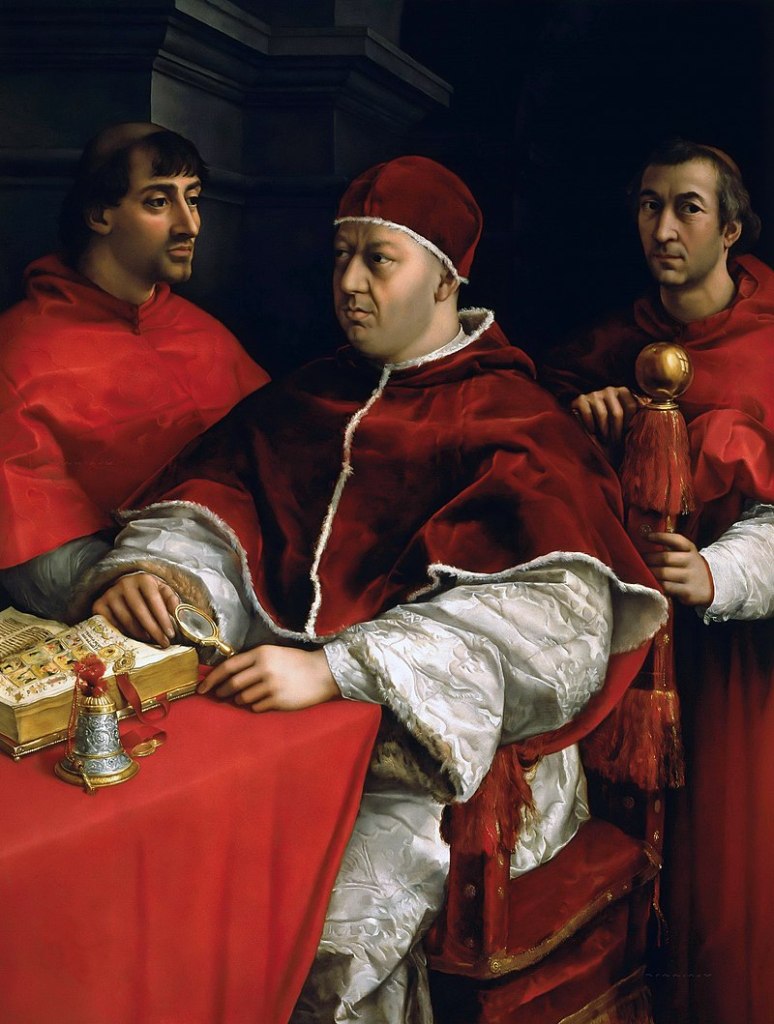
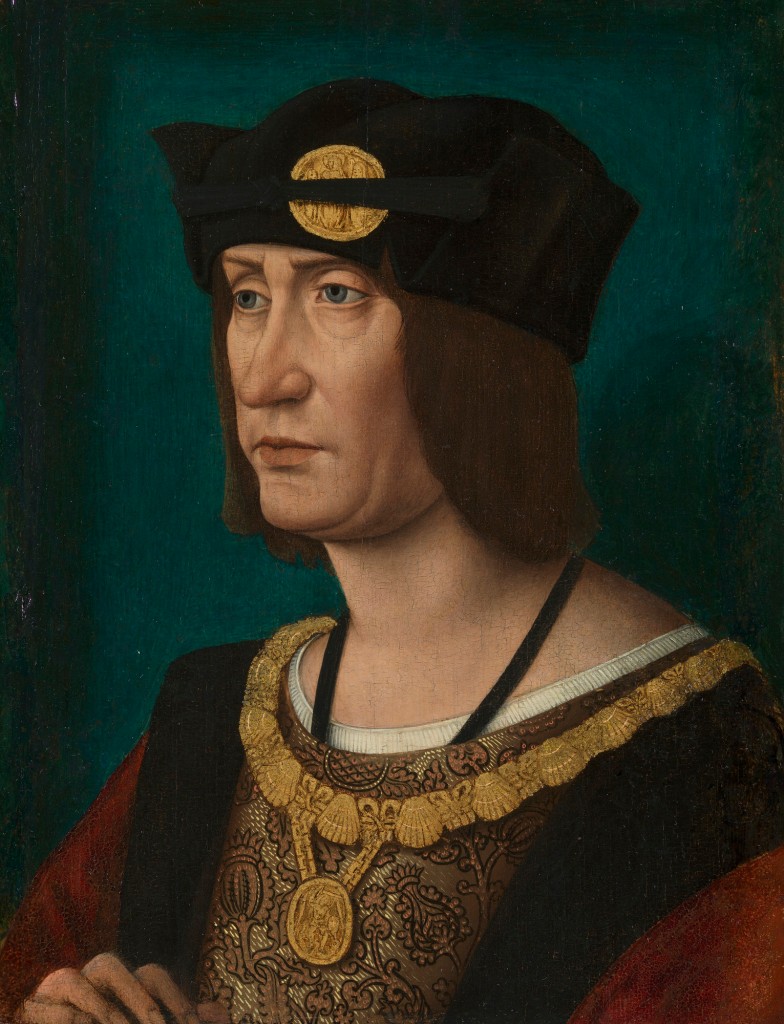
Episode 36: The Tigress and the Popolano

This time, we check in on the sons of Pierfrancesco de’ Medici, the brothers Popolano, Lorenzo and Giovanni. While Lorenzo tried to play a small, non-partisan role in Florence’s new government, Giovanni fell in love with one of the most famous and daring women of the Renaissance.

“La dama dei gelsomini” (“The Lady of Jasmine”) by Lorenzo di Credi, date unknown. It is believed to be a contemporaneous portrait of Caterina Sforza. Source: The Picture Gallery of Forli.
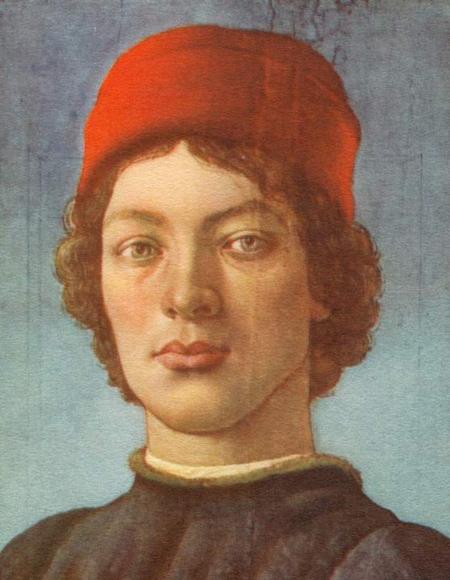
A portrait by Filippino Lipi thought to possibly be of Giovanni di Pierfrancesco “il Popolano” (ca. 1490). Source: U.S. National Gallery of Art.
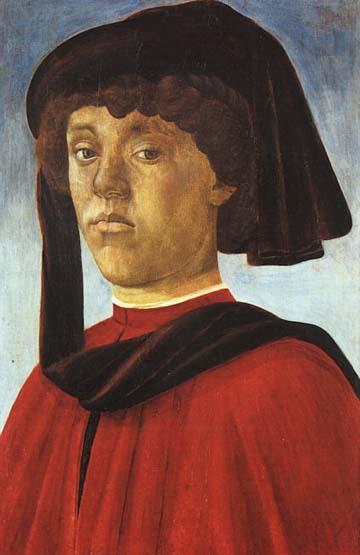
A portrait of Lorenzo di Pierfrancesco “il Popolano” by Sandro Botticelli (1479). Source: Pitti Palace, Florence.

Transcript

Before we finally return to Piero de’ Medici, we need to check in on his cousins, the sons of Pierfrancesco, Lorenzo and Giovanni. They’re not to be confused with Lorenzo the Magnificent or any of the other Giovannis in the Medici family, which is one of the reasons I’m mostly only talking about them in their own episode. Plus honestly not much happened with the two after they plotted against Piero, becoming exiled, and then trying to ingratiate themselves with King Charles of France.

Categories
season three

Episode 35: Trial By Ordeal

We conclude Savonarola’s story by looking at why one of his most fervent followers decided to try to shut up the growing criticism of Savonarola by resorting to an obsolete medieval ritual and how that decision backfired catastrophically. 

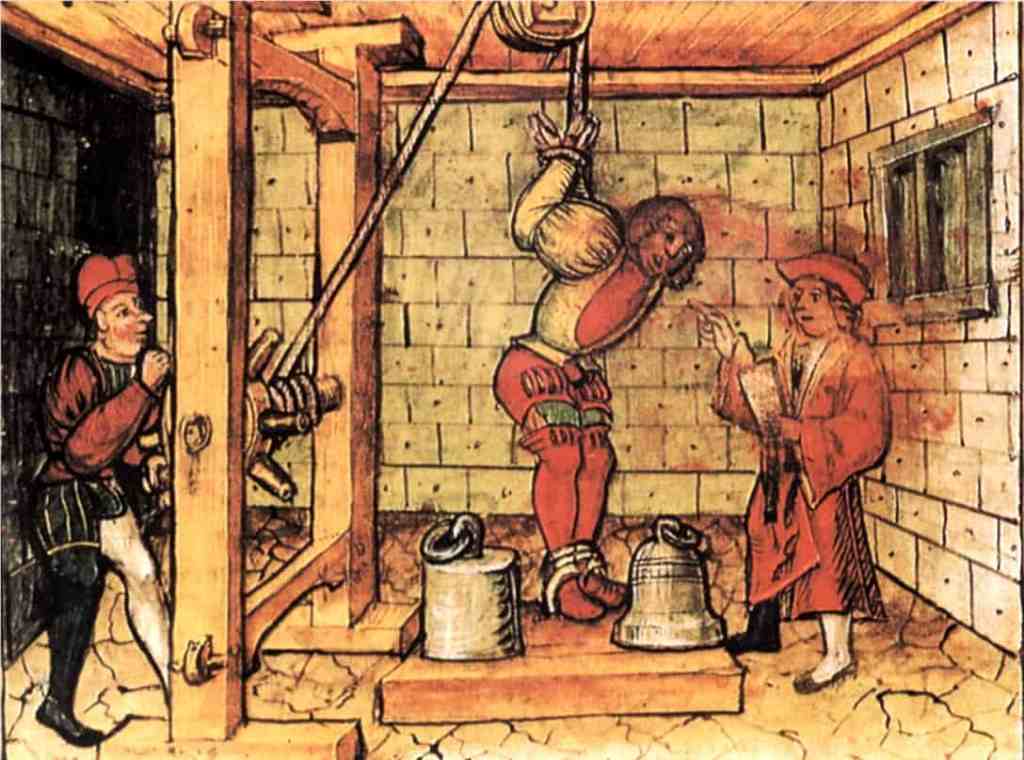
An illustration by Hans Spiess of the strappado, the torture device used on Girolamo Savonarola. 1513. Source: The Chronicle of Lucerne, the Burger Library of Lucerne.
A contemporaneous painting of the executions of Girolamo Savonarola, Domenico da Pescia, and Silvestro Maruffi (1498) by Filippo Dolciati. Source: Museo di San Marco, Florence.

Transcript

Just before his excommunication, Savonarola was at the top of the mountain. True, he had become not just an embarrassment but a liability because of his hostile relationship with the Pope. But he still had formidable political influence and was untouchable. No matter how many of his enemies the Arrabiatti got elected, none dared act against him out of fear that arresting him would cause a civil war or the collapse of the republic. But the mountain Savonarola stood on was turning into mud. Florence was still in an economic decline that would in some ways prove to be permanent, a plague was raging across Tuscany, and food prices were still high and would get even worse with another harsh winter in 1497-1498. Now Alexander’s excommunication didn’t knock Savonarola off the mountain, but to take the metaphor one step further, it was like turning a firefighter’s hose on an already increasingly slippery and muddy mountain.

Categories
season three

Episode 34: The Borgia Vs. The Prophet

Savonarola may be enjoying the peak of his influence over Florence, but he’s made a relentless enemy who just so happens to be a pope and, worse, a Borgia. Meanwhile, Piero and his supporters spin plots for a Medici restoration. 

A portrait of Pope Alexander VI (Rodrigo Borgia) by Pedro Berruguete (c. 1492). Source: Vatican Museums.

Transcript

So my only excuse for being late this week is that honestly I caught Savonarola fever. Seriously, my script for this episode just kept getting longer and longer and I kept finding new tidbits of research that I felt like I had to include. I really, really wanted to wrap up Savonarola’s story in this episode, but I had to split it. I just like to think there is something special about the fact that, centuries after his death, Savonarola is still big enough of a figure that he took over a podcast that’s supposed to be about the Medici.

Categories
season three

Episode 33: God’s Republic

Charles VIII marches on Naples not knowing a brand-new plague is waiting for him, the Medici adapt to the existence of the new republic in different ways, and Savonarola and his allies in government tighten their grip over Florence, even while Rodrigo Borgia closes in on Florence’s popular preacher.

Transcript

Savonarola never really ruled Florence. In fact, you couldn’t even say that he had an invisible throne like the Medici did. But his sermons captivated his audiences with how they shifted gracefully from apocalyptic thunder to gentle cries for social reform, and as a result he had a great deal of influence over both the average people and the elites. As much as Savonarola owed to his skills as a preacher, he was also lucky enough to have a chance to hedge his bets on King Charles VIII of France. As Florence and Savonarola were about to christen their reformed republic, Charles was marching on Rome to face Pope Alexander VI, and it still seemed like King Charles really would reform the papacy itself.

Categories
season three

Episode 32: The Friar and the King

Piero de’ Medici is gone, and a new rising star is a hotshot preacher named Girolamo Savonarola. Once an itinerant preacher and lecturer, Savonarola now finds himself hobnobbing with King Charles VIII of France and even having a say in Florence’s newly rebuilt, Medici-free republic. 

The only known contemporaneous portrait of Girolamo Savonarola (1497 or 1498) by Fra Bartolomeo. Source: Museo di San Marco, Firenze.
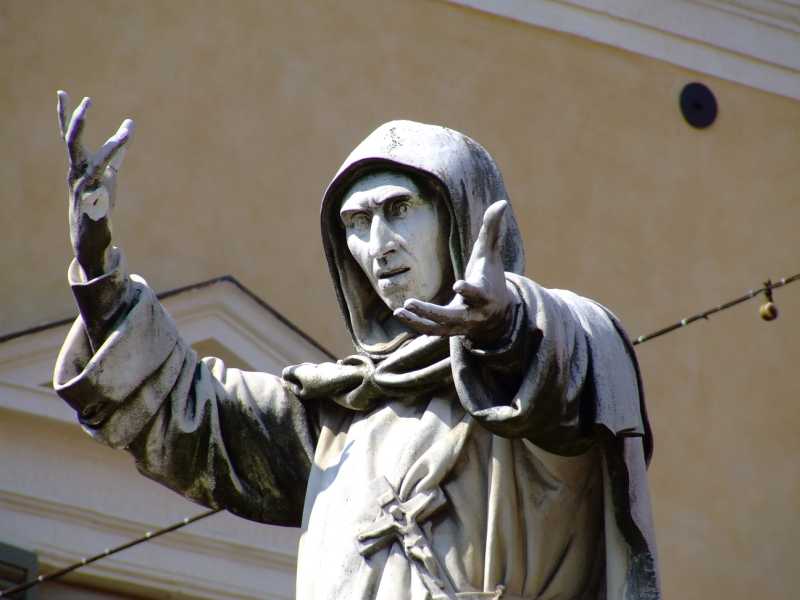
A statue of Girolamo Savonarola in the Palazzo Savonarola in Ferrara (1875) by Stefano Galletti. Source: Dominican Friars of England, Wales, and Scotland website.

Transcript

Today, we’re leaving behind the Medici golden age. This episode marks the start of a new season, the Holy Family. It’s an era that begins with the Medici being driven out of their home city. By rights they should have faded into obscurity. Yet, ironically, this will be the time when they really left their mark on European and even world history. A Medici would assume the role of antagonist in a little tiff you might have heard of called the Protestant Reformation. The family would also, like that other great Italian family the Borgias, take a part in the story of how the golden age of the Italian city-states drew to a close and how Italy would lose much of its independence to the great powers of Europe for roughly 300 years. Basically, this season is about how a dynasty stripped of political power and the bank they founded and driven into exile just simply refused to step off the stage of history.

Categories
season two

Episode 31: The Flood Comes

Piero doesn’t get to enjoy being the de facto lord of Florence for long before he has to deal with an impending French invasion of Italy. He decides to imitate his father’s boldest move, which would surely work…won’t it?

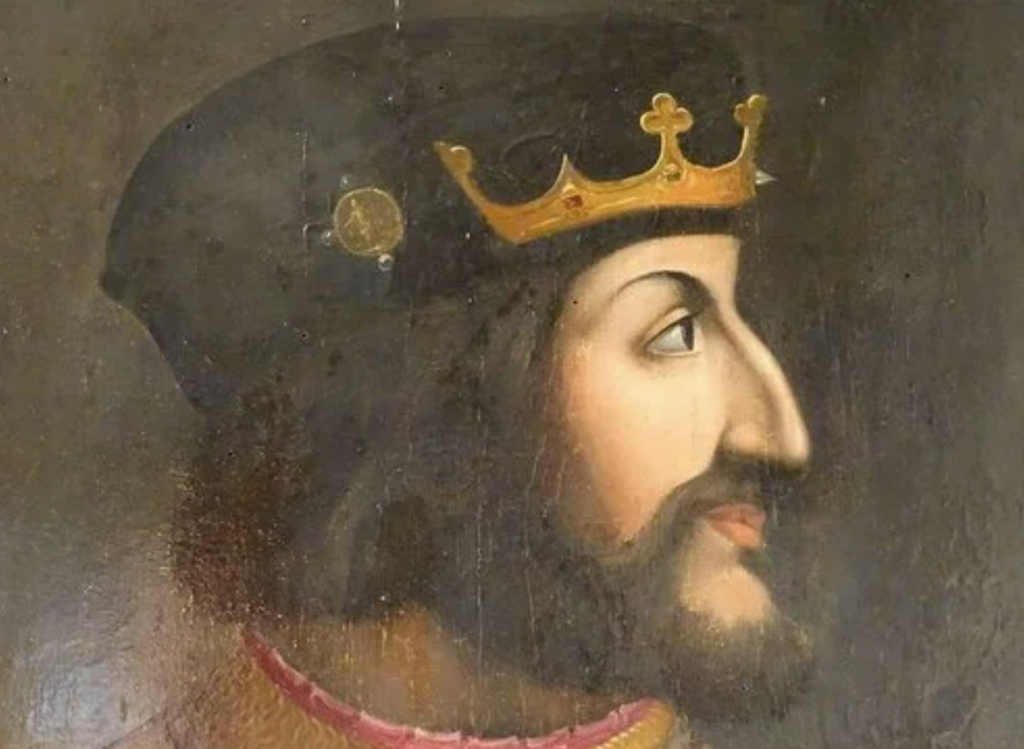
A portrait of King Charles VIII of France. Artist unknown. Uffizi Galleries, Florence.

Transcript

The birth of the future King Charles VIII of France was even more celebrated than that of a normal heir. His father, King Louis XI of France, had two daughters, but by that time it would have been impossible even for their domineering father to have them accepted as his successors. Under what was called the Salic Law, daughters could not inherit the French throne. This law took its name from the Salian Franks, the Germanic people that first established the kingdom of France and gave it its name. In truth, the Salic Law just took its name from an old sixth century law that regulated property inheritance and had nothing to do with royal succession. But in the early fourteenth century it was a convenient excuse for King Felipe V to claim the throne instead of his elder brother’s daughter Jeanne. The excuse became even more convenient when King Edward III of England used the claim to the French throne he inherited through his mother to justify his invasion of France. By Louis XI’s time, the Salic Law was firmly locked in place. So without a son the crown would pass over his hated cousin and rival, Louis d’Orleans. However, since the day he was born to the happy parents Louis XI and his queen Charlotte of Savoy, Charles VIII was sickly. No wonder Louis XI was so afraid for his son’s survival that he kept him isolated and micromanaged his son’s governors.

Categories
season two

Episode 30: Piero the Brief

The fourth Medici to come to power as “unofficial lord” of Florence is Lorenzo the Magnificent’s son, Piero. Although a strapping, handsome, and popular young man, forces within the regime are already working against him. But the real threat is starting to stir many miles outside of Florence…

A portrait of Piero II “the Brief” de’ Medici by Gherardo di Giovanni del Fora. Date: 1494. Source: National Library of Naples.

Transcript

Piero de Medici or Piero II if you want to be specific was the oldest of Lorenzo the Magnificent’s sons who lived past infancy, born on February 15, 1472. This is a bit of a spoiler but I should mention he’s also remembered by history with the sobriquets “the Unfortunate” or “The Brief”, as you probably noticed in this episode’s title. There was never really any question that Lorenzo’s place on the invisible throne of the Medici would be filled by his eldest son Piero. After Lorenzo’s death only a single vote in the Council of Seventy, out of all the legislative councils in the government, went against a bill that would have Piero inherit everything from Lorenzo, including his political responsibilities. This was despite the fact that Piero was too young for political office according to Florentine law.

Categories
season two

Episode 29: After Me, The Deluge

We step back from the Medici to look at Europe as a whole circa 1492. The balance of power is shifting and that means, for the Medici and Italy as a whole, the flood is coming. 

A map of Europe circa 1500 (although it should be noted modern Spain was still administratively divided between the kingdoms of Aragon and Castile). Source: The University of Oregon.

A map of Italy in 1494. Source: Shadowxfox.

A medal depicting the future King Alfonso II of Naples by Andrea Guazzalotti. Date: 1481. Source: Sailko.
A 19th century painting depicting the surrender of Emir Muhammad XII of Granada to Queen Isabel I of Castile and Fernando II of Aragon, by Francisco Pradillo y Ortiz. Date: 1882. Source: Senate of Spain Collection, Madrid.
An anonymous portrait of Mary of Burgundy, painted sometime during her life. Her decision to marry Maximilian von Hapsburg would change the course of European history and arguably set the stage for a long series of conflicts up to World War II. Artist and exact date unknown. Source: Private collection.
A portrait of King Louis XI of France, nicknamed “The Universal Spider” because his cunning and ruthless foreign policy helped make France a great power again, free of the threats once posed by the English and the Burgundians. The artist is Jacob de Littemont. Date: 1469. Source: Private collection.
A portrait of Maximilian von Hapsburg, Holy Roman Emperor, Duke of Austria, and co-duke of Burgundy through his wife Mary of Burgundy. The artist is Bernhard Strigel. Date: ca. 1500. Source: Kunsthistorisches Museum, Vienna.

Transcript

Apres moi, le deluge. This means “after me, the Deluge.” Depending on who you ask, the saying was spoken by King Louis XIV of France on his deathbed, by Louis XIV’s great-grandson and successor Louis XV, or by Madame de Pompadour, Louis XV’s mistress. There’s some debate over what it means, too, but the way I learned about the phrase was that it was Louis XIV predicting some disaster befalling France after his death, a disaster like maybe the French Revolution. One can certainly believe Louis XIV was enough of an egotist to think the whole show would fall apart after he left the stage, but the main problem with this interpretation is that there were over seven decades until the Revolution started. Honestly, it would have been much more apropos if Lorenzo de’ Medici said it or the Italian equivalent, which I think would be “dopo di me, il diluvio”, while he was dying.

Categories
season two

Episode 28: The End of the Golden Age

The golden age of the Medici’s unofficial lordship over Florence is drawing to an end with Lorenzo’s death. Here we look back over Lorenzo’s legacy as the patron, the politician, and even the embezzler and the human being. Also, what exactly was Lorenzo’s contribution to the course of not only Florentine but European history as a whole? 

The tomb of Lorenzo de’ Medici, his brother Giuliano, and other members of the family in the New Sacristy in Florence. Lorenzo and Giuliano’s remains were reinterred there in 1532. The statuary at the tomb was carved by Michelangelo and commissioned by Pope Leo X (Giovanni de’ Medici).

Transcript

Last time, we talked about the Medici bank being in free fall. And Lorenzo himself was well aware of the bank’s problems. Once, he wrote to the signorie himself, explaining his last tax report to the government: “In making out this report, I shall not follow the same procedure as my father in 1469 because there is a great difference between that time and the present with the consequence that I have suffered many losses in several of my undertakings, as is well-known not only to Your Lordships but to the entire world.”

Categories
season two

Episode 27: The Decline and Fall of the Medici Bank

Lorenzo is at the height of his power and security. However, just behind the scenes, the family bank that caused the Medici to come into power in the first place is slowly but steadily falling apart, thanks to the Ottomans, a squabble between English royals, and, most of all, the ugly realities of politics. 

Transcript

Now when we last left Lorenzo the Magnificent, he was basking in what I think is safe to say was his greatest triumph, coming back to Florence from Naples with an end to a catastrophic war following behind him. Plus with some more tweaking of the Florentine Constitution and the creation of a new government body, the Council of Seventy, the Medici’s hold on power was secure – well, at least as secure as it could ever be.