
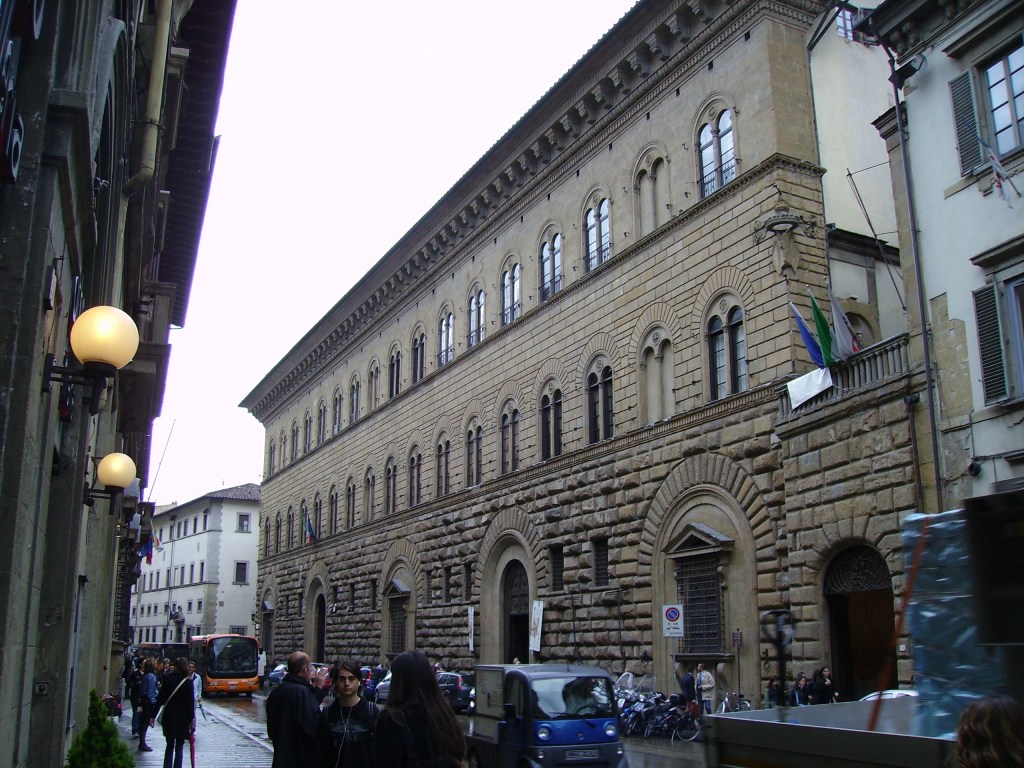
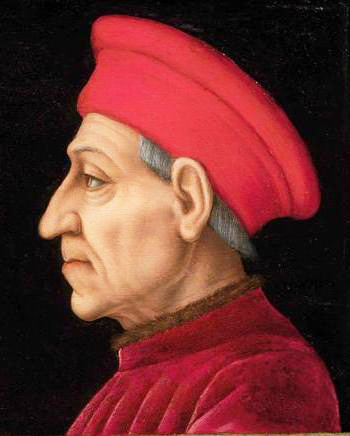
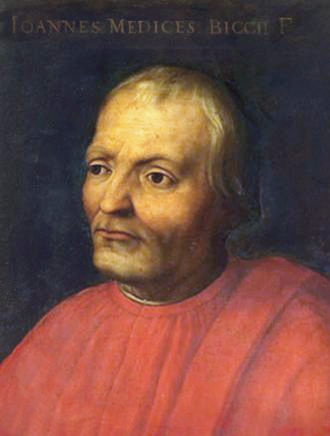
Cosimo de’ Medici quickly established a regime that operated within Florence’s constitution but gave Cosimo an almost unchallenged power over the state. Unfortunately, Cosimo’s government was a delicate structure, and the pandemonium of Italian Renaissance politics threatened to bring it all tumbling down.


Transcript
So, with that, let’s start by talking about the idea of an invisible throne and why Cosimo after his return from exile can be said to have one. By the time the Council of Florence was over, if not sooner, foreign leaders wrote to and talked about Cosimo de’ Medici as if he were the de facto ruler of Florence. This is rather remarkable because, unlike other Italian rulers, Cosimo never called himself or was called signore. Nor did he ever receive some kind of aristocratic title or was voted an office like dictator-for-life cementing his power. In fact, in the decades between Cosimo’s triumphant return and his death, for the most part commentators within Florence write and talk as if the republic was chugging along like always. Cosimo actually pushed only one major reform to the government, which we’ll get to this episode. Just by pulling the levers provided for him by the Florentine constitution and by his patronage network, Cosimo made himself the all but unchallenged ruler of one of the richest regions of Europe. Cosimo’s regime was for the most part so subtle and was managed so indirectly that even now modern historians have trouble determining exactly what decisions made by the official political leaders of Florence were actually their initiative or if they were acting entirely on behalf of Cosimo.











 The Medici Podcast