Duke Alessandro de’ Medici enters a deadly contest with his cousin, Cardinal Ippolito. The real threat, however, may be closer to home.
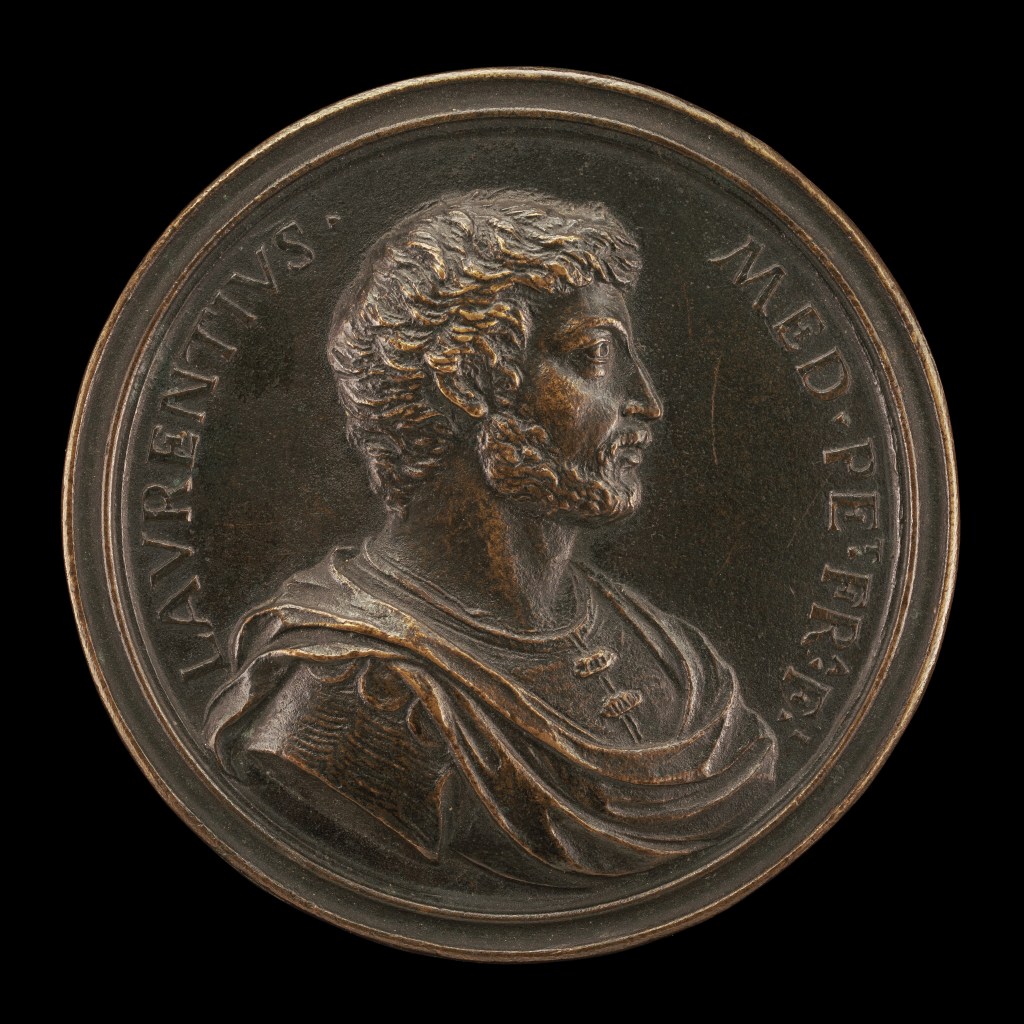
A medal depicting Lorenzino de’ Medici, grandson of Lorenzo “il Popolano.” It was made by Antonio Francesco Selvi circa 1740. Source: National Gallery of Art (Washington, DC).
Transcript
So I hope you weren’t expecting for me to update you on French history up to the point of Catherine’s marriage in 1533. But for this episode I will give you a crash course on France’s monarchy, the institution that Catherine found herself literally wedded to, and what it meant to be a woman within it.
Lorenzo the Magnificent’s granddaughter Clarice triggers a coup in Florence just by berating the man in charge. Meanwhile Pope Clement is driven to hide in a derelict palace in the mountains and receives an unwelcome visitor all the way from England.
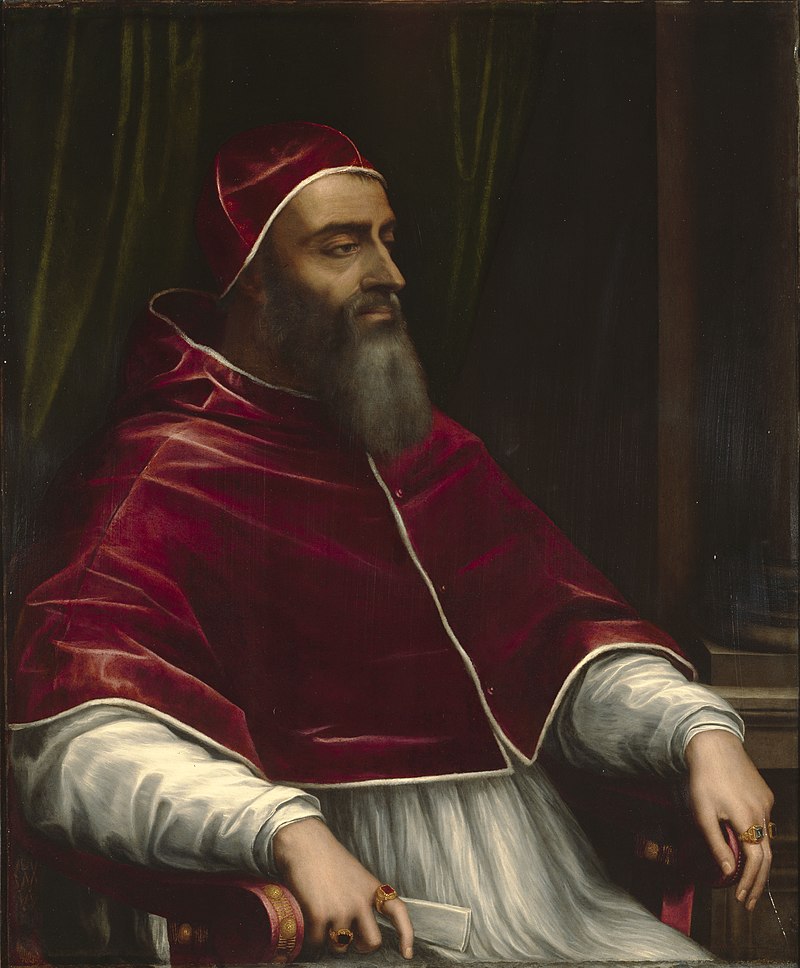
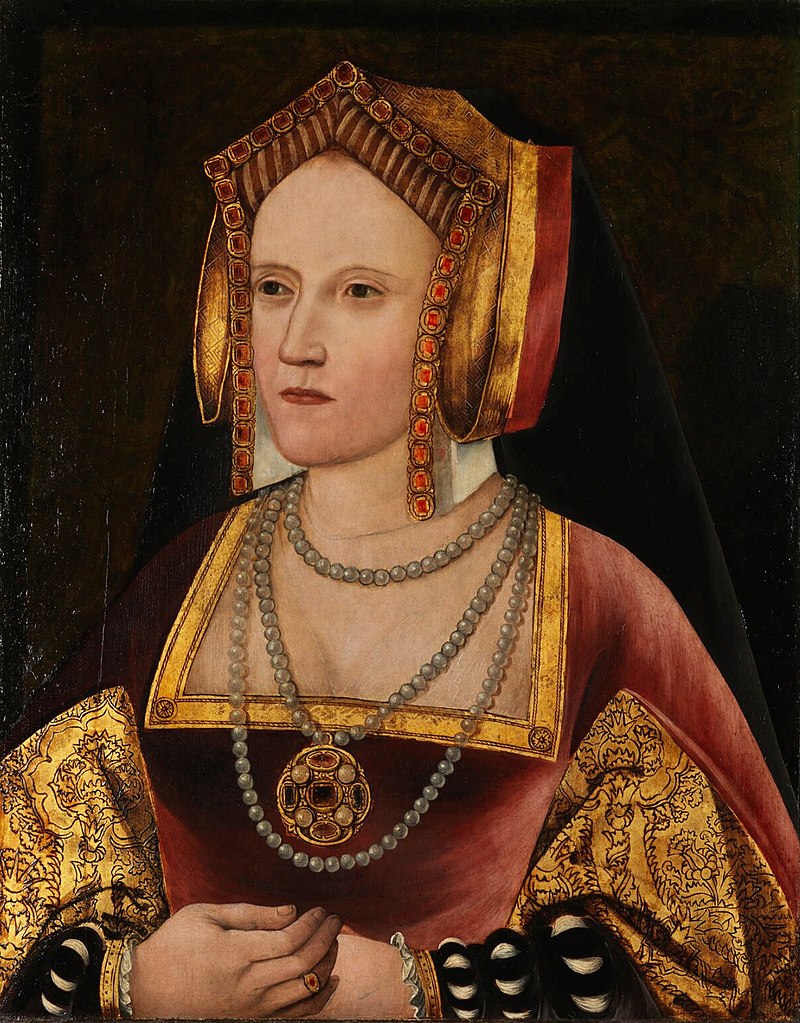
A portrait of Pope Clement VII after the Sack of Rome by Sebastiano del Piombo (c. 1531). Despite beards being unfashionable in Italy among the upper class at the time, Clement VII grew one as a sign of mourning for the Sack of Rome. Source: The Getty Center, Los Angeles, California. An artist’s rendition of the Battle of Mohács (1526), which triggered the destruction of the independent Kingdom of Hungary and led to Hungary being split between the Ottoman Empire, Austria, and the Principality of Transylvania, along with the Hapsburgs claiming the crowns of Hungary, Croatia, and Bohemia. The image is based on the testimony of a soldier who participated in the battle (1555). Source: Chronicle Commissioned by Johann Jacob Fugger. A contemporaneous portrait of Catherine of Aragon, Queen of England. Artist unknown (c. 1520). The matter of the annulment of her marriage to King Henry VIII would turn out to be a far bigger issue than Clement VII probably ever realized. Source: Lambeth Palace, London.
Transcript
When Emperor Charles V learned that his unpaid troops had torn apart Rome, he ordered his court to dress in black, as if mourning the death of a member of the imperial family. I have no doubt that Charles was sincere. After all, he was a devout Catholic, and he had put some effort into avoiding this very outcome. However, he was still a ruler, and he had practical reasons to lament this outcome as well. In modern terms, the Sack of Rome was a massive PR disaster for the imperial cause. It galvanized the League of Cognac. The imperial army looked like a pack of heretical barbarians. Even Henry VIII of England, who at this point was still loyal to the Pope, joined the alliance against the emperor.
Pope Clement tries once more to loosen Emperor Charles V’s grip on Italy, another revolution in Florence is narrowly avoided through one man’s incompetence, and the stage is set for one of modern history’s most notorious war-time atrocities.
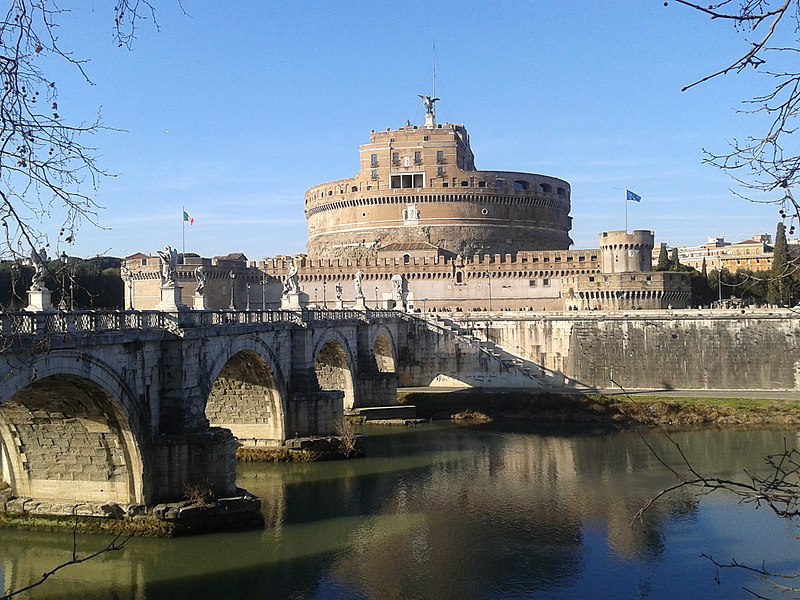
Dirck Volckertsz, “Sack of Rome in 1527 and the Death of Charles III, Duke of Bourbon” from The Victories of Charles V (1555/1556). Source: British Museum, London. Francisco Javier Amérigo, The Sack of Rome (1884). Source: Victor Balaguer Museum & Library, Vilanova i la Geltrú, Catalonia, Spain. The Castel Sant’Angelo or the Mausoleum of Hadrian, where Pope Clement VII had to spend a nightmarish month taking shelter with 3,000 Roman civilians during the sack. Source: 0x010c on Wikimedia.
The Florentine Luigi Guicciardini, the brother of the more famous historian Francesco, was an eye witness to one of the darkest chapters in the history of the city of Rome. In his account of what happened to the city, he wrote, “All the sacraments of the modern Church were scorned and vilified as if the city had been captured by Turks or Moors or some other barbarous and infidel enemy.” Another eyewitness, Marino Sanuto, more succinctly wrote in his diary, “’Hell itself was a more beautiful sight to behold.” This was the Sack of Rome of 1527. It was certainly worse than the four times Rome was sacked in late antiquity and the Middle Ages, including the infamous pillaging of the city by Vandals in 410. In those times, the marauders still followed prevailing rules of warfare. Either that or Rome was so depopulated it was little more than a village or a small town. 1527 was something different, more akin to the atrocities we read about in the annals of the 20th century history. In fact, arguably it wasn’t just pillaging at all; it was an outburst of mass rage directed at a civilian population that was allowed to go on for not just days or weeks, but months.
Clement VII brings back the artistic glories of Renaissance Rome, but disaster for himself, his family, and for Rome looms overhead.
The Baptism of Constantine I (1517-1524) . It is part of a series of frescos started during the pontificate of Leo X and continued under Clement VII on the life and conversion of Emperor Constantine I by Giulio Romano and Giovan Francesco Panini. Pope Clement is included in the painting as Pope Sylvester. Source: The Apostolic Palace, Vatican City.
At first Giulio wanted to just use a version of his own name as a papal title, which would have made him Pope Julius III. It also would have kept with the tradition of Renaissance Popes adopting names that invoked the great heroes of Greek, Roman, and Byzantine history, like Alexander, Hadrian, and Leo. However, Clement was instead convinced by his advisors to choose a different papal name. I couldn’t find a source explaining exactly why Pope Clement chose the name that he did. One theory is that he did so to signal that he would be merciful to his enemies like Cardinal Soderini. In fact, despite Soderini’s involvement in the Cardinal Plot against Leo X, Clement did in 1521 allow Soderini to return to Rome, although perhaps it was at least in part a practical decision to stop him from getting up to too much mischief in Florence. Another, more likely theory is that Clement chose the name because at one point in his career climbing up the church hierarchy he was once the priest at the Church of Saint Clement in Rome. Personally I wonder if it might have been meant at least a little to be a sly if elaborate shot at Emperor Charles V, since Pope Clement I was according to legend imprisoned under the orders of the first century Roman Emperor Trajan. Even if it wasn’t intentional, later events would prove the connection to be ironic.
After Leo X’s sudden death, the Medici are briefly out of power in the papacy. In the meantime, Emperor Charles V changes the landscape of European politics by getting elected as Holy Roman Emperor, and the fate of the Medici family is put in the hands of an orphaned, illegitimate son.
A 1528 portrait of Giulio de’ Medici, Pope Clement VII, by Sebastiano del Piombo. Source: J. Paul Getty Museum, Los Angeles, California.
Transcript
Since I didn’t want to risk adding more to the overstuffed narrative, I did just slide over what I think was one of the most important political events of the sixteenth century: the election of King Charles of Spain as Emperor Charles V of the Holy Roman Empire. It might just seem like icing on the cake from Charles’ point of view. What, being Archduke of Austria, Duke of Burgundy, and king of Castile and Aragon wasn’t enough, you had to be Holy Roman Emperor too? But to be fair Charles himself believed that if didn’t gain the imperial title, it would have been a risky situation. After all, the Holy Roman Emperor had historic claims on many of Charles’ titles in the Netherlands, and having an unfriendly emperor would even threaten the Hapsburg ownership of their own heartland, Austria. That definitely would have been the outcome if that emperor also happened to be the king of France. With the encouragement of the Elector of Brandenburg and the Elector of Saxony, King Francois threw his own crown in the ring. France wasn’t part of the Holy Roman Empire, but in the past foreign princes had run for the office and had come very close to claiming it, like the English prince Richard of Cornwall who was elected King of the Germans, but was never actually crowned emperor, in the thirteenth century.
While Pope Leo works with the artist Raphael toward the preservation of Roman antiquities and tries to steer Italy between the deadly rocks of France, the Holy Roman Empire, and the Ottoman Empire, a little problem crops up to demand his attention. And that little problem had a name: Martin Luther.
Michelangelo’s engravings with the tomb of Lorenzo “the Younger” in the New Sacristy at the Church of San Lorenzo, depicting Dusk and Dawn. Source: Romain Rolland, The Life of Michael Angelo (1912). Michelangelo’s engravings with the tomb of Giuliano de’ Medici in the New Sacristy at the Church of San Lorenzo, depicting Day and Night. Source: Romain Rolland, The Life of Michael Angelo (1912). A contemporaneous portrait of Martin Luther by Lucas Cranach the Elder. Date: 1528. Source: Coburg Fortress Gallery.
Transcript
So with that, let’s go back to the year 1505, on a July afternoon…
A university student was returning home after visiting his parents. He found himself caught in the middle of a sudden thunderstorm. Lightning struck the ground near him. On the spot, Luther prayed to Saint Anne, vowing he would give up his studies in law and become a monk if he survived the thunderstorm. The young student did indeed survive and joined an Augustinian monastery. And that university student was Martin Luther.
A new Medici is born amidst tragedy, Pope Leo struggles with the threats posed by France, Spain, and the Holy Roman and Ottoman empires and a deadly conspiracy close to home, and an obscure monk and university lecturer in Germany starts to inspire a bit of controversy.
A portrait possibly of Madeleine de La Tour d’Auvergne, the mother of Catherine de’ Medici and wife of Lorenzo “the Younger.” Date unknown. Source: Uffizi Gallery.
Transcript
The last we saw Pope Leo X he had just betrayed his mentor and predecessor, Pope Julius, by ousting Julius’ nephew Francesco Maria from the duchy of Urbino and giving the duchy instead to Leo’s own nephew Lorenzo. But a few modern historians and Leo’s contemporaries agreed that he had also betrayed Julius by not doing enough to, as Julius would say, drive the barbarians out of Italy. But honestly while taking Urbino from its rightful duke was an undisputable blunder, I don’t think Leo can really be blamed for the rest of his foreign policy. He was stuck between a French rock and an imperial hard place, especially now that Spain and the Holy Roman Empire was practically ruled by the same family.
Pope Leo X goes through his own “annus mirabilis.” Meanwhile the next generation of Medici men come into their own: the wannabe aristocrat, Lorenzo “the Younger”, and the juvenile delinquent turned freelance mercenary, Giovanni of the Black Bands.
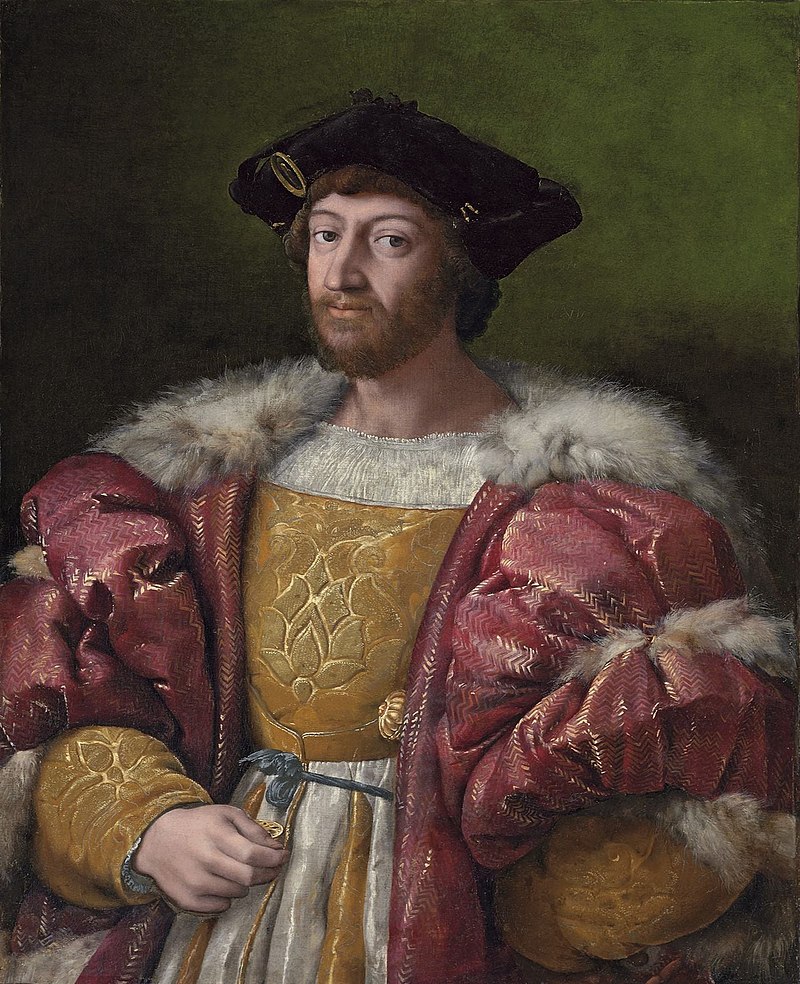
A portrait of Lorenzo di Piero de’ Medici, Duke of Urbino, by Raphael (1518). Note the ostentatious dress in the style of a French nobleman in contrast to the more modest patrician clothing worn by his grandfather Lorenzo the Magnificent and his uncle Giuliano. Source: Private collection. A portrait depicting Giovanni “of the Black Bands” painted after his death by Francesco de’ Rossi (1548). Source: Soprintendenza Speciale Per Il Polo Museale Fiorentino.
Transcript
1516 was a very bad year for Leo X. To paraphrase Queen Elizabeth II of England centuries later, 1516 was Leo’s annus mirabilis. His brother Giuliano died in March, which was not only a personal loss but a political one for the family, since he seems he might have been the most politically talented and popular member of the family since his father Lorenzo the Magnificent. Then, that summer, a monk named Bonaventura had declared himself the true, “Angelic Pope”, excommunicated the Pope and all his cardinals, and warned that the Ottoman Turks would invade Italy before converting to Christianity thanks to the King of France.
The unlikely partnership between the bookish, affable Giovanni de’ Medici and the rough-and-tumble Pope Julius II will finally bring the Medici back to power and set the stage for Giovanni’s turn as Pope Leo X, which would prove to be one of the most consequential papal reigns in history for reasons no one could have predicted.
A contemporaneous portrait of Giuliano della Rovere, Pope Julius II, by Raphael (1511). Despite their very different personalities, Pope Julius was Giovanni de’ Medici’s mentor and biggest benefactor, playing an essential role in the Medici’s restoration. Source: The National Gallery, London.
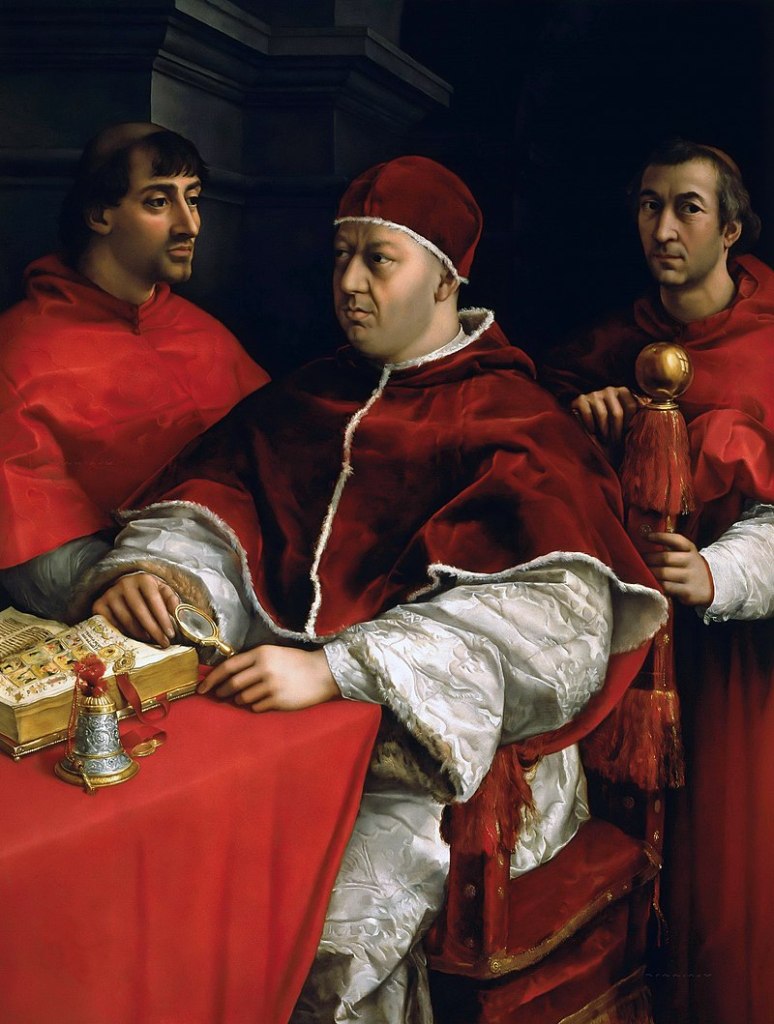
Raphael’s portrait of Pope Leo X with his cousins, Giulio de’ Medici (the future Pope Clement VII) and Luigi de’ Rossi, who were both cardinals (1518). Source: Uffizi Gallery, Florence.
Sketches of Hanno the Elephant by Giulio Romano (c. 1515). Hanno proved to be the most popular attraction at Leo X’s coronation and essentially became the Pope’s pet.
Transcript
According to a story, when Lucrezia was about to give birth to her son Giovanni, she had a dream that she gave birth to a lion. You don’t have to be all that skeptical to suspect this account is probably apocryphal. Still, there’s a tinge of truth in that Giovanni de’ Medici did end up becoming the hero that saved the future of the family. That much his father, Lorenzo the Magnificent, glimpsed when he boasted that making Giovanni a cardinal was his greatest achievement.
This time, we check in on the sons of Pierfrancesco de’ Medici, the brothers Popolano, Lorenzo and Giovanni. While Lorenzo tried to play a small, non-partisan role in Florence’s new government, Giovanni fell in love with one of the most famous and daring women of the Renaissance.
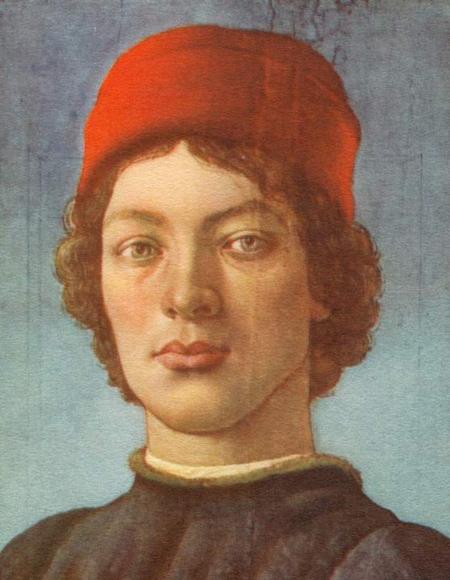
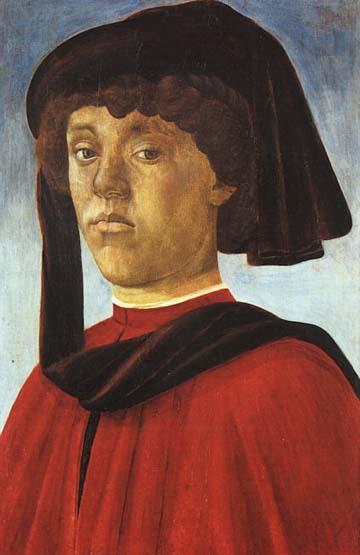
“La dama dei gelsomini” (“The Lady of Jasmine”) by Lorenzo di Credi, date unknown. It is believed to be a contemporaneous portrait of Caterina Sforza. Source: The Picture Gallery of Forli. A portrait by Filippino Lipi thought to possibly be of Giovanni di Pierfrancesco “il Popolano” (ca. 1490). Source: U.S. National Gallery of Art. A portrait of Lorenzo di Pierfrancesco “il Popolano” by Sandro Botticelli (1479). Source: Pitti Palace, Florence.
Transcript
Before we finally return to Piero de’ Medici, we need to check in on his cousins, the sons of Pierfrancesco, Lorenzo and Giovanni. They’re not to be confused with Lorenzo the Magnificent or any of the other Giovannis in the Medici family, which is one of the reasons I’m mostly only talking about them in their own episode. Plus honestly not much happened with the two after they plotted against Piero, becoming exiled, and then trying to ingratiate themselves with King Charles of France.









 The Medici Podcast