Categories
season two

Episode 28: The End of the Golden Age

The golden age of the Medici’s unofficial lordship over Florence is drawing to an end with Lorenzo’s death. Here we look back over Lorenzo’s legacy as the patron, the politician, and even the embezzler and the human being. Also, what exactly was Lorenzo’s contribution to the course of not only Florentine but European history as a whole? 
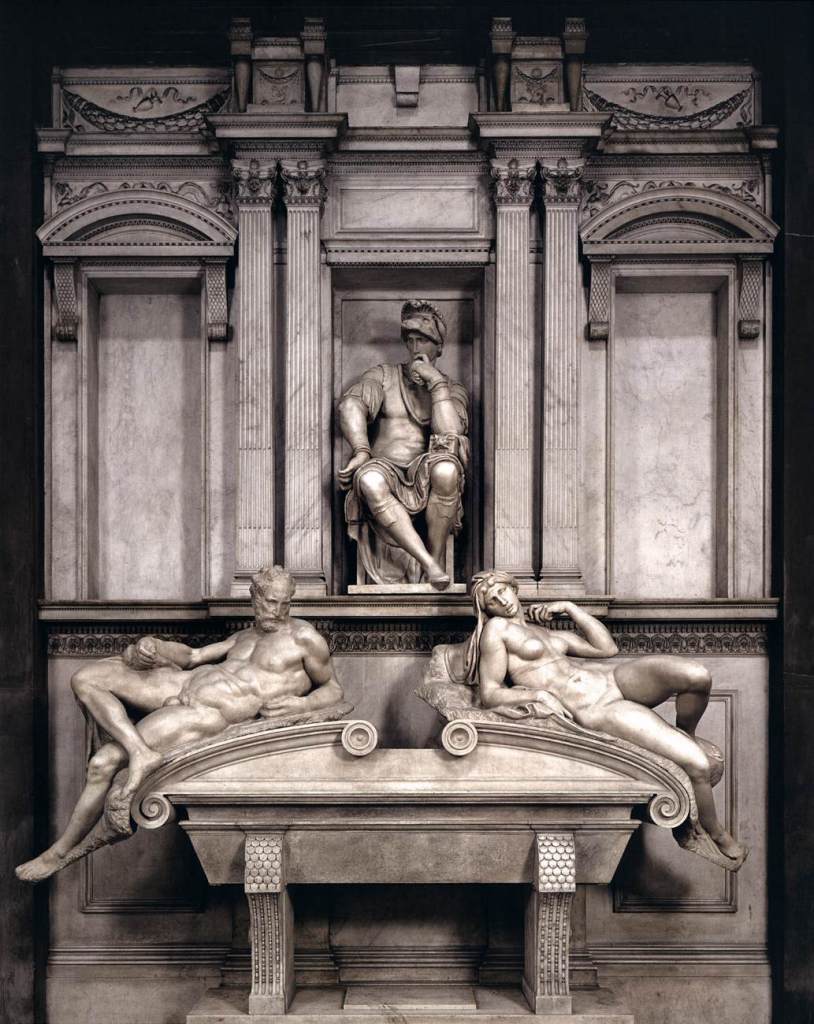
The tomb of Lorenzo de’ Medici, his brother Giuliano, and other members of the family in the New Sacristy in Florence. Lorenzo and Giuliano’s remains were reinterred there in 1532. The statuary at the tomb was carved by Michelangelo and commissioned by Pope Leo X (Giovanni de’ Medici).

Transcript

Last time, we talked about the Medici bank being in free fall. And Lorenzo himself was well aware of the bank’s problems. Once, he wrote to the signorie himself, explaining his last tax report to the government: “In making out this report, I shall not follow the same procedure as my father in 1469 because there is a great difference between that time and the present with the consequence that I have suffered many losses in several of my undertakings, as is well-known not only to Your Lordships but to the entire world.”
Categories
season two

Episode 27: The Decline and Fall of the Medici Bank

Lorenzo is at the height of his power and security. However, just behind the scenes, the family bank that caused the Medici to come into power in the first place is slowly but steadily falling apart, thanks to the Ottomans, a squabble between English royals, and, most of all, the ugly realities of politics. 

Transcript

Now when we last left Lorenzo the Magnificent, he was basking in what I think is safe to say was his greatest triumph, coming back to Florence from Naples with an end to a catastrophic war following behind him. Plus with some more tweaking of the Florentine Constitution and the creation of a new government body, the Council of Seventy, the Medici’s hold on power was secure – well, at least as secure as it could ever be.

Categories
season two

Episode 26: The Private Life and Patronage of Lorenzo de’ Medici

The Lorenzo we see from his voluminous letters is a man who had a short temper and bouts of depression, but was also capable of tremendous compassion and generosity. Unfortunately, his relationships with his own wife and sons were perhaps less than ideal.

Transcript

So you may have noticed I focused on Lorenzo’s activities as a politician, and not as a patron. This is despite the fact that Lorenzo is the rare historically celebrated leader who is actually better known for his activities in the cultural sphere than his political career. Now that we hit a point in our story where Lorenzo is basking in his victories over Pope Sixtus and is for the first time in a long time secure, I want to hit pause and look at Lorenzo as a family man and then as the head of a vast patronage network that made Florence one of the cultural capitals of Europe.

Categories
season two

Episode 24: Bloodshed

The Pope, his nephew, an archbishop, and a mercenary decide Lorenzo de’ Medici and his brother Giuliano have to die. Unfortunately, the conspiracy develops some hiccups, namely having to send a couple of clergy instead of a mercenary to take down Lorenzo…

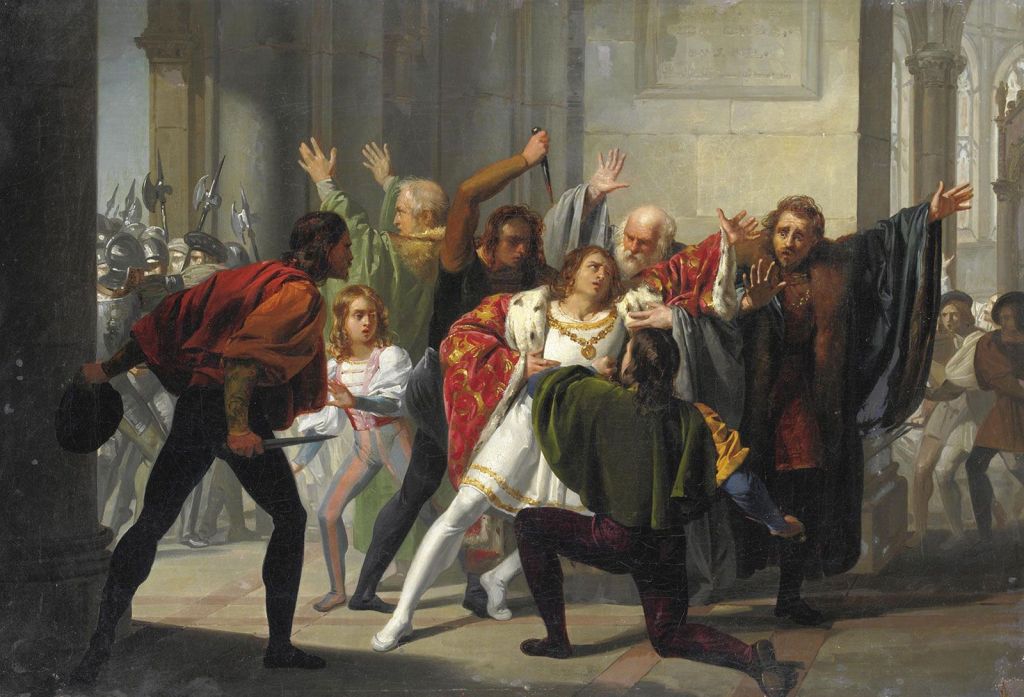
Stefano Ussi’s painting imagining the assassination of Giuliano de’ Medici (although note that Giuliano was supposed to have been kneeling when he was killed) (date unknown). Source: Private collection.
Leonardo da Vinci’s sketch of Bernardo Bandini, one of the executed conspirators. Date: 1479.

Transcript

On a late summer day in 1477, a battle-hardened mercenary, Giovan Batista, Count of Montesecco, was ushered into the private chambers of the Pope himself. Already flanking the Pope were his nephew, Count Girolamo Riario, and Francesco Salviati, the Archbishop of Pisa. Count Girolamo still blamed Lorenzo de’ Medici for not helping his uncle acquire territories for him in the Romagna. The Archbishop was barred from assuming his rightful post. In the heart of the spiritual center of Christendom, the three had come to discuss sparking a rebellion, and maybe even murder. Giovan had met with the archbishop and Girolamo a couple of times before in order to discuss overthrowing the Medici-dominated government in Florence along with the assassination of Lorenzo de’ Medici and his brother Giuliano. Giovan was skeptical of the whole scheme’s chances of success from the start, or at least that’s what he told the men interrogating him in Florence after the fact. In any case, he believed the whole thing was just a hair-brained plot dreamed up by Girolamo and the archbishop behind the Pope’s back. Now, however, here they were, talking about overthrowing the Medici in the presence of the Pope himself.

Categories
season two

Episode 21: The Rising Son

Even as a small child, Lorenzo had been thrust into the role of the public face of the Medici regime. Now an adult, Lorenzo’s own marriage to a Roman noblewoman from a clan claiming the Emperor Augustus and Julius Caesar as ancestors is a chance for the Medici to ascend even higher. Meanwhile, Piero is finally succumbing to his gout, just when both the domestic and foreign situations are starting to fall apart. 

“The Counterattack of Michelotto di Cotignola” (c. 1455), one of Paolo di Dono’s three paintings commemorating the Florentine victory over Siena at the Battle of San Romano in 1423, commissioned by Piero de’ Medici. Source: The Louvre, Paris.
Boticelli’s Adoration of the Magi (1475 or 1476), which includes a depiction of the 16-year-old Lorenzo de’ Medici on the far left. Source: Uffizi Gallery, Florence.
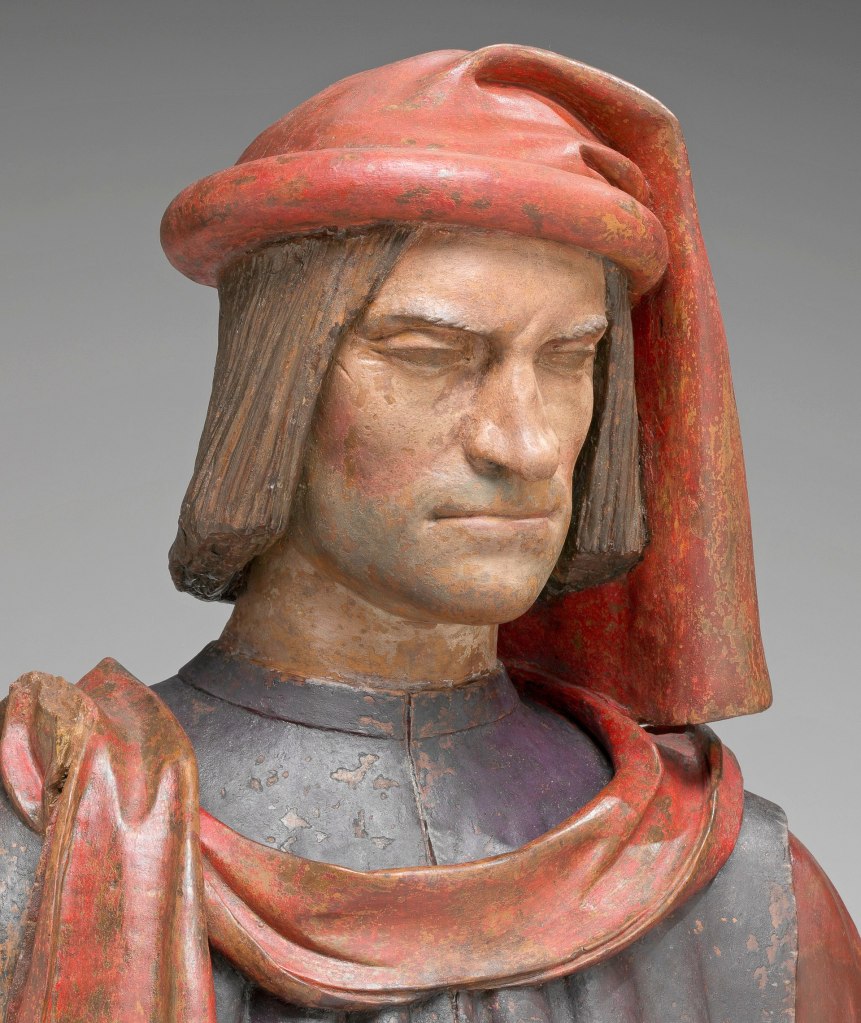
A posthumous terracotta bust of Lorenzo de’ Medici, which was likely based on a 1478 wax sculpture by Andrea del Verrocchio and Orsino Benintendi. Date unknown. Source: National Gallery of Art, Washington DC.
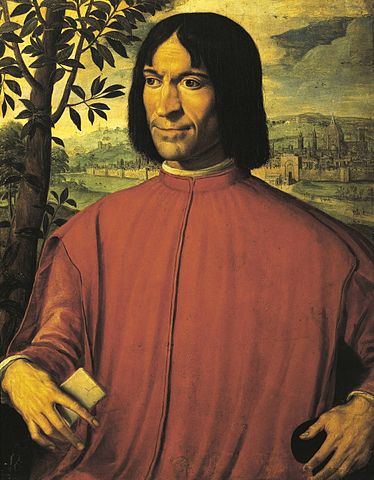
Girolamo Machietti’s posthumous portrait of Lorenzo de’ Medici. Date unknown. Source: Palazzo Pitti, Florence.
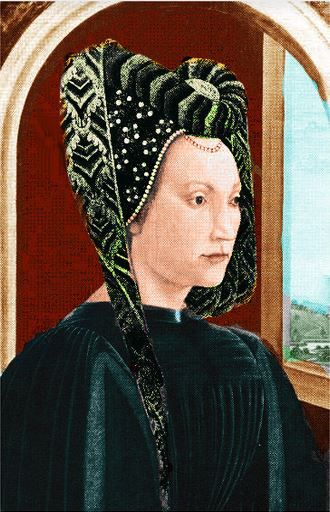
A portrait likely of Clarice Orsini by Domenico Ghirlandaio (1490s). Source: National Gallery of Ireland, Dublin.

Transcript

Well, I know “Rising Sun” is probably one of the most obvious word plays you can make in this case, but it really is just…too relevant. Because Lorenzo di Piero di’ Medici was exactly that. From a very early age he was seen as the future of the family, so much so that his poor father Piero, through no fault of his own, was seen as little more than a placeholder, whose most important job was to live long enough for Lorenzo to reach adulthood.

Categories
season two

Episode 20: Conspiracy or Countercoup?

Piero de’ Medici narrowly escaped death or abduction. But did everything happen as Piero and his son Lorenzo said? And just how will the Party of the Hill survive when they apparently bet everything on one scheme? 

One-Time
Monthly
Yearly

Make a one-time donation

Make a monthly donation

Make a yearly donation

Choose an amount

$5.00
$15.00
$100.00
$5.00
$15.00
$100.00
$5.00
$15.00
$100.00

Or enter a custom amount

$

Your contribution is appreciated.

Your contribution is appreciated.

Your contribution is appreciated.

DonateDonate monthlyDonate yearly

Transcript

Last time, we saw Piero narrowly dodge a possible abduction or assassination attempt. Only the fact that his son Lorenzo wasn’t recognized and was able to get back to Florence using the backroads foiled the plot. Or was that actually what happened? A silk merchant and staunch critic of the Medici regime, Marco Parenti, left behind an interesting memoir that was discovered, having laid forgotten in the archives, by historian Mark Phillips in the 1970s.