Categories
season three

Episode 41: The Prince

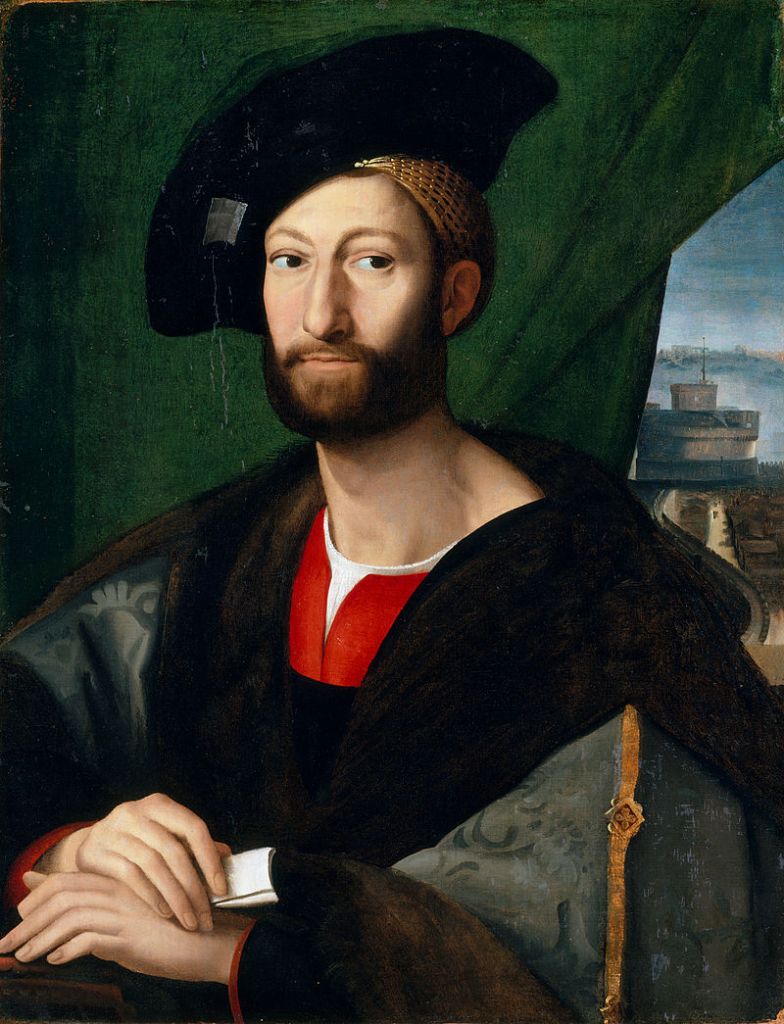
Pope Leo X goes through his own “annus mirabilis.” Meanwhile the next generation of Medici men come into their own: the wannabe aristocrat, Lorenzo “the Younger”, and the juvenile delinquent turned freelance mercenary, Giovanni of the Black Bands. 
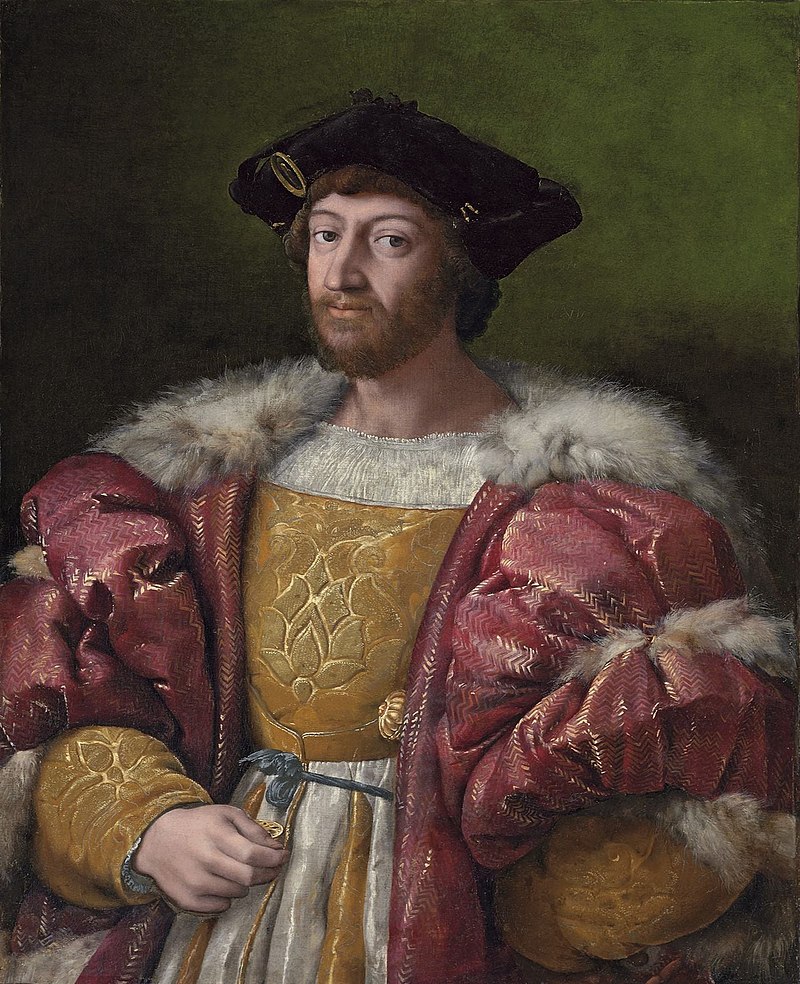
A portrait of Lorenzo di Piero de’ Medici, Duke of Urbino, by Raphael (1518). Note the ostentatious dress in the style of a French nobleman in contrast to the more modest patrician clothing worn by his grandfather Lorenzo the Magnificent and his uncle Giuliano. Source: Private collection.
A portrait depicting Giovanni “of the Black Bands” painted after his death by Francesco de’ Rossi (1548). Source: Soprintendenza Speciale Per Il Polo Museale Fiorentino.

Transcript

1516 was a very bad year for Leo X. To paraphrase Queen Elizabeth II of England centuries later, 1516 was Leo’s annus mirabilis. His brother Giuliano died in March, which was not only a personal loss but a political one for the family, since he seems he might have been the most politically talented and popular member of the family since his father Lorenzo the Magnificent. Then, that summer, a monk named Bonaventura had declared himself the true, “Angelic Pope”, excommunicated the Pope and all his cardinals, and warned that the Ottoman Turks would invade Italy before converting to Christianity thanks to the King of France.
Categories
season three

Episode 40: New World Order

We look at Pope Leo X’s reign, from how he got an edition of a pivotal Jewish text dedicated to him to the elaborate practical joke he engineered involving his pet elephant and an old-fashioned Roman triumph. But Leo also has to face the fact that  the fate of Europe now lays in the hands of three young, ambitious, and powerful monarchs. 

A portrait of Giuliano de’ Medici, duc de Nemours, who was Lorenzo the Magnificent’s youngest son (c. 1515) by Raphael’s workshop. Source: The Metropolitan Museum of Art, New York City.
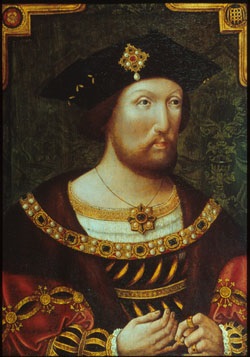
King Henry VIII as a young man. Date and artist unknown. Source: National Portrait Gallery, London.
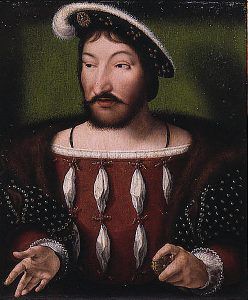
King François I of France (c. 1530) from the workshop of Joos van Cleve. Source: Private collection.
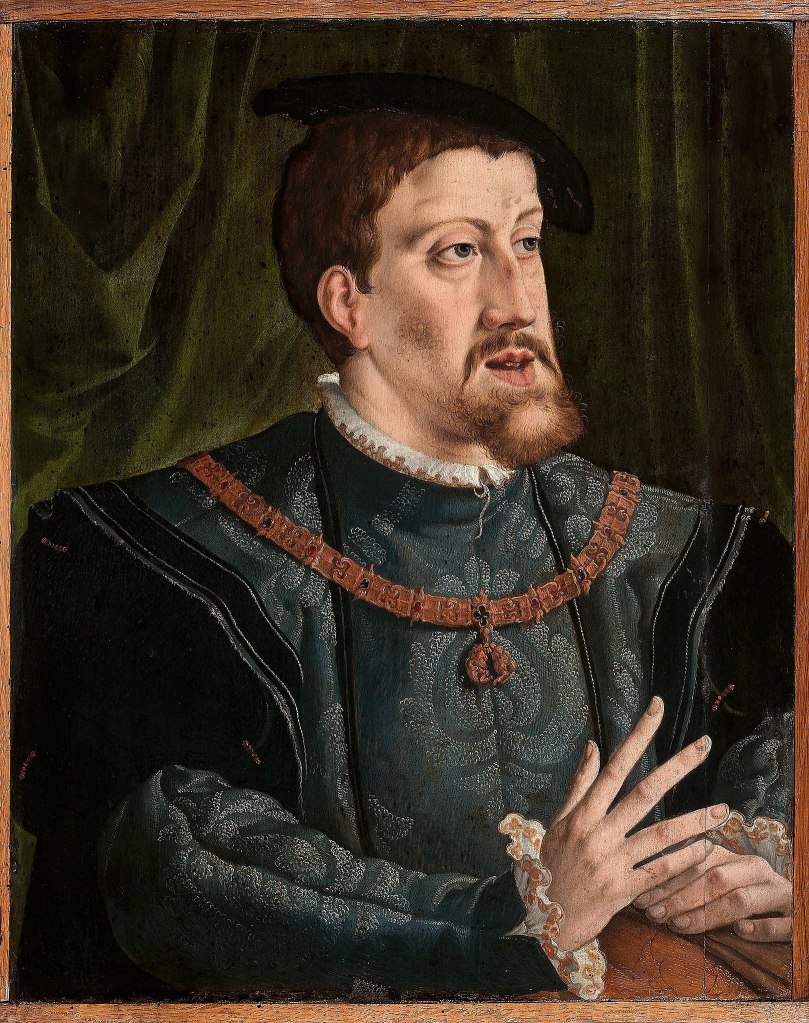
Portrait of Emperor Charles V as a young man by Jan Cornelisz Vermeyen (1535). Source: Private collection.

Transcript

When last we left Giovanni de’ Medici, he had exceeded even his father’s wildest ambitions by becoming Pope Leo X. So, from here on out, we’ll start to refer to him as Leo. There’s too many Giovannis in the story of the Medici anyway.

Categories
season three

Episode 39: The Lion of God

The unlikely partnership between the bookish, affable Giovanni de’ Medici and the rough-and-tumble Pope Julius II will finally bring the Medici back to power and set the stage for Giovanni’s turn as Pope Leo X, which would prove to be one of the most consequential papal reigns in history for reasons no one could have predicted.

A contemporaneous portrait of Giuliano della Rovere, Pope Julius II, by Raphael (1511). Despite their very different personalities, Pope Julius was Giovanni de’ Medici’s mentor and biggest benefactor, playing an essential role in the Medici’s restoration. Source: The National Gallery, London.

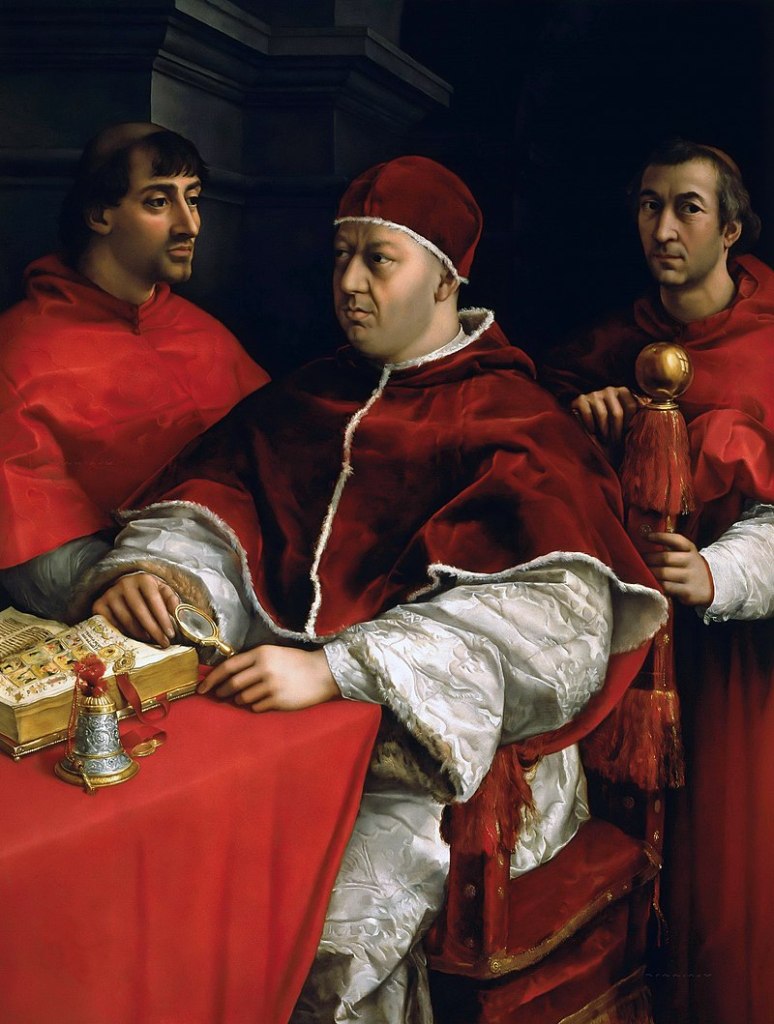
Raphael’s portrait of Pope Leo X with his cousins, Giulio de’ Medici (the future Pope Clement VII) and Luigi de’ Rossi, who were both cardinals (1518). Source: Uffizi Gallery, Florence.

Sketches of Hanno the Elephant by Giulio Romano (c. 1515). Hanno proved to be the most popular attraction at Leo X’s coronation and essentially became the Pope’s pet.

Transcript

According to a story, when Lucrezia was about to give birth to her son Giovanni, she had a dream that she gave birth to a lion. You don’t have to be all that skeptical to suspect this account is probably apocryphal. Still, there’s a tinge of truth in that Giovanni de’ Medici did end up becoming the hero that saved the future of the family. That much his father, Lorenzo the Magnificent, glimpsed when he boasted that making Giovanni a cardinal was his greatest achievement.