Categories
season three

Episode 47: The Old New Republic

Lorenzo the Magnificent’s granddaughter Clarice triggers a coup in Florence just by berating the man in charge. Meanwhile Pope Clement is driven to hide in a derelict palace in the mountains and receives an unwelcome visitor all the way from England.
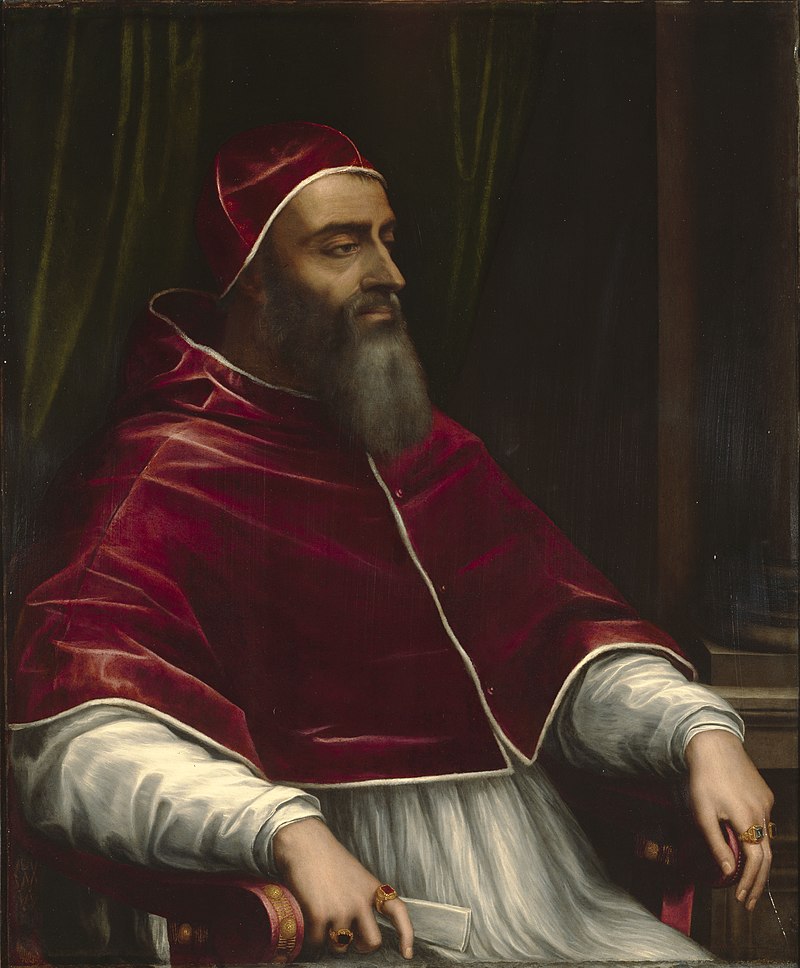
A portrait of Pope Clement VII after the Sack of Rome by Sebastiano del Piombo (c. 1531). Despite beards being unfashionable in Italy among the upper class at the time, Clement VII grew one as a sign of mourning for the Sack of Rome. Source: The Getty Center, Los Angeles, California.
An artist’s rendition of the Battle of Mohács (1526), which triggered the destruction of the independent Kingdom of Hungary and led to Hungary being split between the Ottoman Empire, Austria, and the Principality of Transylvania, along with the Hapsburgs claiming the crowns of Hungary, Croatia, and Bohemia. The image is based on the testimony of a soldier who participated in the battle (1555). Source: Chronicle Commissioned by Johann Jacob Fugger.
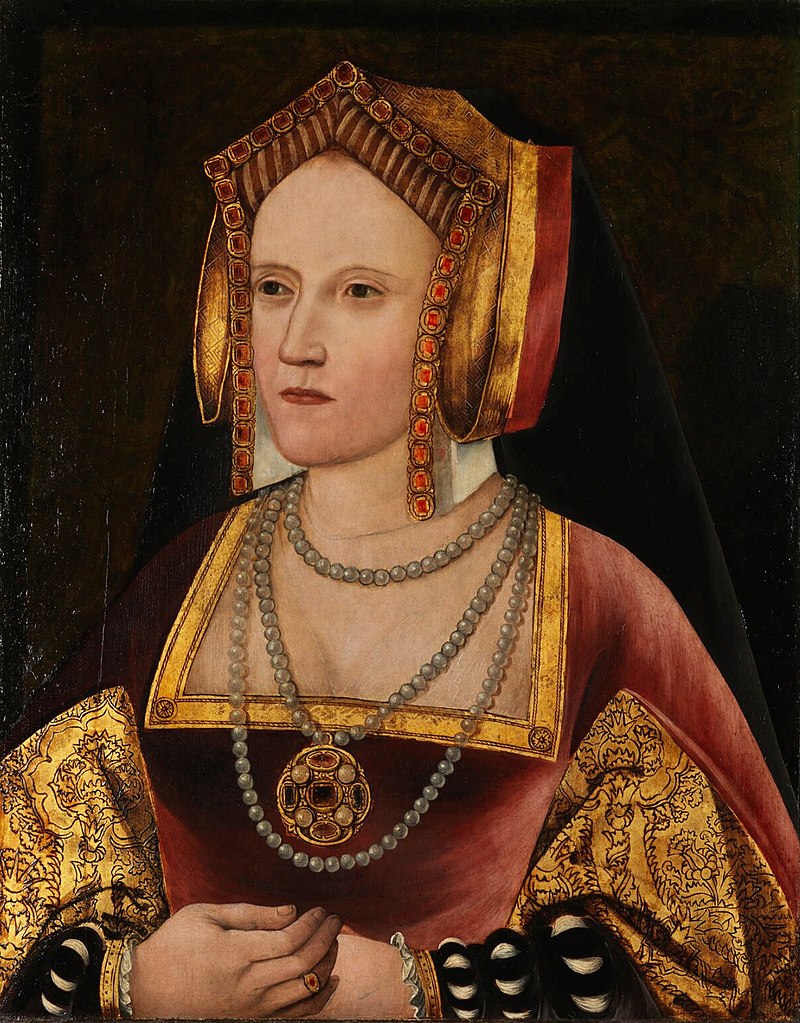
A contemporaneous portrait of Catherine of Aragon, Queen of England. Artist unknown (c. 1520). The matter of the annulment of her marriage to King Henry VIII would turn out to be a far bigger issue than Clement VII probably ever realized. Source: Lambeth Palace, London.

Transcript

When Emperor Charles V learned that his unpaid troops had torn apart Rome, he ordered his court to dress in black, as if mourning the death of a member of the imperial family. I have no doubt that Charles was sincere. After all, he was a devout Catholic, and he had put some effort into avoiding this very outcome. However, he was still a ruler, and he had practical reasons to lament this outcome as well. In modern terms, the Sack of Rome was a massive PR disaster for the imperial cause. It galvanized the League of Cognac. The imperial army looked like a pack of heretical barbarians. Even Henry VIII of England, who at this point was still loyal to the Pope, joined the alliance against the emperor.

Categories
season three

Episode 46 – The Sack of Rome

Pope Clement tries once more to loosen Emperor Charles V’s grip on Italy, another revolution in Florence is narrowly avoided through one man’s incompetence, and the stage is set for one of modern history’s most notorious war-time atrocities.

Dirck Volckertsz, “Sack of Rome in 1527 and the Death of Charles III, Duke of Bourbon” from The Victories of Charles V (1555/1556). Source: British Museum, London.
Francisco Javier Amérigo, The Sack of Rome (1884). Source: Victor Balaguer Museum & Library, Vilanova i la Geltrú, Catalonia, Spain.
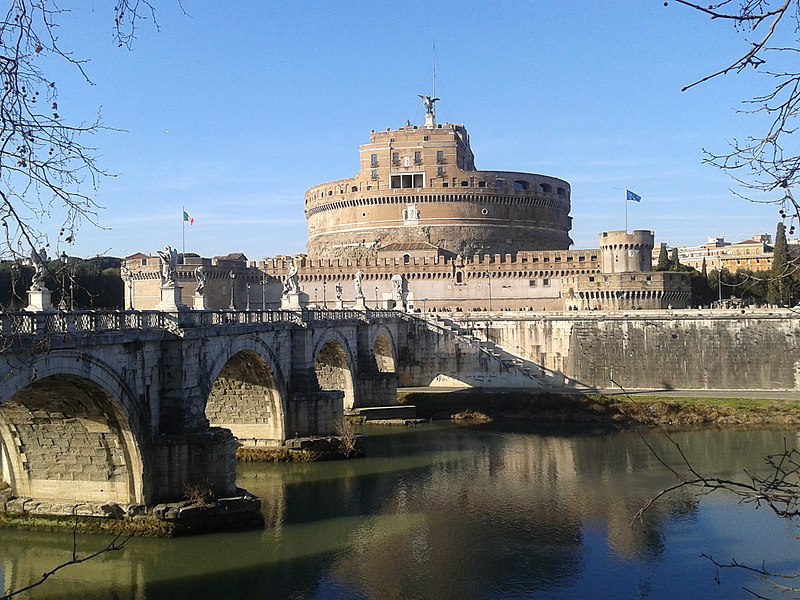
The Castel Sant’Angelo or the Mausoleum of Hadrian, where Pope Clement VII had to spend a nightmarish month taking shelter with 3,000 Roman civilians during the sack. Source: 0x010c on Wikimedia.

One-Time
Monthly
Yearly

Make a one-time donation

Make a monthly donation

Make a yearly donation

Choose an amount

$5.00
$15.00
$100.00
$5.00
$15.00
$100.00
$5.00
$15.00
$100.00

Or enter a custom amount

$

Your contribution is appreciated.

Your contribution is appreciated.

Your contribution is appreciated.

DonateDonate monthlyDonate yearly

Transcript

The Florentine Luigi Guicciardini, the brother of the more famous historian Francesco, was an eye witness to one of the darkest chapters in the history of the city of Rome. In his account of what happened to the city, he wrote, “All the sacraments of the modern Church were scorned and vilified as if the city had been captured by Turks or Moors or some other barbarous and infidel enemy.” Another eyewitness, Marino Sanuto, more succinctly wrote in his diary, “’Hell itself was a more beautiful sight to behold.” This was the Sack of Rome of 1527. It was certainly worse than the four times Rome was sacked in late antiquity and the Middle Ages, including the infamous pillaging of the city by Vandals in 410. In those times, the marauders still followed prevailing rules of warfare. Either that or Rome was so depopulated it was little more than a village or a small town. 1527 was something different, more akin to the atrocities we read about in the annals of the 20th century history. In fact, arguably it wasn’t just pillaging at all; it was an outburst of mass rage directed at a civilian population that was allowed to go on for not just days or weeks, but months.   

Categories
season three

Episode 45: The Edge of the Abyss

Clement VII brings back the artistic glories of Renaissance Rome, but disaster for himself, his family, and for Rome looms overhead. 

The Baptism of Constantine I (1517-1524) . It is part of a series of frescos started during the pontificate of Leo X and continued under Clement VII on the life and conversion of Emperor Constantine I by Giulio Romano and Giovan Francesco Panini. Pope Clement is included in the painting as Pope Sylvester. Source: The Apostolic Palace, Vatican City.
One-Time
Monthly
Yearly

Make a one-time donation

Make a monthly donation

Make a yearly donation

Choose an amount

$5.00
$15.00
$100.00
$5.00
$15.00
$100.00
$5.00
$15.00
$100.00

Or enter a custom amount

$

Your contribution is appreciated.

Your contribution is appreciated.

Your contribution is appreciated.

DonateDonate monthlyDonate yearly

Transcript

At first Giulio wanted to just use a version of his own name as a papal title, which would have made him Pope Julius III. It also would have kept with the tradition of Renaissance Popes adopting names that invoked the great heroes of Greek, Roman, and Byzantine history, like Alexander, Hadrian, and Leo. However, Clement was instead convinced by his advisors to choose a different papal name. I couldn’t find a source explaining exactly why Pope Clement chose the name that he did. One theory is that he did so to signal that he would be merciful to his enemies like Cardinal Soderini. In fact, despite Soderini’s involvement in the Cardinal Plot against Leo X, Clement did in 1521 allow Soderini to return to Rome, although perhaps it was at least in part a practical decision to stop him from getting up to too much mischief in Florence. Another, more likely theory is that Clement chose the name because at one point in his career climbing up the church hierarchy he was once the priest at the Church of Saint Clement in Rome. Personally I wonder if it might have been meant at least a little to be a sly if elaborate shot at Emperor Charles V, since Pope Clement I was according to legend imprisoned under the orders of the first century Roman Emperor Trajan. Even if it wasn’t intentional, later events would prove the connection to be ironic.

Categories
season three

Episode 44: Interregnum

After Leo X’s sudden death, the Medici are briefly out of power in the papacy. In the meantime, Emperor Charles V changes the landscape of European politics by getting elected as Holy Roman Emperor, and the fate of the Medici family is put in the hands of an orphaned, illegitimate son.

A 1528 portrait of Giulio de’ Medici, Pope Clement VII, by Sebastiano del Piombo. Source: J. Paul Getty Museum, Los Angeles, California.

Transcript

Since I didn’t want to risk adding more to the overstuffed narrative, I did just slide over what I think was one of the most important political events of the sixteenth century: the election of King Charles of Spain as Emperor Charles V of the Holy Roman Empire. It might just seem like icing on the cake from Charles’ point of view. What, being Archduke of Austria, Duke of Burgundy, and king of Castile and Aragon wasn’t enough, you had to be Holy Roman Emperor too? But to be fair Charles himself believed that if didn’t gain the imperial title, it would have been a risky situation. After all, the Holy Roman Emperor had historic claims on many of Charles’ titles in the Netherlands, and having an unfriendly emperor would even threaten the Hapsburg ownership of their own heartland, Austria. That definitely would have been the outcome if that emperor also happened to be the king of France. With the encouragement of the Elector of Brandenburg and the Elector of Saxony, King Francois threw his own crown in the ring. France wasn’t part of the Holy Roman Empire, but in the past foreign princes had run for the office and had come very close to claiming it, like the English prince Richard of Cornwall who was elected King of the Germans, but was never actually crowned emperor, in the thirteenth century.