
Pope Leo X goes through his own “annus mirabilis.” Meanwhile the next generation of Medici men come into their own: the wannabe aristocrat, Lorenzo “the Younger”, and the juvenile delinquent turned freelance mercenary, Giovanni of the Black Bands.

Transcript
1516 was a very bad year for Leo X. To paraphrase Queen Elizabeth II of England centuries later, 1516 was Leo’s annus mirabilis. His brother Giuliano died in March, which was not only a personal loss but a political one for the family, since he seems he might have been the most politically talented and popular member of the family since his father Lorenzo the Magnificent. Then, that summer, a monk named Bonaventura had declared himself the true, “Angelic Pope”, excommunicated the Pope and all his cardinals, and warned that the Ottoman Turks would invade Italy before converting to Christianity thanks to the King of France.
Bonaventura, whose words were fueled by his love for the lost cause of Savonarola, prophesized before a crowd in Rome that the Pope, five cardinals, and even the Pope’s dear elephant Hanno and his handler would all die that summer. And indeed, both Hanno and the handler became sick. The handler would die suddenly, although we don’t really know how since the ultimate fate of the handler got less attention from people at the time than his charge. Hanno could barely move and struggled to breathe. Leo actually stayed with Hanno as much as his duties as Pope would allow and called for the best medical assistance available. Of course, sixteenth century Italy didn’t have veterinarians, apart from a few specialists in the care of horses or cows. So the physicians Leo summoned had no recourse but to treat Hanno like they would any human. They diagnosed Hanno as suffering from acute constipation and gave him a laxative made from gold, in a much larger dose than they would give to a human. As you might have guessed, this only had the effect of helping to finish off the poor elephant.
Leo was genuinely devastated. He asked Raphael to paint a mural of the elephant, which sadly did not survive, and had it buried in the Belvedere Courtyard, an open space in the Vatican where Hanno first performed tricks to the entertainment of Leo and his court. Pope Leo himself wrote an epitaph for Leo, which the poet Filippo Beroaldo the Younger converted into Latin hexemeters. It reads,
““Under this great hill I lie buried / Mighty elephant which the King Manuel / Having conquered the Orient / Sent as captive to Pope Leo X. / At which the Roman people marvelled, – / A beast not seen for a long time, / And in my brutish breast they perceived human feelings. / Fate envied me my residence in the blessed Latium / And had not the patience to let me serve my master a full three years. / That which Nature has stolen away / Raphael of Urbino with his art has restored.”
On top of all this, Leo himself continued to suffer from an anal fistula, which required several painful and no doubt humiliating surgeries. Also that year he was struck with malaria. Although he made a full recovery, he was left completely bedridden for over two days. Things were no better on the political front. The worst blow was that Leo X had two options to help him cultivate the future of the family: his nephew Lorenzo the Younger, the only son of his brother Piero, or the other branch of the family, the family of the brothers, Giovanni and Lorenzo Popolano. The brothers had passed away, but still living was Lorenzo Popolano’s son Pierfrancesco the Younger, who like his father was a less than successful banker and businessman who preferred to stay out of politics or may have been to some extent pressured to keep out of politics by Leo’s branch of the family. With his wife Maria Soderini he had a son who was frustratingly to us named Lorenzo, but fortunately he became known to history as Lorenzino, so that’s the name we will go with.
Then there was the only child of Caterina Sforza and Giovanni Popolano, who was originally named Ludovico but was later renamed…what else…Giovanni. From the start his life involved conflict. His uncle Lorenzo the Younger and cousin Pierfrancesco went to the courts to try to take his inheritance from his father in order to fund their own failing businesses. Almost as if in response to his circumstances, Giovanni was from the start a juvenile delinquent. He was a poor and rebellious student, eluding his tutors in order to go off rampaging through the streets of Florence or to play in the countryside. The only adult in his life who could exercise any control over him was his mother Caterina. After she died when he was seven years old and he went into the care of his cousin Jacopo Salviati, the husband of Lorenzo the Magnificent’s oldest daughter Lucrezia, his behavior got even worse and he dived into the world of Florentine street gangs. When he was twelve he got involved in a gang fight and killed a boy around his age, which was enough to get him exiled from the city. Thanks to his family connections, though, he was allowed to return less than a year later. Then, he was banished for a time from Florence again. Although the details from the court records are sketchy, he lured a sixteen-year-old into the gardens of the Palazzo Medici where the teenager was beaten and raped by two unidentified adult men. When he was only fourteen, Giovanni went to Rome with Jacopo Salviati, who had been appointed Florence’s ambassador to the Papacy. There, he quickly fell in with a local Roman gang and got into a brawl with some rivals, during which he managed to kill a fully grown adult with actual combat experience.
In another era and place, even with a blue blood background Giovanni might have been in for a life as a career criminal or in a series of prisons and-or drug rehab centers. Luckily, though, Giovanni was born in sixteenth-century Italy, where society had the perfect place for him to channel his incredibly violent energies. He became a distinguished condottiero and founded his own band of mercenaries that eventually became known as the Black Bands for the colors they would wear after the eventual death of Pope Leo X. By the way, just for the sake of convenience I am going to refer to the Black Bands and Giovanni as Giovanni of the Black Bands, even though using these terms at this point in our narrative is a bit anachronistic. The Black Bands were the first mercenary company on record to use the hottest new military technology, the gun known as the arquebus, while riding horses. Ironically given his own chaotic childhood, Giovanni as a commander was a strict disciplinarian, among other things forcing his soldiers to bathe daily and practice good hygiene in order to avoid the plague. But he was also idealized by his troops, and Giovanni led them into victory after victory. At only the age of 22, Giovanni of the Black Bands was given the title “The Invincible.”
But Giovanni had more in his life than just war and killing. When he was 18, he married Maria Salviati, who just so happened to be Jacopo’s daughter. It was a politically beneficial match. Maria was through her mother Lucrezia the granddaughter of Lorenzo the Magnificent. So it bridged the gulf between the two branches of the Medici family, much like the match proposed between Lorenzo’s daughter Luisa and Giovanni’s own father Giovanni Popolano was supposed to, if not for Luisa’s premature death. However, the sources suggest it was actually a love match. This isn’t so hard to believe since the two were very close in age – Maria was just a year older – and had grown up together. And I suppose it’s reasonable to speculate that Maria just liked a bad boy. She was even said to have admired her husband’s talents at war so much that it was one of the reasons she loved him and agreed to the marriage. They would have only one child, named Cosimo, about whom we will hear much more about later.
Leo X would have cause to hire the services Giovanni of the Black Bands. Still, though, it seems like he kept the other branch of the family at arm’s length, likely because he never forgave them for siding with the republican cause during the years of the Medici exile. Instead, with the death of his brother Giuliano, Leo X turned to the only adult male not committed to the church left in his branch of the family, his nephew Lorenzo the Younger. Leo tried grooming Lorenzo to become the new head of the family. I forgot to mention that Giuliano actually abdicated from being the unofficial leader of Florence in 1513 a few years before his death. The sources suggest he did so because of the same lack of ambition that led him to decline the chance to become the new king of Naples, but I personally suspect that Lorenzo and his mother Alfonsina pressured Giuliano and Leo to give Lorenzo a chance to shine.
Unfortunately for…well, everyone, Lorenzo inherited all of his father Piero’s faults. If anything, he got a double dose of his flaws. Even though Lorenzo already sat on the Medici’s invisible throne, he and Alfonsina pestered Leo into having Lorenzo appointed the Captain of the Florentine army. Even some Medici supporters balked at this. Worse than even the naked nepotism was the fact that Lorenzo was far younger than anyone who had ever held the position of Captain before, at the age of 22 or 23.
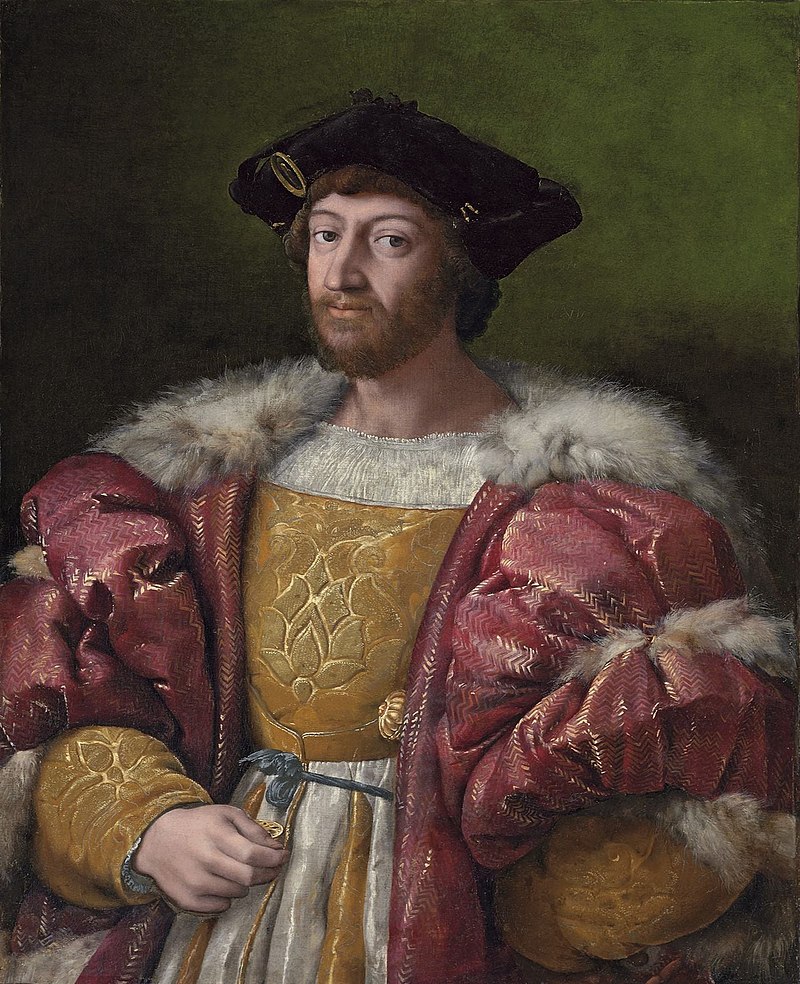
It didn’t help that Lorenzo lacked his uncle Giuliano’s knack for dealing with a government that was still ostensibly republican. He refused to dress like a patrician, instead appearing in public decked out like a French duke. Be sure to go to medicipodcast.com and the post highlighting this episode to see what I mean. Leo found it wasn’t enough to give Lorenzo instructions on what policies he should pursue as he once did with Giuliano; instead, he handpicked a small council to manage Florentine affairs in Lorenzo’s name. Even so, this did little to help Lorenzo become well-liked. Eventually Lorenzo decided he was tired of dealing with the Signoria of Florence and begged his uncle to give him his own fiefdom. Since Giuliano, the main opponent of such a project, was now dead, there was nothing standing in their way. Not learning from his predecessors Sixtus IV and Alexander VI who also tried to give their family their own little dominions, Leo X agreed.
It probably helped that there was a natural target, the Duke of Urbino, Francesco Maria della Rovere. Urbino was a well-fortified town, guarded by its own impressive walls and the surrounding Appenine mountains. It grew over the course of the Middle Ages. Since the twelfth century with a couple of brief interruptions, the area was ruled in the name of the Popes by the Montefeltro family who finally got the title of duke in 1443. Besides being one of the key fortresses of the Papal States, Urbino was also one of the most celebrated centers of the Renaissance. With the death of Duke Guidobaldo, the Montefeltro line died out and Urbino was passed on to Guidobaldo’s nephew, Francesco Maria.
Leo X apparently had a grudge against Francesco, even though he was also the nephew of his friend and one-time benefactor Pope Julius. It might have been because Julius had ordered Francesco to send his army to support the Medici restoration, but Francesco had refused. Leo also had perfectly legitimate reasons to depose Francesco as his overlord. Francesco was involved in the assassination of a cardinal and was implicated in a foreign plot against Pope Leo X. Still, though, given that Pope Julius was basically responsible for Leo X’s rise in the church and the restoration of the Medici, many contemporaries were outraged by Leo’s shocking ingratitude toward the della Roveres and his willingness to strip a della Rovere of his rightful inheritance for the sake of his inept nephew. Duke Guidobaldo’s widow, Elisabetta, even travelled to Rome to declare she was on Francesco’s side and that it was wrong for Leo to raise a hand against the family that once supported him. She even brought up that she herself had held Lorenzo on her lap when he was an infant. Despite her arguments, Leo X went ahead, excommunicating Francesco and declaring him deposed.
Leo X sent an army to claim Urbino for his nephew. Despite its fortifications, Urbino was captured without much of a fight. Taking Urbino was one thing, but keeping Urbino was something else entirely. Already in January of the next year, 1517, Francesco della Rovere led an army back to Urbino, supported by the Republic of Venice. Leo X had to deploy a Florentine army along with mercenaries, among them a mercenary company commanded by his cousin, Giovanni of the Black Bands. The army managed to hold Urbino long enough that Francesco Maria ran out of money to pay his own mercenaries. However, Lorenzo was hit by a bullet during a siege, and fled back to Florence to recuperate, leaving the actual war for his newfound duchy in other people’s hands. Worse, the Florentines were well-aware that Leo was spending the city’s money and its citizen’s lives just for a pet project for his hated nephew. When Leo became pope, it was a moment of pride that a son of Florence became Pope. Now, though, the war for Urbino made it look like Florence was reduced to being a vassal of the papacy. Nor was it a good luck that at almost the same time Pope Leo was committing men and firepower to ousting the nephew of the Pope who defended Italy from the barbarians, Italy was again being threatened from the outside. French forces under King Francois once more occupied Milan. Pope Julius must have been rolling in his grave or more likely bellowing and cursing.
Sometime around 1513, Niccolo Machiavelli had finished work on a book he first titled “Of Principalities”, but which would become known as “The Prince.” Even though the Medici recently had him arrested on accusations of being involved in a conspiracy, Machiavelli dedicated the book to Giuliano. After Giuliano died, the book was dedicated instead to Lorenzo. In his dedication, Machiavelli wrote:
“Desiring therefore to present myself to your Magnificence with some testimony of my devotion towards you, I have not found among my possessions anything which I hold more dear than, or value somuch as, the knowledge of the actions of great men, acquired by long experience in contemporary affairs, and a continual study of antiquity; which, having reflected upon it with great and prolonged diligence, I now send, digested into a little volume, to your Magnificence. And although I may consider this work unworthy of your countenance, nevertheless I trust much to your benignity that it may be acceptable, seeing that it is not possible for me to make a better gift than to offer you the opportunity of understanding in the shortest time all that I have learnt in so many years, and with so many troubles and dangers; which work I have notembellished with swelling or magnificent words, nor stuffed with rounded periods, nor with any extrinsic allurements or adornments whatever, with which so many are accustomed to embellish their works; for I have wished either that no honour should be given it, or else that the truth of the matter and the weightiness of the theme shall make it acceptable.
By the standards of the time, Machiavelli’s advice was shockingly pragmatic. A ruler should if possible cultivate a reputation for benevolence and generosity, something usually recommended by both Christian and humanist writers, but they should also be willing to do evil. “Hence it is necessary for a prince wishing to hold his own to know how to do wrong, and to make use of it or not according to necessity.” Likewise it’s better to be seen as merciful, but cruelty is sometimes needed to stop potential revolts and assassination attempts. This discussion leads Machiavelli to one of the more notorious quotes from his masterwork: “Upon this a question arises: whether it be better to be loved than feared or feared than loved? It may be answered that one should wish to be both, but, because it is difficult to unite them in one person, it is much safer to be feared than loved, when, of the two, either must be dispensed with.”
The Prince would go on to have such an impact that Machiavelli’s name would become an adjective in multiple languages. Arguably no writer before Machiavelli wrote so cynically about politics. For example he bluntly depicted religion as just a tool rulers in the past, including the great prophet Moses, used to keep their peoples in line. No wonder why historians, philosophers, political scientists still debate over the book and what Machiavelli’s intentions in writing it were. One philosopher, Mary Dietz, in her essay “Trapping The Prince” went so far as to argue the book was meant as a work of sabotage, to get the Medici to do things that would once again get them overthrown. Personally I don’t agree with this interpretation, but it’s a testimony to how revolutionary The Prince is and how it doesn’t quite fit in with the works of its time that such theories can sound convincing.
In any case, we have no proof that Lorenzo ever actually read a single sentence of The Prince. There’s a certain irony in having a history-making book written in your name and with a dedication to you, and you never even touch it.
So I had to put it off, but everyone’s favorite acidic German, Martin Luther, will finally show up next episode. Until then, thank you for listening, and buona note.
 The Medici Podcast