
Pope Clement VII sells his soul to Emperor Charles V to get back Florence. Part of the bargain includes Clement essentially signing off on the death warrant of the Republic of Florence.



Transcript
When we last checked in on Florence’s old new or maybe new old republic, it was struggling. As the months piled up, the situation only got worse. Niccolo Capponi’s policy of reconciliation was a complete failure. Part of the problem is that wartime is a horrible time to build a new government. But I suspect even if Florence wasn’t caught up in an unpopular war there would still be problems. Democracies tend to run badly if most of the people don’t share some of the same basic premises. It wasn’t just a case of the pro-Medici and the anti-Medici. Instead among the anti-Medici factions you also had the radical republicans who were drunk on their own overidealized visions of the republics of ancient Greece and Rome and who despised the religious fanaticism of Savonarola and his followers as much as the pro-Medici camp did, the so-called Wailers who yearned to one day fulfill Savonarola’s plans for a democratic theocracy, the conservatives like Machiavelli who just wanted Florence to go back to the good old days of the Ordinances of Justice, and the moderate republicans, many of whom came from the ranks of the ottimati and wanted to make Florence more like a Venice-style oligarchy. United as they were by their rejection of the Medici regime, these were groups with such fundamentally divergent plans for the future of the city that there was no way they could be in the same room with each other, much less build stable coalitions.
It didn’t help that violence was becoming a normal part of Florentine political life. Much of it was directed against the Medici. As much as the families who traditionally backed the Medici were targeted by forced loans and other tax abuses by the new republic’s officials, they also kept to their houses because of justified fears of assassins and gangs. One distant but prominent relative of the Medici, Ottaviano de’ Medici, was very nearly assassinated on the streets. One time, a gang of men wearing masks tore down wax statues of Lorenzo de’ Medici and Pope Leo and Clement that had been placed in Florence’s Basilica of the Most Holy Annunciation. However, people were also grumbling about the gonfaloniere Niccolo Capponi. As the Florentines had to keep living their lives under the expense and fear of war, the failures of the ottimati to bring peace only drove the Florentine public to either drift into the pro-Medici camp or emboldened the more extreme republicans. None of the factions seemed to have much interest in convincing the artisan and worker classes to support them either. There was no real reason for them to think life under the Medici was any worse than life under the restored republic. Indeed, many probably thought about how at least under the Medici the neighborhood pub didn’t have to close right after sunset and their brother wouldn’t have been arrested just for having a fling with a Portuguese sailor. The economy was still bad and the war was still going on just like it had under the rule of Pope Clement, and on top of that there were a lot of oppressive laws and censorship. In 1528, the Great Council even held a vote to name Jesus Christ the king of the city. Although many of the city’s aristocratic humanists scoffed at the measure, only ten had the guts to vote against it.
Luckily, though, by the summer of 1528 the War of the League of Cognac had reached its final act. With the help of the bulk of the Florentine military, the League was about to take control of Naples. Such a blow would deprive the imperial forces of their major gateway into Italy and open up another front that the imperials would have to deal with. The Florentines themselves hoped Naples falling would keep the war away from their backyard. Unfortunately, at that moment not far from victory, the Republic of Genoa which supplied most of the navy decided to switch sides. At the same time, the French managed to blow up the main aqueduct supplying Naples. However, this had the side effect of flooding the lands around the city, creating temporary marshes that became the perfect breeding ground for malaria. The plague and the threat of imperial reinforcements made the League give up the siege. The League navy tried to escape, only to be caught by an imperial navy that obliterated them. By the end of August, the Neapolitan fiasco cost Florence most of its navy and army. The Florentines knew that the failure of the siege of Naples increased the odds that their own city would come under attack. They also knew very well what had happened to Rome.
Niccolo Capponi acted. He passed an unpopular law that drafted all male citizens aged 18 to 40 in a militia. He also entered into a secret correspondence with the Pope himself, hoping to negotiate a peace treaty without having to go through a firmly anti-Medici government. The Pope’s demands were fairly simple: the return of his niece Caterina who was still being held as a hostage and raised in a convent, the restoration of the Medici arms in the churches founded by the Medici, and the restoration of any of the family’s property confiscated by the government. Even so, Capponi could barely even bring these fairly modest demands before the Signoria without getting shouted down. This was especially unfortunate because he knew he was running out of time. Pope Clement was about to finally make peace with Emperor Charles V.
The Pope was a mentally and physically exhausted man by this point. He had returned to Rome in October of 1528 and was devastated by the sight of the burnt-out, depopulated city. Even though beards were unfashionable among the Florentine elite, who liked to imitate the clean-shaven Greeks and Romans, Pope Clement grew a long, gray one as a sign of mourning for those killed in the Sack of Rome. This was in imitation of the Medici’s great patron, Pope Julius II, who also let his beard grow as a gesture for the people killed when the city of Bologna was besieged and taken in war. Especially after news of the League’s cataclysmic defeat near Naples reached him, he was ready to give in to Charles. To an ambassador from Siena Clement said with tears in his eyes, “These people wish me to make the Emperor master of Italy, and I shall do it.”
It wasn’t quite all helpless, though. Clement could offer Charles V the one thing he could never take by force: legitimacy. In the complicated rules of the Holy Roman Empire, a newly elected monarch was merely King of Germany and King of the Romans until he was crowned by the Pope, after which he truly became the emperor. Sure, it was basically the equivalent of keeping the same job only now you’re called the Director of Operations, but Charles understood the importance of such window dressing when it came to monarchies. Likewise getting the Pope to support his role in such an unquestionable way would go a long way in removing the stain left by the Sack of Rome on his reputation. Finally, Charles was determined to neutralize the threat Italy posed. Charles did write a letter to his aunt and the regent of the Netherlands, Margaret of Austria, assuring her he would do anything possible to face the threat of the Ottoman Empire. At almost the same time, he wrote to his brother Archduke Ferdinand in Austria, urging him to hang on against the Ottoman onslaught until Charles finally dealt with matters in Italy. It’s a rather remarkable document, given the massive threat the Ottomans posed to the rest of Europe. Still, I would argue it doesn’t really show that Charles wasn’t mindful of the Ottoman menace. Rather, it proved the problems his patchwork empire posed. As his letters reveal, his Spanish subjects resented the manpower and tax money from their country that he threw at Italy, and Charles had no reason to believe that King Francois wouldn’t try to stir up trouble in Italy the minute his back was turned. Charles was well aware he was taking a gamble by trying to finish fixing one leak before he went to try to fix the other one. Luckily the fortifications of Vienna and the mountainous terrain of eastern Austria kept the Ottomans at bay long enough for Charles to send support, although eventually Ferdinand would have to make peace with the Sultan by acknowledging his conquests in Hungary and Croatia, paying him a tribute, and even acknowledging him as his overlord.
Meanwhile through the early months of 1529, Charles V and the Pope hashed out terms, what would become the Treaty of Barcelona. As much as the two likely despised each other on a personal level, Charles could now afford to be magnanimous to the Pope who broke his word to him twice. No territory from the Papal States would be lost. In fact, Charles would agree to restore the city of Ravenna, which had been occupied by the Venetians, to papal rule. In the end, Charles even agreed that he would restore the Medici to power in Florence, even if it meant besieging and capturing the city. In return, the Pope would leave the League of Cognac, which he had hardly any money and forces left to commit to anyway, and would give Charles V the imperial coronation he desperately wanted. Even then, though, Charles could not resist giving the Pope a snub: the general he put in charge of capturing Florence was Prince Philibert of Orange, the very man who was one of the leaders of the imperial army during the Sack of Rome and who had kept the Pope prisoner in the Castel del’ Sant’ Angelo. Later that year, Charles also finally made peace with Francois. The negotiations were mostly conducted by Francois’ mother, Louise of Savoy, and Margaret of Austria. The fact that he was heavily in debt and his subjects were getting restless forced Charles and Margaret to be as generous to their archenemy Francois as Charles had been to the Pope. Charles even signed away his grandmother’s inheritance of the core lands of the duchy of Burgundy in what is now eastern France, something he once vowed he would never do. But at least the war was over and Charles could finally make plans for his crusade against the Ottomans. The only members of the League of Cognac that were still fighting were the Republic of Venice and Florence.
During this time, Florence might have made an unconditional surrender. However, in April of 1529 the newly elected Signoria was stacked with radicals. One of them, Jacopo Gherardi, had agents who intercepted one of Niccolo Capponi’s letters to the Pope. It was quickly decoded and found to be proof that Capponi had been in communications with the Pope without the government’s knowledge. This was more than enough to have Capponi dragged before the dreaded Council of Eight, which you might remember had the mission to judge all accusations of treason. Capponi only meekly begged that the Council absolve his son Piero, who was implicated in the letter. The debate got so heated these statesmen drew daggers on each other while crowds armed themselves outside.
Fearing an outright revolt or even worse a civil war, it was decided that Capponi would be impeached and an election for a new gonfaloniere would be held immediately. The Signoria still wanted to punish Capponi, with a few even demanding his death. However, two of the members of the Signoria who were supporters of Capponi and who had known about the letter previously decided to save their own skins and decided to just not show up to the meeting on the excuse of ill health. This kept the Signoria from reaching a quorum. So, yes, Capponi’s life was saved by parliamentary procedure. In the end, Capponi had to pay an exorbitant bail and was released under orders not to leave the city for five years. A crowd of his armed supporters accompanied him home, where he wisely stayed secluded until the end of the war. The new gonfaloniere was Francesco Carducci, a political unknown who only caught the attention of higher-ups when he served as an envoy to Siena. He was chosen because he was a radical republican but not a Savonarolan. Carducci dropped negotiations with the Pope, not realizing that both the Pope and the emperor had to be won over to secure the republic’s future. Carducci did send envoys to Charles V, but these were all coldly received. Florence’s fate had already been decided, as far as Charles was concerned.
The war was finally coming to Florence. Michelangelo himself patriotically worked on fortifying Florence and several of the towns under its control. By October of 1529, doomsday came. An army of 40,000 imperial soldiers marched across the borders of Tuscany and began pillaging the towns and countryside under Florentine control. It was not long before they surrounded the city, undeterred by the fact that the Florentines had destroyed all crops and supplies within a mile’s radius of the city. The Florentines were defiant from the start. However, there was no help coming. Venice had been forced to surrender. Florence now stood alone against an empire that spanned Europe.
As the people of Florence began to starve and suffer from plague under the pressure of the siege, on February of 1530 the Pope and Emperor Charles arrived in the city of Bologna. Charles came into the city almost in the style of an ancient Roman triumph. As he rode on horseback through the streets and doffed his hat at any pretty woman he saw watching the parade, an official proceeding him threw coins to the cheering crowds. When Charles met the Pope, he threw himself on his knees and stayed in that position even when he and the Pope began speaking. It was a long established way for the emperor to show their submission to the Pope, although I doubt the irony of how this modest display contrasted with the actual political reality was lost on anyone. To maximize the public relations potential, the crowning wwas scheduled to coincide with both Charles V’s birthday and the victorious Battle of Pavia. In his own rather odd words, the coronation made Charles “as happy as a man who just escaped from prison.” One person who was not happy was the artist Titian, who was apparently offended that the emperor only paid him one ducat for his portrait while it was known that Charles routinely gave two ducats to any woman that slept with him. In any case, the emperor and the Pope shared neighboring apartments in Bologna’s city hall, so they had a number of discussions. Learning from the Prince of Orange that the siege would be more expensive than he first realized, Charles made Clement an offer: he would set Alessandro de’ Medici up as a duke out of territory carved out from the duchy of Milan. Clement refused, offering to help support the siege from his own limited funds. It would be Florence or nothing.
As the siege dragged on through the months, the Florentines remained defiant, although the city began starving, and as often happened the famine was accompanied by plague. But there were heroes even in this hopeless situation. One was the military officer Francesco Ferrucci, who went out of the city in the middle of the night to secure fresh supplies. Unfortunately, one day Ferrucci was caught. In the resulting skirmish, the Prince of Orange was shot twice and killed, but Ferrucci was also severely wounded. When the new imperial commander saw Ferrucci being carried to a physician in a letter, he flew into a rage, drew his dagger, and stabbed Ferrucci repeatedly in revenge for the fallen Prince of Orange. When news of what happened travelled back to Florence, the populace’s already frayed morale seemed to break.
After a brutal ten-month siege, on August 12, 1530 a treaty was signed. At Pope Clement’s insistence, Florence would not be pillaged, and certainly not subjected to anything as brutal as the Sack of Rome. But this isn’t to say that Florence didn’t pay a heavy price. Modern estimates vary widely, but it is possible that as much as a third of the city’s population, perhaps as many as 36,000 people, died or fled the city during the siege. As Cecil Roth argues, the siege also capped off the economic decline that had afflicted Florence since the start of the sixteenth century. The Italian Wars would not yet be over for another three decades, but the siege of Florence was arguably the first sure sign of what was to come: an Italy dominated by foreign powers where the native nations had lost most if not all of the initiative. Clement’s lament that he handed Italy over on a silver platter to the emperor was not much of an exaggeration.
Certainly Clement signed off on the final end of the Republic of Florence, which if you define it as starting with the Ordinances of Justice had lasted for about 237 years. At first, it seemed like the only big changes would be the abolition of the great council and Clement’s son or cousin Alessandro being made Governor of the Republic or the Capo, meaning “head.” In other words, the invisible throne of the Medici was finally made visible. This reform also left open the possibility that, while Alessandro would be governor for life, someone outside the Medici family might claim the position later. However, an ominous sign was that these changes were announced not by a Florentine statesman or even a Medici supporter, but by an envoy from the emperor. He declared, “Florence, like all other states, would be better governed by one single person rather than the many.” The envoy also warned the people that any act of rebellion against their government would also be an act of rebellion against the empire.
Charles had seen what happened if you tried to trust a government whose leadership changes hands every couple of years. At least with a hereditary monarchy the continuity of power was much more stable, and there was at least a person you can put into your debt or set up a marriage alliance with. And having a republic with an executive for life wasn’t going to cut it. Charles insisted that Alessandro would have to be made a duke with Florence as his personal fiefdom to pass on to heirs. Even Pope Clement was reluctant to take such a fateful step, even telling Alessandro at one point he “absolutely opposed” to making Alessandro a duke or king over Florence. However, the days when such things were up to Pope Clement were long gone. In 1532, he named Alessandro the Duke of the Florentine Republic, a seemingly contradictory title that was inspired by the Venetian title of Doge. Clement also selected a board of reformers who were given wide-ranging powers to overhaul the constitution. Top on their list of changes was that the Signoria had to be abolished. The bell of the tower of the Palazzo della Signoria, which had been used for centuries to summon the people, was thrown from its tower and crashed to the ground, shattering into pieces. Those pieces were gathered, melted down, and made into medals celebrating the Medici.
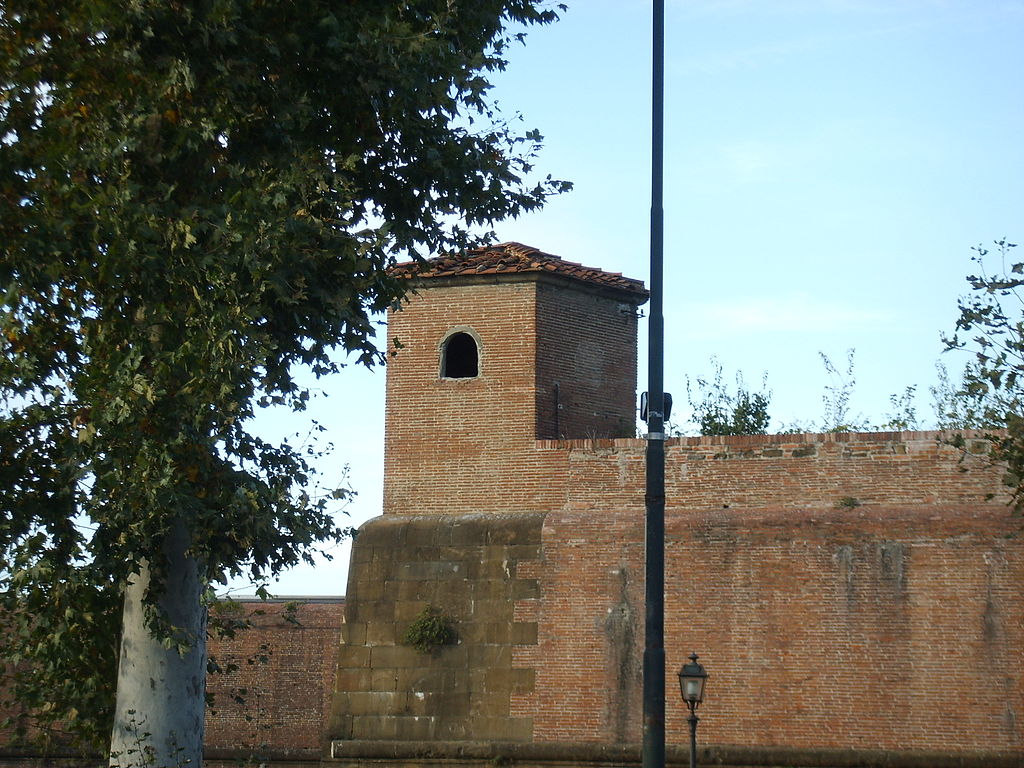
In the new government, the Duke and an executive council of four advisors, the Magistrato Supremo, were at the top of the pyramid. A Senate was established, whose members were appointed by the Duke, serve lifelong terms, and would rotate into the Magistrato Supremo. There was also a Council of 200. Many officials and magistrates were still elected through lot, although the higher up the government the more likely a statesman would be appointed by the Duke and would come from the ottimati. But perhaps the biggest and certainly the most visible sign of the fall of the Republic was the construction of the Basso Fortress, which was explicitly built to protect the Medici if there was a popular uprising.
The very ottimati who were responsible for the last exile of the Medici completely bent the knee to this new government. The experience of the war years made them associate republicanism with political extremism and religious fanaticism. As a result, the magistrates in the government who came from the ottimati families orchestrated out a brutal crackdown where at least 200 people were exiled or imprisoned, with Pope Clement and Duke Alessandro cleverly keeping their hands clean while giving their tacit approval. The ottimati had decided that Medici tyranny was preferable to republican anarchy.
Now that Florence had been dragged back into the Medici fold, Clement could set about achieving one of his greatest dreams: getting a Medici married to one of Europe’s premier royal families. This dream dovetailed nicely with his goal of forging ties with both Charles V and Francois of France to make sure there would not be another League of Cognac fiasco. Alessandro was to marry the emperor’s illegitimate daughter Margaret. And Caterina de’ Medici was to be wed to one of Francois’ sons. Charles only gave permission because he rightfully assumed Francois would refuse. Little did he know that Clement had already been talking with Francois about it for months. But we’ll return to the subject of Caterina’s marriage in future episodes.
Soon enough, though, this unlikely victory, marrying the descendent of Florentine bankers to a French prince, the fates handled Pope Clement one last humiliation. By 1534, Henry VIII completely lost patience with Clement’s stonewalling on the topic of the annulment of his marriage to Catherine of Aragon. So, Henry VIII declared his intention to name himself the head of the Church of England, giving him the authority to dissolve his own marriage. Henry VIII still never really became committed to Protestant doctrine, but that was cold comfort considering that now England was the second country outside of Germany to renounce papal authority (the first, by the way, was Sweden). It was bad enough to see another domino fall; it must have been much worse for Clement knowing it was a direct consequence of Clement’s own decisions.
Just a couple of months before the Parliament of England would formally make their king the spiritual head of their country as well, in September of 1534 Clement VII suddenly became gravely ill. He was dying from liver failure and had gone mostly blind. According to his autobiography, at that time Benvunto Cellini brought Pope Clement some new medals he had designed, but he could no longer see them. clearly. Then he began to fumble with his fingers at them, and having felt them a short while, he fetched a deep sigh.” Three days later, Clement died. Only a few days after his death his tomb was found covered with obscene graffiti and with human feces.
It’s been hard not to see Pope Clement’s papacy as a tragedy or maybe a dark comedy. In fact, I’d go so far as to say that Pope Clement has a really strong claim to be the worst pope in history, and that includes the teenage Pope John XII we talked about all the way back in Episode 1. Now, to be fair, many of Pope Clement’s problems came out of trends that were out of his hands. The spiritual authority of the papacy had been on the wane since at least the days of the Avignon papacy and the Great Schism. Nor was there much the Popes could do against the rise of the more centralized, nationalistic states of the early modern era. The time when Pope Innocent III could get even King John of England to grovel before him was long gone. Even the one thing Clement often gets blamed for, England starting down the road to Protestantism, was probably out of his hands. Even without Henry VIII’s megalomaniacal determination to get rid of his first wife no matter what, England would have likely turned Protestant anyway, like most of northern Europe.
That said, Clement’s reign is full of what they call “unforced errors” in sports, so much so that I often found myself personally frustrated reading biographies about him. True, Clement had to deal with a lack of qualified Medici to manage political affairs in Florence, but appointing a provincial priest proved to be a fatal mistake. Perhaps it seemed preferable to entrusting the regency over Florence to one of the ottimati, but regardless Clement’s actual choice for a stand-in for Alessandro and Ippolito didn’t have either the competence or the legitimacy. And even a master politician would have found it difficult if not impossible to stay completely neutral between King Francois of France and Charles V of the Holy Roman Empire. But however much of a threat Clement thought Charles V to be his decision to continue to back Francois even after the disaster that was the Battle of Pavia is just baffling. There were so many exit ramps on the way to the Sack of Rome it’s hard for me not to blame Clement at least in part for that tragedy. If Clement hadn’t played his hand so badly, he likely would have never found himself so completely at the mercy of Charles V. In that scenario, he would have been free to give Henry VIII the annulment he wanted so badly and neither the Siege of Florence or agreeing to turn Florence effectively into a monarchy would have been necessary. Again, I don’t think Clement could have done too much about either the long-term power of the papacy, the course of the Reformation, or the escalating encroachment on the independence of the Italian states. Nothing he did helped, though, to say the very least.
Join me again next week, as I talk about the first Duke of Florence, a man who may have been Clement’s son as well as the son of a Black woman.
 The Medici Podcast