
Lorenzo the Magnificent’s granddaughter Clarice triggers a coup in Florence just by berating the man in charge. Meanwhile Pope Clement is driven to hide in a derelict palace in the mountains and receives an unwelcome visitor all the way from England.

Transcript
When Emperor Charles V learned that his unpaid troops had torn apart Rome, he ordered his court to dress in black, as if mourning the death of a member of the imperial family. I have no doubt that Charles was sincere. After all, he was a devout Catholic, and he had put some effort into avoiding this very outcome. However, he was still a ruler, and he had practical reasons to lament this outcome as well. In modern terms, the Sack of Rome was a massive PR disaster for the imperial cause. It galvanized the League of Cognac. The imperial army looked like a pack of heretical barbarians. Even Henry VIII of England, who at this point was still loyal to the Pope, joined the alliance against the emperor.
But what made the Sack look even worse was another disaster that happened just a year before. Not long after taking the island of Rhodes, Suleiman was once again on the march westward. He besieged and took the fortified mountain city of Belgrade, which opened a gateway for the Turks through the Carpathian Mountains. Several years later, on April 16, 1526, Sultan Suleiman himself led a large army into southern Hungary. His army was at least twice the size of the Hungarian forces that King Lajos II, King of Hungary, Croatia, and Bohemia, had quickly gathered. Over the past several decades, the Hungarian monarchy had been weakened under the boot of the country’s overpowerful nobility. They had systematically dismantled Hungary’s once fearsome mercenary force, the Black Army, and the kingdom’s bureaucracy. Worse, by the time the Ottomans came marching, Hungary was in an alliance with Austria, but they had failed to inform Archduke Ferdinand of their battle plans and of the seriousness of the Ottoman threat. In fact, the only foreign soldiers that arrived to help was a small Polish battalion. On top of all this, Lajos II and his advisors made the rather inexplicable decision to put all their chips on a single confrontation against the Turks near the town of Mohacs on the Danube River, rather than going on the defense or relying on guerilla tactics.
Suleyman was able to trap the Hungarian forces in a pincer movement. In a matter of hours, Sultan Suleyman won the battle, wiping out the entire army and much of Hungary’s nobility in a single stroke. The 20-year-old Lajos II tried to retreat. However, while trying to ride his horse up a steep incline, he fell into a stream and his armor was too heavy to let him rise, causing him to drown. In just one battle, one of the great powers of eastern Europe was about to be dismantled.
With the deaths of not just the king but much of the country’s leadership, Suleyman was able to take much of southern Hungary all but unopposed. Some of the surviving Hungarian nobility elected as their next king Janos Zapolya, a powerful Slavonian magnate who had been entrusted with territory in the eastern part of the kingdom that would later become the independent Principality of Transylvania. Other nobles rallied around Emperor Charles V’s brother, Archduke Ferdinand, who happened to be the husband of King Lajos’ sister Anna. He was able to take control of the western and northern part of the country. Ferdinand was also recognized as Lajos II’s successor in Croatia and Bohemia, adding even more titles and lands to the Hapsburg ledger. You can imagine what people thought a year later when the greatest monarch in Christendom responded to the biggest display of the Ottoman threat since the fall of Constantinople by…letting an army loot the spiritual capital of Christendom.
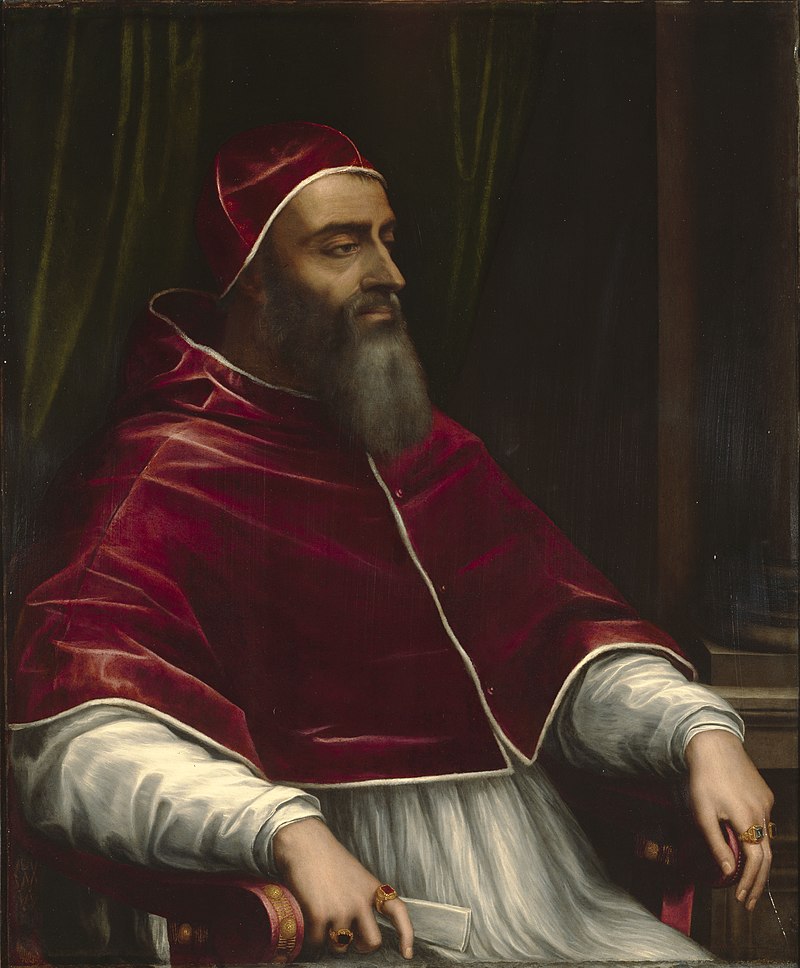
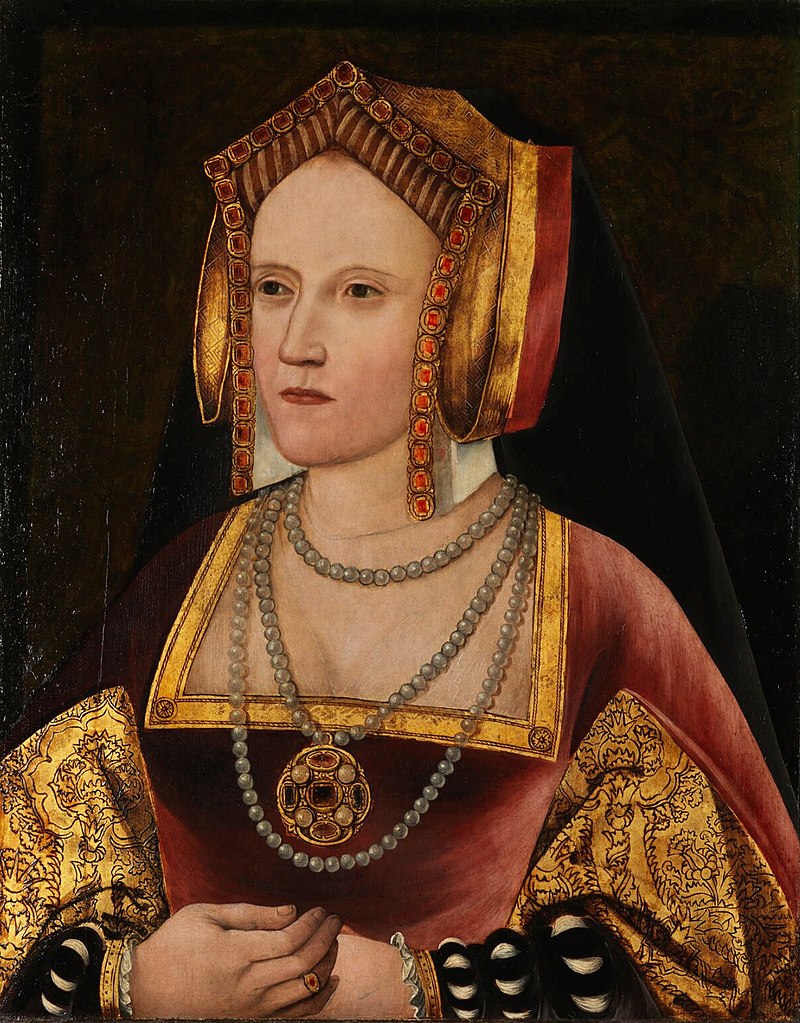
As for Pope Clement, he had to live with knowing two of his and Pope Leo’s worst nightmares, the growth of the Hapsburgs’ own empire and Ottoman expansion west, happened almost simultaneously. Still, it’s hard to keep even a mediocre pope down. Even though Pope Clement had signed terms with Emperor Charles V and the Roman citizens who had taken shelter there had been allowed to leave, Charles understandably kept Clement under lock and key. So Clement waited until his guards became complacent, disguised himself as one of his officials, and slipped out of Rome. From there he fled to Orvieto, an almost impregnable mountain city in central Italy on papal territory. Clement was free, but he had no money and his options were non-existent. At Orvieto he stayed at what a Venetian ambassador described as a “ruinous and decayed old palace” with “roofs fallen down.” Pope Clement was heard to have complained, “It was better to be captive in Rome than here at liberty.” It was while at Orvieto that the Pope had an audience with Stephen Gardiner, a bishop from England. He came with a simple request: King Henry VIII wanted to annul his marriage to the queen, Catherine of Aragon. She had numerous miscarriages; a son was born, but he had died in infancy. Her and Henry’s only child who lived past infancy was a girl, Mary. Normally, such a request would have been unexceptional, almost routine. The strict rules of the Catholic Church demanded lifelong marriages and forbade divorces, but such restrictions were inconvenient to royal and noble power politics and the need to produce heirs to preserve lineages.
Since the Church’s rules also forbade consanguinity, marriages between people who were related within certain degrees of kinship, and Europe’s royal families and noble clans all tended to be closely related, it was easy enough for the Church to just suddenly notice the couple were so closely related the marriage should have never been legal in the first place, dissolve the marriage, and leave the children born to the marriage legitimate since their parents had married in good faith. Or in situations where the spouses were given an exception to the rules, a pope could just nullify the previous decree and dissolve the marriage. In fact, everyone would have known of a scandalous case that took place just 30 years ago, when King Louis XII of France asked the Pope to annul his marriage to his first wife, Jeanne of France. Part of his argument was that, because of a mysterious physical deformity, Jeanne was unable to conceive children. But besides heirs, Louis also wanted to be free to wed Anne, the heiress to the duchy of Brittany, for political reasons. If tabloids existed back then, the trial would have been reported on it for years. In the end, Pope Alexander VI granted Louis his annulment, and Jeanne retired to a convent. So there was some precedent.
To try to simplify a really famous but complicated story, before she married Henry VIII Catherine of Aragon had been betrothed to Henry VIII’s older brother, Arthur. After Arthur died, she was then betrothed to Henry. There were a couple of verses from the Bible that seemed to condemn such marriages, most importantly Leviticus 20:21: “If a man shall take his brother’s wife, it is an unclean thing…they shall be childless.” The Pope at the time, Julius II, issued a dispensation allowing the marriage, on the basis that Catherine claimed her marriage to Arthur had never actually been consummated. Clement almost certainly would have agreed to annul Henry’s marriage to Catherine. Except the real knot in the issue wasn’t biblical verses or the right of one Pope to overturn a decision made by a previous Pope. It was the fact that Catherine of Aragon just so happened to be Charles V’s aunt. In fact, soon after his first meeting with Gardiner, imperial envoys arrived at Orvieto, demanding that the Pope not grant the annulment. So Clement decided to string along the English for now. Even then, he probably had no inkling that this otherwise unexceptional affair would be the seed for another disastrous legacy he would bequeath on the Catholic Church.
For the time being, there was yet another catastrophe Clement was powerless to stop. If anyone could have taken a poll at that time and place, Clement’s popularity in Florence would have probably been found to be in the single digits. He was so hated that when news of the Sack of Rome reached the people there, the city broke out in celebration. For too long Clement had milked the city dry to help pay for the League of Cognac’s wars and the indemnities the emperor demanded from him following his defeats. At least now the war would be over and the Pope was brutally humiliated in the bargain.
Then on late May of 1527, just several weeks after the Sack, Piero the Unfortunate’s daughter, Clarice Strozzi, had a furious confrontation with Florence’s unpopular regent, Cardinal Silvio, in the Palazzo Medici. She furiously denounced Clement for refusing to promote her son Piero to the office of cardinal and for letting her other son Filipo become a hostage to the imperial forces in Naples, at a time when Clement was about to break his agreements with Charles. Anyway, she went to argue, the Medici fortune was being hoarded by a pack of bastards, meaning Clement and Alessandro and Ippolito, and kept away from the legitimate heirs of the family, referring no doubt to herself and her children. In fact, some peasant priest from the provinces and two illegitimate children had no right to represent the family at all. A gun fired off nearby in the palace, either accidentally or not. Thinking she was about to be assassinated, Clarice escaped into the gardens and made a mad dash away from the palace grounds. This was not the end of it. The next day, her husband Filippo Strozzi later came to the palace with an armed retinue. Cardinal Silvo tried to raise a garrison to defend himself, only to be bluntly told that the treasury was empty and there was no way Pope Clement could spare any funds or men. Quietly, the regime folded. Filippo Strozzi negotiated for Cardinal Silvio, Alessandro, and Ippolito to quietly leave the city. They made their way north to the city of Parma on papal territory. Eight-year-old Catherine de’ Medici, who had been living in the Palazzo Medici, was suddenly taken away from her tutors and servants as a hostage and placed in a series of convents. That night the arms of the papacy were removed from the city gates and replaced by those of the republic.
The Signoria was purged and replaced by candidates who would be friendly to the Florentine elites, the ottimati, and unfriendly to the Medici. The new Gonfaloniere, Niccolo Capponi, came from one of Florence’s top noble families and was the son of one of the leaders of the republic after the downfall of Piero the Unfortunate. Acknowledging that the ottimati would like the Medici be quickly brought down if they tried to rule alone, as soon as he was in office he reached out to the different factions. To appease more radical republicans, he worked toward the reestablishment of the grand council that the Medici had abolished. For the Piagnoni, the Wailers, who still yearned for the good old days of Savonarola, Capponi signed off on a rapid series of puritanical regulations. Harsh sodomy and blasphemy laws were put into place, it became illegal and punishable by fines for women to dress too luxuriously in public, and horse races and traditional Carnival celebrations were suppressed. Jewish bankers were banished from the city. Gambling was restricted, as were the hours of taverns. The government set up a new department to handle the censorship of books, and a new law declared that only members of the clergy could debate religious topics. And these new laws were actually enforced. In an act of spontaneous protest, one citizen deliberately threw a crucifix into a well. He was executed.
Still, Capponi tried to promote reconciliation with supporters of the old Medici regime. Here, though, he found out how little power over the government he actually had. Anti-Medici partisans were the ones actually running many of the levers of government. They targeted pro-Medici families with higher demands for tax payments and arranged for the arrests of Medici supporters on questionable grounds. It certainly didn’t help that a special judicial tribune was established which was allowed to hold its deliberations in secret and which could circumvent most of the usual standards of evidence and rules that restrained Florentine courts.
Still, despite these and a few other minor reforms, the new republic was really just the old one, and its leaders promoted the idea that their government was a continuation of Savonarola’s fondly remembered republic. If anything had changed, the republic seemed to be even more openly under the domination of the ottimati, although in practice things were a bit more complicated. No representatives of the lower middle-class and the artisan and worker classes were ever invited to give their blessing to the regime change or discuss potential reforms. In fact, the new leaders of Florence never even bothered calling a general assembly or repealing the Medici law abolishing general assemblies. As far as the leaders of the restored republic were concerned, Florence’s destiny was to be a Venice-style oligarchy.
While people like Capponi might have been able to keep the rival factions in check, as always foreign affairs remained a threat that could overturn the entire ship at any moment. Medici or no, Florence was stuck as a member of the League of Cognac. And since Pope Clement was not in charge of Florentine affairs anymore, the other members of the League no longer trusted the Florentine government to stay committed to the war effort. And probably Florence would have happily made a separate peace with Charles or jumped across the fence to the imperial camp. The problem was that any treaty with Emperor Charles would have to come with large payments which Charles desperately needed to pay his armies, and Florence just didn’t have the cash either. So the new government was basically stuck in a war they didn’t want and couldn’t benefit from, fighting alongside allies who didn’t feel any particular need to go out of their way to help and protect them, and they couldn’t even negotiate their way out of the whole mess because the price tag would be too high.
But you know who did still have some bargaining chips to offer the emperor? Poor Pope Clement, in his ramshackle palace off in the Umbrian mountains.
Thank you for joining us, and buona notte.
 The Medici Podcast