
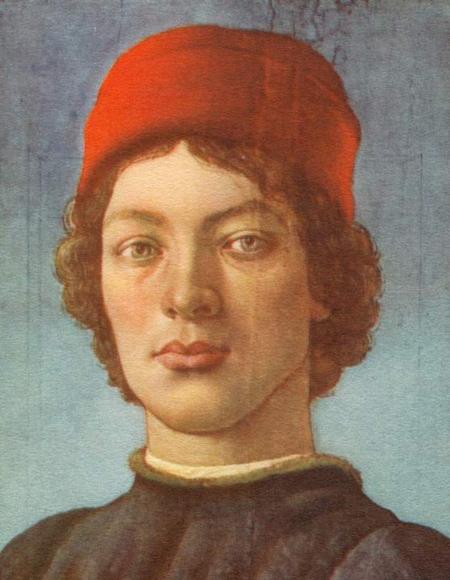
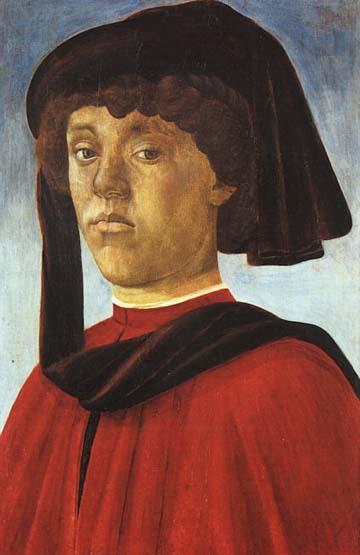
This time, we check in on the sons of Pierfrancesco de’ Medici, the brothers Popolano, Lorenzo and Giovanni. While Lorenzo tried to play a small, non-partisan role in Florence’s new government, Giovanni fell in love with one of the most famous and daring women of the Renaissance.

Transcript
Before we finally return to Piero de’ Medici, we need to check in on his cousins, the sons of Pierfrancesco, Lorenzo and Giovanni. They’re not to be confused with Lorenzo the Magnificent or any of the other Giovannis in the Medici family, which is one of the reasons I’m mostly only talking about them in their own episode. Plus honestly not much happened with the two after they plotted against Piero, becoming exiled, and then trying to ingratiate themselves with King Charles of France.
Lorenzo and Giovanni involved with taking various administrative and diplomatic posts with the new government. Lorenzo in particular was involved with the plans to reform Florence’s constitution and administration. Overall, though, they kept a low profile, siding openly with neither the pro-Savonarola or anti-Savonarola factions that took over Florentine politics. While a couple of the pro-Medici leaders schemed to create a new government that would have them and not Piero at the head, there’s virtually no evidence they ever gave such plans their blessing. Perhaps they knew such plans were not worth risking their necks. Or perhaps they genuinely were committed to the idea of a republic where no one family, even their own, had a monopoly on power. Certainly by embezzling money from their inheritances their cousin Lorenzo the Magnificent gave them every reason to reject what his branch of the family had built.
Despite this animosity, Lorenzo di Pierfrancesco still had a role to play in his cousin’s grand dynastic plans. As his guardian, in 1482 Lorenzo the Magnificent had him married to Semiramide Appiano, the daughter of a nobleman who ruled the small principality of Piombino which strategically sat on the border between Florence’s sphere of influence and the territory of the independent republic of Lucca. The wedding was another example of Lorenzo the Magnificent trying to expand the Medici’s marriage alliances outside the fishbowl of the Florentine elite, especially since Semiramide was also related to the royal family of Naples. The couple had two daughters, Ginevra and Laudomia, and one son who lived to adulthood, who was of course, confusingly for us, named after his grandfather Pierfrancesco. Luckily, we don’t really need to spend time with Pierfrancesco. Pierfrancesco’s own son, however, will play a rather dramatic role in our story, but that’s for another time.
This marriage was significant enough that one of Botticelli’s most famous works, The Rites of Spring, was commissioned for it. Art historians aren’t actually sure if it was commissioned by Lorenzo the Magnificent or Lorenzo di Pierfrancesco himself. In either case, as I mentioned in an earlier episode, Lorenzo di Pierfrancesco was an avid patron of the arts and collector of rare books, whose patronage and scholarly efforts are unfairly overshadowed by his famous cousin. He supported artists like Boticelli and Michelangelo and the writer Alessandro Bracessi and protected them from the anti-intellectual and religiously extreme climate of the republic under Savonarola. Even though Lorenzo didn’t align himself openly with Savonarola’s opponents, it might be significant that at the height of Savonarola’s influence he stayed out of the city and travelled abroad or stayed at one of his estates in the country.
Unfortunately, he could not avoid the economic recession that hit Florence. I mentioned before that northern Italy’s economy was hit hard by the fall of Constantinople, which left the Ottoman Empire with a powerful monopoly of all trade between Italy and Asia. It was the Ottoman stranglehold that drove Europeans to look for alternate trade routes through totally unknown waters, either down the coast of West Africa and around the continent from the far south or to the west. The accidental discovery of the Caribbean and then the mainland Americas and the depressingly speedy exploitation of these islands and continents and their peoples would prove to be a turning point for northern Italy. Now it is true that by most metrics northern Italy would remain the richest region of Europe throughout the sixteenth century. However, thanks to colonialism and the tightly regulated trade networks that would be woven between the colonies and their mother countries, the center of European trade would slowly shift from the Mediterranean to the Atlantic. The raw materials coming in from the Americas fueled a booming cloth industry, which competed with Florence’s own once prosperous industry. Eventually, though, the glut of silver and gold leeched from the Americas would cause across Europe massive inflation, which in turn fed income inequality and hikes in property rents. Keep in mind this was a process that unfolded over the course of not just years, but generations, and arguably didn’t really start until the last few decades of the fifteenth century. But the process was beginning nonetheless, and it isn’t unreasonable to think that Lorenzo and Giovanni’s business ventures suffered in part because of it. Whatever the case may be, the huge fortune Pierfrancesco left the brothers was evaporating.
As for Giovanni di Pierfrancesco, he too stayed out of the limelight. Nor was he as much of a patron of the arts and scholarship as his brother, although like any good pure-blooded Medici male he was known for his admiration of these things. Nor did Lorenzo the Magnificent bother arranging a match for him. He didn’t seem interested in marriage himself and lived to the age of 30 without a wife, which was practically middle aged. But then, Giovanni found that rarest of things among the European upper class at this time: a marriage based on love.
The object of his passion was none other than Caterina Sforza. Caterina is usually and rightfully so touted as one of the boldest and most outspoken women of the Renaissance, but her life was also one of tragedy. Her life started promisingly enough as the daughter of Duke Galeazzo Maria of Milan and Lucrezia Landriani, a woman we know practically nothing about apart from her name and the fact that after Caterina’s birth Lucrezia was married off to one of the duke’s courtiers for the sake of propriety. Whatever her mother’s status, that did not stop Caterina from being raised and educated alongside her legitimate half-siblings. She read Greek philosophy and Plutarch and Bocaccio. Thanks to the unorthodox Sforza approach to educating their daughters, she even got to learn to ride a horse and handle weapons.
Still, she wasn’t to be spared the fate of so many royal and aristocratic girls. In 1473, when she was only ten years old, she was betrothed to Pope Sixtus IV’s nephew, Girolamo Riario. You might remember him as the man who was one of the ringleaders behind the assassination of Lorenzo the Magnificent’s brother Giuliano. Caterina was offered up instead of her cousin Costanza Fogliana, whose mother Gabriella Gonzaga refused to allow the betrothal to go through when was learned Girolamo planned to immediately have sex with his intended bride, who was only 11 years old. Duke Galeazzo sadly had no such reservations. On Gabriella’s refusal to let her daughter marry, Galeazzo only remarked in a letter, “To tell the truth, Lady Gabriella seems strange and wild to us. We have been considerate of her because she is a woman and, this being the nature of women, we don’t want to argue with them.” Caterina had something of a reprieve because Girolamo was more interested in his schemes for territory in the Romagna than his new wife, but only until she was 13, which was still younger than what was generally considered appropriate at the time.
Caterina would go on to have six children with Girolamo. In a reflection of his father’s or perhaps also his mother’s ambitions, the eldest son was named Ottaviano, an invocation of Octavius Caesar, the birth name of the Emperor Augustus. But we know from her letters that she wasn’t content just producing heirs for her husband’s ambitions. Instead she was active in forming her own patronage network and pulling diplomatic weight in her husband and Pope Sixtus’ interests, and set up her own court attended by artists and scholars when her husband become Lord of the Romagna city of Forli. When Girolamo was assassinated, a revolt broke out and she and her children barricaded themselves in the city’s fortress. Only when she had negotiated for her and her family and supporters’ safety did she leave the fortress. At least one contemporary claims that, as she left the fortress, she gave members of the revolt the fig, the Italian equivalent of the middle finger that you might still see in Italy today if you offend someone.
With the military backing of the papacy and Milan, Caterina managed to ensure her Ottaviano’s position as the new Lord of Forli with herself as regent. Never again would she enter an arranged marriage. Instead, she did something rare, even for a woman of her time with some political independence. She married a commoner, Giacomo Feo, who had been the steward of her husband’s castle but stayed loyal to the family even after he was murdered. Personally, Caterina and Giacomo seemed genuinely devoted to each other. Politically, though, it was a disastrous match. Giacomo, or so the sources say, alienated everyone other than Caterina, even her children. He went so far as to slap the teenaged Ottaviano in the middle of an argument. So it was perhaps not a surprise that Giacomo was assassinated during a hunting trip. Enraged and heartbroken, which is always a dangerous combination, Caterina had the assassin, his known accomplices, and even the assassin’s wife and children executed. We don’t know for sure Ottaviano himself was involved, even though he was known to have been a co-conspirator in an earlier plot to kill GIacoomo. Either way, even in her grief Caterina could not or would not implicate her children.
Luckily, she would find love again, but with Giovanni di Pierfrancesco de’ Medici. He was not as accomplished as his big brother politically or as a patron, but he was well-built and handsome. Caterina had dealings with the Popolano brothers before, writing them a sizeable loan. But she never met either of them until 1496. By then, Florence had declared war on Pisa, which had remained stubbornly independent since King Charles VIII of France liberated the city from Florentine rule. Giovanni made regular trips to Forli to hire Caterina’s troops as mercenaries for Florence, although he might have also been working to get Caterina to sign off on a formal alliance with Florence. Either way, at some point dry discussions over mercenary pay and the politics of reestablishing Florentine hegemony over Tuscany gave way to love. She became pregnant and the two married in a secret ceremony. There was no way that Caterina wanted the current duke of Milan, her uncle Ludovico, to know about her new husband. After all, she suspected, along with everyone else in Italy, that he had poisoned her half-brother, the previous duke. But more to the point, it was one thing for Caterina to carouse with some commoner. It was quite another for her to take her own initiative and marry a Medici, who were still a powerful, well-connected family even if they were out of power in Florence. It still meant that in the realm of Italian politics Caterina was still committing herself to a side. And worse, there was a slight but still not impossible chance she could become the mother of a possible Medici rival to the Milanese throne.
Unfortunately, it was rather hard for Caterina to hide the marriage from her uncle’s envoys. She was visibly pregnant, even as she led her armies in support of Florence. Venice, Milan, and the Pope backed Pisa’s independence, as a way of checking Florence which remained allied to France. Even though it meant turning against her family, Caterina joined the war effort, even leading a siege on Castel del’ Sant Angelo on papal territory while pregnant. On April 6, 1498, she gave birth to a healthy baby boy she named Ludovico, likely in an attempt to appease her uncle. It didn’t work.
Tragically, this marriage wouldn’t last either. Giovanni was stricken with the family illness of gout. He tried to go to the thermal baths at Bagno in Romagna for relief. However, Caterina would receive an urgent letter to meet Giovanni at Bagno. There, he died in her arms on September 12, 1498. They had been married for only a year.
Giovanni was gone, but her entanglement with Florentine politics remained. Since Forli was on a strategic route between Florence and the north, her city was targeted by a Venetian army. She alone had to arrange the city’s defense along with two generals sent to her by Duke Ludovico. After initial loses, Caterina’s forces were able to force the Venetians away from Forli. After the main fighting was done, Machiavelli went to see Caterina as an ambassador for Florence, sent on an assignment to hire her son Ottaviano as a condottiere. Caterina wryly told Machiavelli that the words of Florentines were always pleasing but their actions less so. Although the Republic of Florence had a reputation for remembering its allies, she said that had not proven true in her case even though she had sacrificed more for Florence than any of its other allies. By staunchly defending Florentine interests, she had invited the wrath of Venice to her lands, yet Florence had done little to help her.
Her feelings toward her late husband’s homeland likely cooled not just because of the lack of military aid, but because of the actions of her brother-in-law Lorenzo. Although Giovanni had left most of his estate to Caterina and their son, Lorenzo took advantage of Caterina’s absence from Florence and began doing to her what Lorenzo the Magnificent had once done to him and his inheritance. He began slicing off pieces of the fortune for his own use. Noticing discrepancies in the account books, Caterina wrote furiously to Lorenzo and at one point even visited Florence personally. This was the start of a legal battle between the two in-laws that would last over five years.
But it wasn’t just her and her children’s inheritance that were at stake, but their political futures and even their lives. Like Pope Sixtus before him, Pope Alexander wanted to bequeath his son Cesare with a kingdom carved out of the papal lands in the Romagna. Caterina siding with his enemies was a perfect excuse to claim her territory for him. Florence was cowed when Alexander threatened to add Pisa to Cesare’s portfolio of titles and lands. Even worse, the French had switched sides, and given Cesare an army. Tired of war, the cities of Forli and Imola in Caterina’s control both surrendered with barely a fight. Caterina holed herself in a fortress that was subjected to bombardment by the French for six non-stop days. When Cesare took the fortress and learned that Caterina had sent her children, including Ottaviano the actual Lord of Imola, he was said to have flown into a rage and raped her. Still, as a modern biographer of Caterine, Elizabeth Lev, put it, “For all the pain, misery, and humiliation that Cesare’s rape inflicted on her, he could not get the better of Caterina.”
Caterina was sent as a prisoner to Rome, put under pressure to renounce any claim to the cities of Forli and Imola in her children’s names. She steadfastly refused. Unfortunately, to quote King Lear, “How sharper than a serpent’s tooth it is To have a thankless child.” Ottaviano had been in contact with Pope Alexander and became convinced that he would rather sign away his inheritance and be rewarded with a lucrative career in the Church as a cardinal. Ottaviano began to beg his mother to sign away her rights so Pope Alexander would fulfill his end of the bargain, and he even insisted that didn’t want anything to do with his little half-brother Ludovico. In one letter he wrote, “I am under obligation to take care of little Ludovico, but I would like to be relieved of it and I can’t unless you renounce your custody of him. I beg you, if you love me, to renounce him immediately and once I am freed from this obligation procure for me a cardinal’s hat.” One of Caterina’s retainers fired back to Ottaviano in a letter, ““The devil must have taken your feelings and your memory.” Between her own son caring nothing about his birthright and the poor conditions of her prison, Caterina relented. After all, she could at least salvage the future of one of her children, Ludovico de’ Medici, whom she would soon rename Giovanni after his father. Yes, another Giovanni *sigh*. In any case, even though it was a French army that captured her, her heroic behavior and the brutal treatment she got from Cesare caused the French to admire her, so much so that King Louis XI of France put pressure on the Pope to release her. Pope Alexander finally relented, but only if Caterina signed away her children’s claims to Imola and Forli. Perhaps more devastated by her son’s indifference than even her imprisonment, Caterina gladly did so, and was allowed to move to Florence in 1501.
Lorenzo was not pleased to see her. Since Caterina was popular in Florence too, Lorenzo gave her a townhouse in the city that once belonged to Cosimo de’ Medici and the government granted her Florentine citizenship. Once the buzz surrounding her relocation into the city died down, though, Lorenzo retook the townhouse, forcing her to relocate to a villa in the countryside. Worse, while she and Lorenzo still fought in the courts for Giovanni’s fortune, Lorenzo also went to the magistrates claiming custody of his now four-year-old nephew. Rather perversely, he used a Florentine law concerning abandoned children to claim that her imprisonment in Rome had proven she was an unfit mother. Caterina was forced to watch while the man who took most of her husband’s fortune also took away her son, just so he could claim even more of his brother’s money. While the cases continued to drag out in the Florentine courts, Caterina Sforza was so relatively impoverished that she had to write to her other adult children, asking them to give her forks. Even when Lorenzo died at the age of 39 on May 20, 1503, Lorenzo’s son Pierfrancesco continued to claim both Giovanni’s inheritance and custody of the child.
It is perhaps telling that despite Lorenzo’s wealth and his political connections the courts finally decided against Pierfrancesco di Lorenzo in June of 1505. Caterina got back custody of her son and her husband’s fortune, or rather what was left of it after Lorenzo had spent years trying to use the money to prop up his failing business ventures. She lived out the rest of her days in the Tuscan countryside, visited by family and well-wishers, until finally she died of an illness that was likely tuberculosis on May 28, 1509. Unsurprisingly, in her will she granted custody of her son not to the son of her archenemy Lorenzo di Pierfrancesco, but instead to Jacopo Salviati, a rich banker whose family was long associated with the Medici. If only she knew that it would be her son Giovanni, and not Pierfrancesco di Lorenzo or even his cousin Piero, who would ultimately hold the future of the Medici family in his hands.
 The Medici Podcast